Biography
Macarius of Pelekete
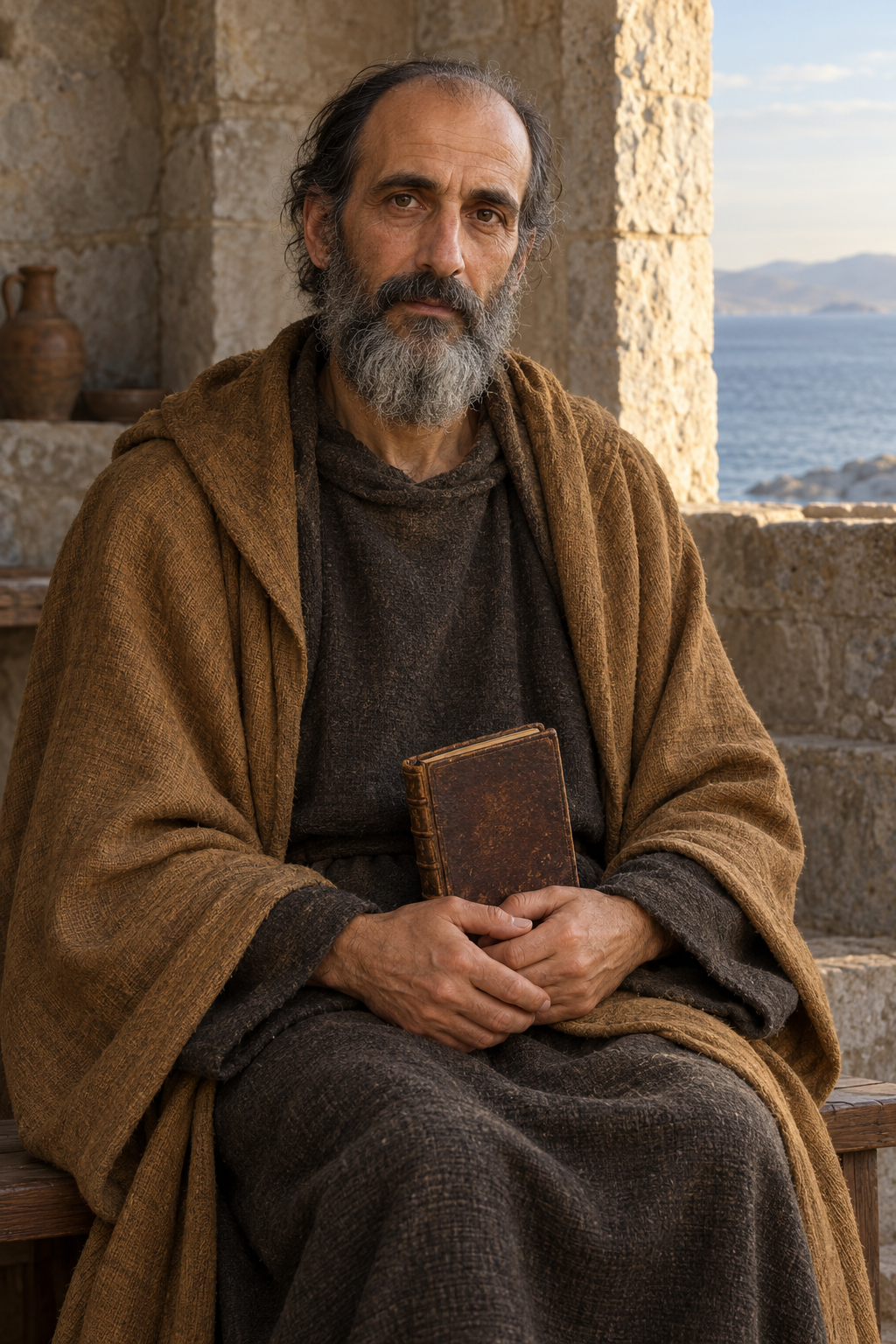
About Macarius of Pelekete
Macarius of Pelekete was a Byzantine monk whose responsibilities grew from copying books to leading a monastery. The scholarly Prosopographie der mittelbyzantinischen Zeit identifies Christopher as his baptismal name. At Pelekete he served as a canonarch, assisting with the ordering of worship, and as steward before becoming abbot. Those duties placed both books and the community’s practical needs in his care.
The Orthodox Church in America remembers him as a native of Constantinople who lost his parents in childhood and was brought up by an uncle. Its account describes his decision to enter monastic life and take the name Macarius. These details belong to the received religious biography, rather than surviving records of his family household.
The Life, as summarized in the Prosopography of the Byzantine Empire, links his work as a copyist with an earlier interest in Scripture. His superior noticed the time he spent with these books and made copying them his regular task. The account also names a monk, John, as a close associate during his early years in the community.
The most substantial account of his life was written by Sabas, a disciple who succeeded him at the community on Aphousia. The Orthodox Encyclopedia explains that the work may have been composed before the restoration of icon veneration in 843. Its narrative celebrates Macarius as a defender of icons, but includes episodes requiring care: the meaning of a passage about his ordination is disputed, and the precise location of the Pelekete monastery is not securely settled.
The disagreement turns partly on a Greek reading in the ordination passage: whether it refers to a deacon or to the devil. The manuscript reading and its interpretation remain contested.
The Finnish narrative describes an attempt to win him over with promises of honor and gifts for his monastery. When he refused, another abbot was assigned to pressure him. That effort also failed, according to the account, and the emperor turned to punishment and exile to break his resistance.
Macarius’s opposition to imperial religious policy brought imprisonment and exile under Leo V. He also appears in letters of Theodore the Studite, providing evidence beyond his own Life for his place among monks resisting iconoclasm. After Leo’s death, Macarius established another community near Chrysopolis and had contact with the deposed patriarch Nicephorus. Under Theophilus he faced renewed punishment and was sent to Aphousia.
Five surviving letters from Theodore were addressed to Macarius between 816 and 818. Several answered letters Macarius had sent, showing an exchange between the two men rather than only reports about him by someone else.
The Finnish account describes the cost of his first exile as separation from his disciples and friends. It says that release after Leo’s death did not bring permission to return to Pelekete. Lay supporters helped finance the new community at Chrysopolis, where other monks who defended icons gathered around him.
The new foundation carried practices from Pelekete into exile. According to the Life, Macarius began the building work, the monks with him completed it, and he introduced the rules of his former monastery. His leadership thus continued through a community whose arrangements were rooted in their earlier shared life.
His resistance included a strict position on clergy who had supported iconoclasm. He agreed with Nicephorus that repentance should not restore them to priestly office. The same religious biography attributes healings to him and tells of a condemned Paulician spared after renouncing his beliefs. These accounts do not establish a general policy of religious tolerance.
The Finnish Orthodox account gives that prison episode a stark setting: only one of the condemned men accepted Macarius’s teaching, while the others were executed. It also remembers monks following him into exile, and his help for islanders facing hunger. These are features of the Church’s narrative of his ministry, not independently verified descriptions of miraculous intervention.
The account of hunger on Aphousia includes a practical intervention alongside the miraculous reputation. Macarius persuaded wealthy inhabitants to open their stores and release food. He also encouraged local people to build a church on existing foundations. These details, preserved in the Life, associate his island ministry with feeding neighbors and organizing a place for worship.
His life dates cannot be fixed with comparable precision. The Orthodox Encyclopedia places his birth between 754 and 776 and his death between 835 and 840. Those ranges are retained here without selecting an arbitrary year.
The Orthodox Church in America instead gives 785 for his birth and about 830 for his death. Its commemoration on April 1 remains clear even where its chronology differs from scholarly reconstruction.
The Finnish Church’s account ends his life on Aphousia and recalls his instructions to two disciples about burial. His remembered community therefore extends beyond the monastery that gave him his name: exile became another setting for worship and shared monastic life.
Wondering how to weigh the stories and sources? Learn how to read a saint biography.