Biography
Macarius of Tkow
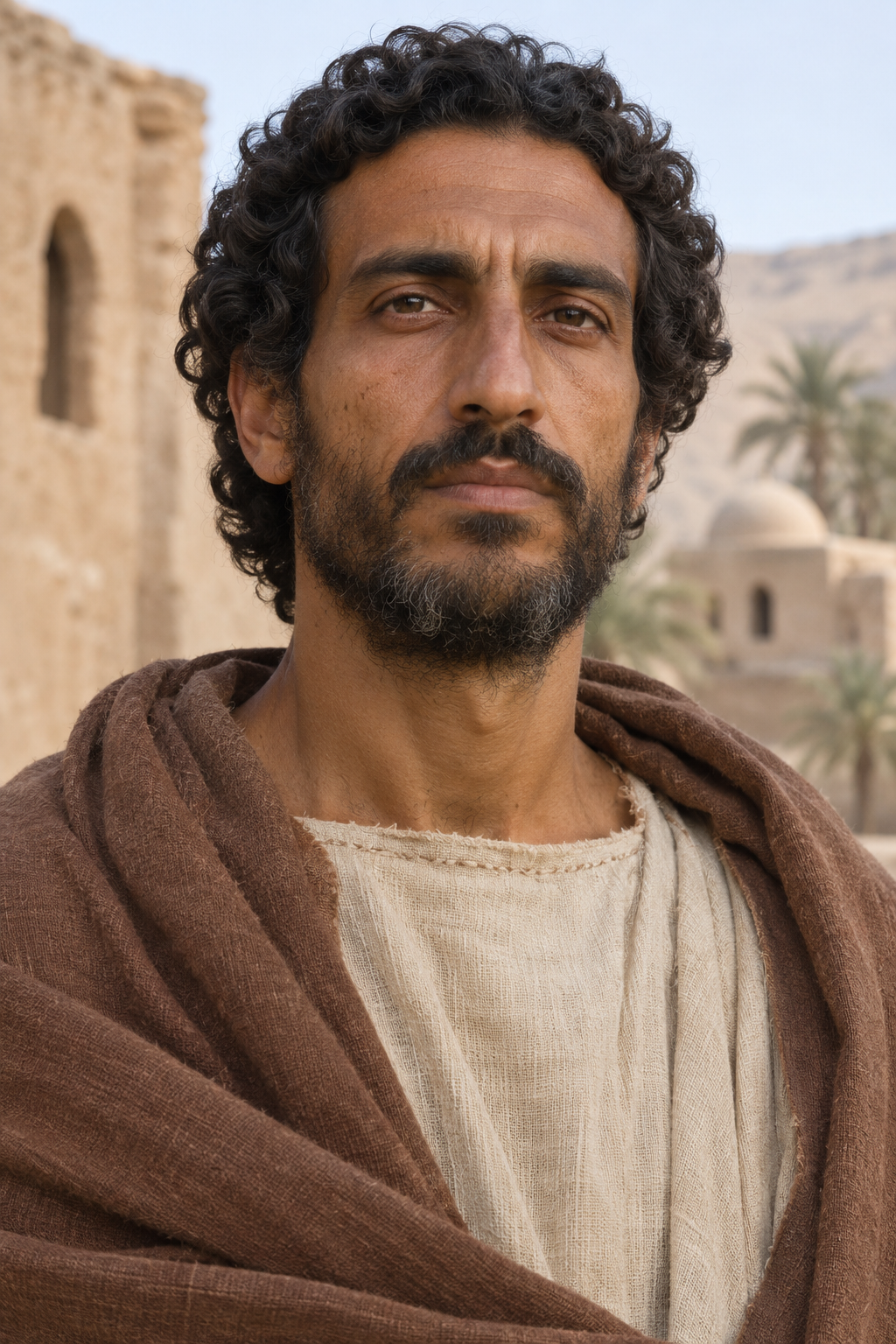
About Macarius of Tkow
Coptic tradition remembers Macarius of Tkow as a bishop of Upper Egypt who opposed the Council of Chalcedon and died in 451 or 452. David W. Johnson identifies the chief source as a Panegyric attributed to Dioscorus of Alexandria. It cannot have been composed before the second quarter of the sixth century, decades after its events. Surviving Sahidic and Bohairic versions transmit a story shaped by praise and anti-Chalcedonian argument. Johnson cautions that even Macarius’s office, opposition, and violent death cannot be independently corroborated outside Egyptian Orthodox tradition. His remembered life must therefore be narrated as the panegyric’s claim rather than a secure sequence of events.
The panegyric says little about Macarius’s childhood or the circumstances of his appointment as bishop. It places his see at Tkow, also called Antaiopolis and identified with Qaw al-Kabir, between Asyut and Akhmim. In the story, Macarius travels to Alexandria with only one companion and almost no money. He speaks Coptic and understands little Greek, so Dioscorus speaks with him through an interpreter. When another companion insults him as “mouthless,” Dioscorus demands that the man apologize. This episode makes Macarius’s language and poverty signs of dignity within a Greek-speaking political and ecclesiastical setting.
The narrative sends Dioscorus and Macarius to Constantinople at Emperor Marcian’s command. The panegyrist says other bishops avoided the journey by bribing the imperial messenger, while Macarius and Dioscorus sailed. During the voyage, Macarius heals a blind man and clears a sailor falsely accused by his companions. His aide Pinoution recounts further miracles, including a victory over demons in a pagan temple. The story links Macarius to Shenute through a vision in which the elderly abbot sees Macarius as the defender who will fight for Egyptian orthodoxy. These scenes establish the saint’s virtues in the language of hagiography; they are not independently corroborated events.
At Constantinople, the panegyric says Macarius was at first refused entry to the imperial presence because his clothes were shabby. He would not change his clothing for an earthly ruler. Dioscorus later secured his entry, but Macarius could not join the doctrinal debate because no interpreter was available. The source thus contrasts his inability to speak Greek with the claim that his faith and spiritual authority surpassed social rank. It presents Dioscorus as the public defender of the Egyptian bishops, while Macarius embodies the poor Coptic-speaking churchman who is prepared to suffer.
Afterward, an informant warns Dioscorus of a plot against Macarius, and the bishop sends him back to Egypt. The panegyric then shifts to the period after Chalcedon, when an imperial courier demands that Egyptian bishops sign the council’s decrees and Pope Leo’s Tome. Macarius refuses because he judges them inconsistent with Nicaea. The text says the courier kicks him so violently that he dies. His body is buried beside John the Baptist and Elisha, as a vision had foretold, and miracles are reported at the bier. The Coptic Encyclopedia says the chronology raises questions about whether Macarius attended the Council itself or a preliminary meeting.
The source distinguishes what may be historical from what belongs to its polemical narrative. Macarius may have been a bishop of Tkow, opposed Chalcedon, and died violently because of his beliefs, but the Coptic Encyclopedia says none of these details can be corroborated outside Egyptian Orthodox tradition. The relics at Dayr Anba Maqar may be associated with him, but the identification is uncertain; a list from the late eleventh century is the earliest cited evidence for three Macarii there. The later cult records Macarius’s continuing veneration but does not independently corroborate the panegyric’s episodes.
The panegyric’s broader significance lies in how it portrays Egyptian Christianity after 451. Its author combines Coptic-speaking figures such as Shenute and Macarius with the Greek-speaking patriarch Dioscorus, presenting them as a united defense of Egyptian orthodoxy. The text urges its audience to imitate poverty, courage, and fidelity, while also using the saint’s story to argue against Chalcedon. Macarius is therefore important both as a remembered bishop and as a figure through whom a later community articulated its identity. The limits of the source are essential: the panegyric shows how sixth-century writers wanted Macarius remembered, not a fully verifiable account of his life.
The story’s language barrier has a wider literary context. Rachel Mairs compares its scenes with Egyptian hagiography in which a Coptic-speaking holy man confronts Greek-speaking elites through interpreters. The Panegyric names Peter the deacon as a mediator when Dioscorus first meets Macarius; at the imperial audience, a would-be interpreter will not speak for him. Mairs notes that bilingual mediation itself was ordinary in Egypt, even though this text makes it a sign of a poor provincial bishop’s moral standing against the court. The scenes convey an author’s argument about holiness and power; they are weak evidence for what languages the historical Macarius knew.
Edward Watts finds that the Macarius Panegyric shares episodes with the later literary History of Dioscorus: both place his death and burial beside John the Baptist and Elisha within a defense of the deposed patriarch. The panegyric claims that Theopistus recorded Dioscorus’s speech, but Watts, following Johnson, calls this a narrative fiction. He describes its movement between Macarius, Palestinian resistance, and other Egyptian monks as a gathering of separate traditions into one polemical work. That structure explains why the material is rich in scenes yet difficult to use as a chronology. It also shows how Macarius’s remembered martyrdom helped later Christians connect episcopal and monastic resistance after Chalcedon.
Wondering how to weigh the stories and sources? Learn how to read a saint biography.