Biography
Madeleine Sophie Barat
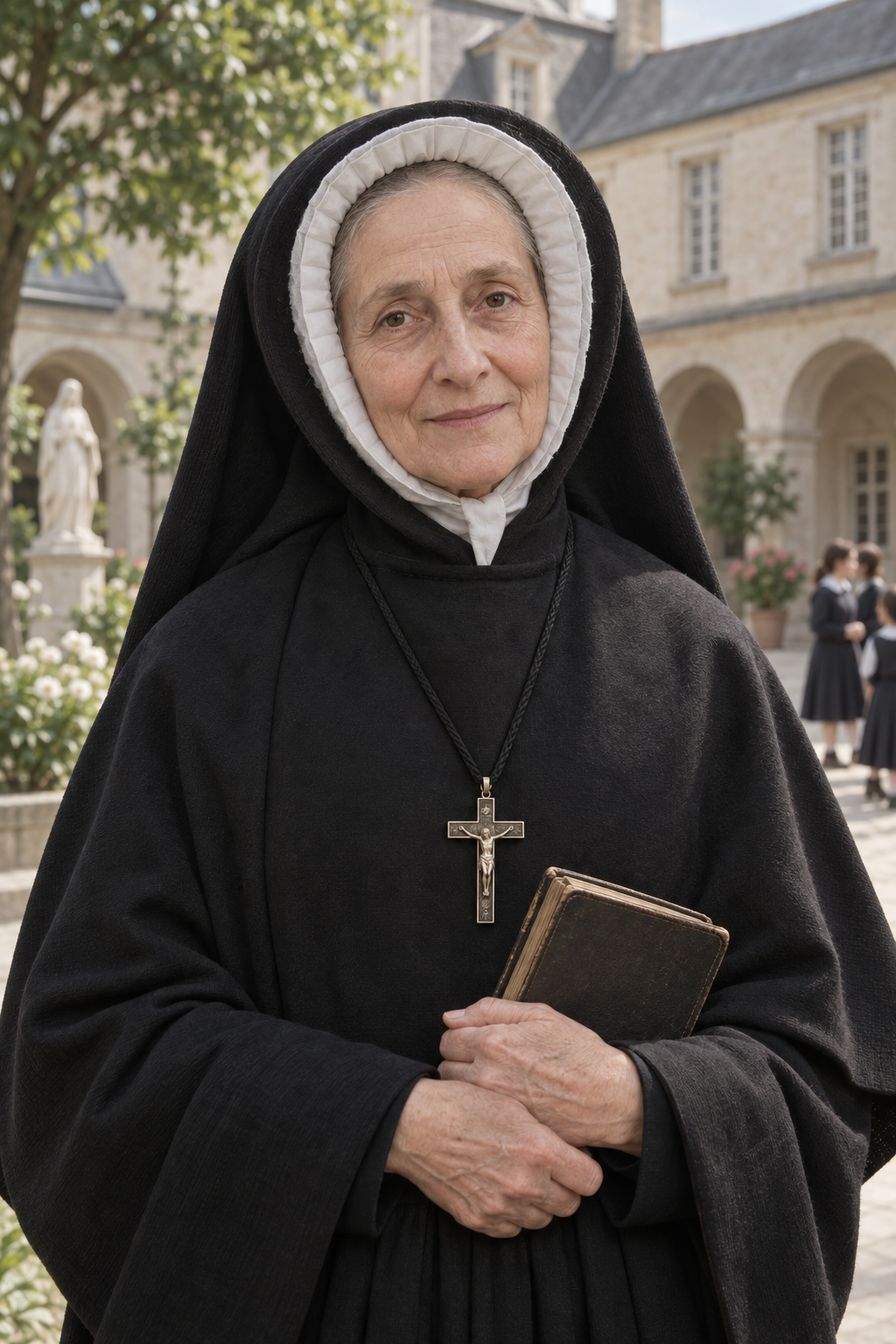
About Madeleine Sophie Barat
Madeleine Sophie Barat built a community of women whose work joined Christian prayer to the education of girls. She was born in Joigny, Burgundy, on December 12, 1779, the youngest daughter of Jacques Barat and Madeleine Fouffé. Her father made barrels, and the household’s work was closely connected with the vineyards. Her brother Louis gave her an unusually thorough education. Her studies included Latin, Greek, mathematics, history, and literature, an education that gave her intellectual resources for the teaching work ahead. The French Revolution disrupted this setting and helped direct her attention toward the religious and educational needs of a society in upheaval.
She went to Paris with Louis in 1795. Through his religious circle, she met Father Varin, who was looking for someone to undertake a new congregation devoted to girls’ education. Sophie hesitated when asked to lead the project, then accepted it. On November 21, 1800, she and three companions consecrated themselves to God. Their small beginning became the Society of the Sacred Heart of Jesus. The undertaking required Sophie to accept a public responsibility that did not come easily to her shy temperament.
The first convent opened at Amiens in 1801, and Sophie went there to teach. A school for poor children was added alongside the growing community and school. She became local superior in 1802. Political suspicions initially prevented use of the Sacred Heart name. She wanted serious study and religious formation to belong together. In 1820 she gathered the superiors in Paris to agree on a common course of studies. In 1826 she sought papal approval for the congregation, submitting a memorandum to Leo XII; approval followed that December.
Expansion made a common government necessary. After Amiens came Grenoble in 1804 and Belley in 1805. Delegates from the three communities gathered or sent written ballots to elect a superior general. On January 18, 1806, Sophie was elected for life by a majority of one vote. She would carry this responsibility for fifty-nine years, until her death. The office connected houses that could no longer depend on a single local superior and gave the growing community a means of acting together.
Her leadership rested heavily on relationships. She preferred consultation and workable decisions to commands that ignored local conditions. In December 1804 Sophie met Rose Philippine Duchesne, who brought her Grenoble monastery into the Society; a close friendship developed between them. For years Philippine wanted to work among Indigenous peoples in North America, while Sophie still needed her in France. In 1818 Sophie accepted Bishop Dubourg’s invitation and sent Philippine and her companions to establish schools across the Atlantic. Their continuing correspondence connected the distant foundations with the motherhouse.
Sophie’s educational mission did not prevent her from consenting to slavery. On September 2, 1836, she wrote to Lucile Mathevon approving the purchase of an enslaved person if the community could afford it. The proposed purchase apparently did not occur. The Society’s archival account distinguishes that permission from the uncertain legal status of Black women who later worked at the school. Her letter nevertheless records her own participation in a system that treated people as property, not merely the decisions of distant subordinates.
In the classroom, she asked teachers to persevere with difficult pupils rather than retain only those who were easy to teach. Her letter to the mothers in charge, dated December 11, 1845, urged sustained effort and patience. She believed that strong personalities could develop well through persistent care. She also wanted affection to be expressed in the small pleasures that made children feel at home. The recollections collected by Pauline Perdrau preserve her insistence that a religious educator should offer more than the management of a boarding school.
Her religious outlook also matured. In the 1830s, Father Favre helped her move beyond an ingrained fear of God toward confidence in the gentle love of Christ. She drew on several spiritual traditions without wanting her congregation to be simply a women’s version of the Jesuits. The Society’s 1815 Constitutions provided for boarding education, free teaching for poor day pupils, contact with people outside the convent, and retreats. In a conference of July 28, 1835, she introduced a meditation book to help the sisters practise Ignatian prayer. Contemplation was to shape the way they taught and met others.
She continued establishing communities despite fragile health. Her foundations spread through Europe, North Africa, and the Americas, bringing the Society’s educational work into settings far beyond its beginnings in France. Political instability and epidemics complicated the growth of the Society. Prayer remained central to her understanding of its life: the work was to arise from relationship with Christ rather than replace it. She died on May 25, 1865, aged eighty-five.
Pius XI canonized her on May 24, 1925, and appointed May 25 for her commemoration in the Roman Martyrology.
Wondering how to weigh the stories and sources? Learn how to read a saint biography.
Explore similar vocations
Prayers for Madeleine Sophie Barat
Madeleine Sophie Barat: sourced prayer excerpt
Let your Heart act.