Biography
Magdalene of Canossa
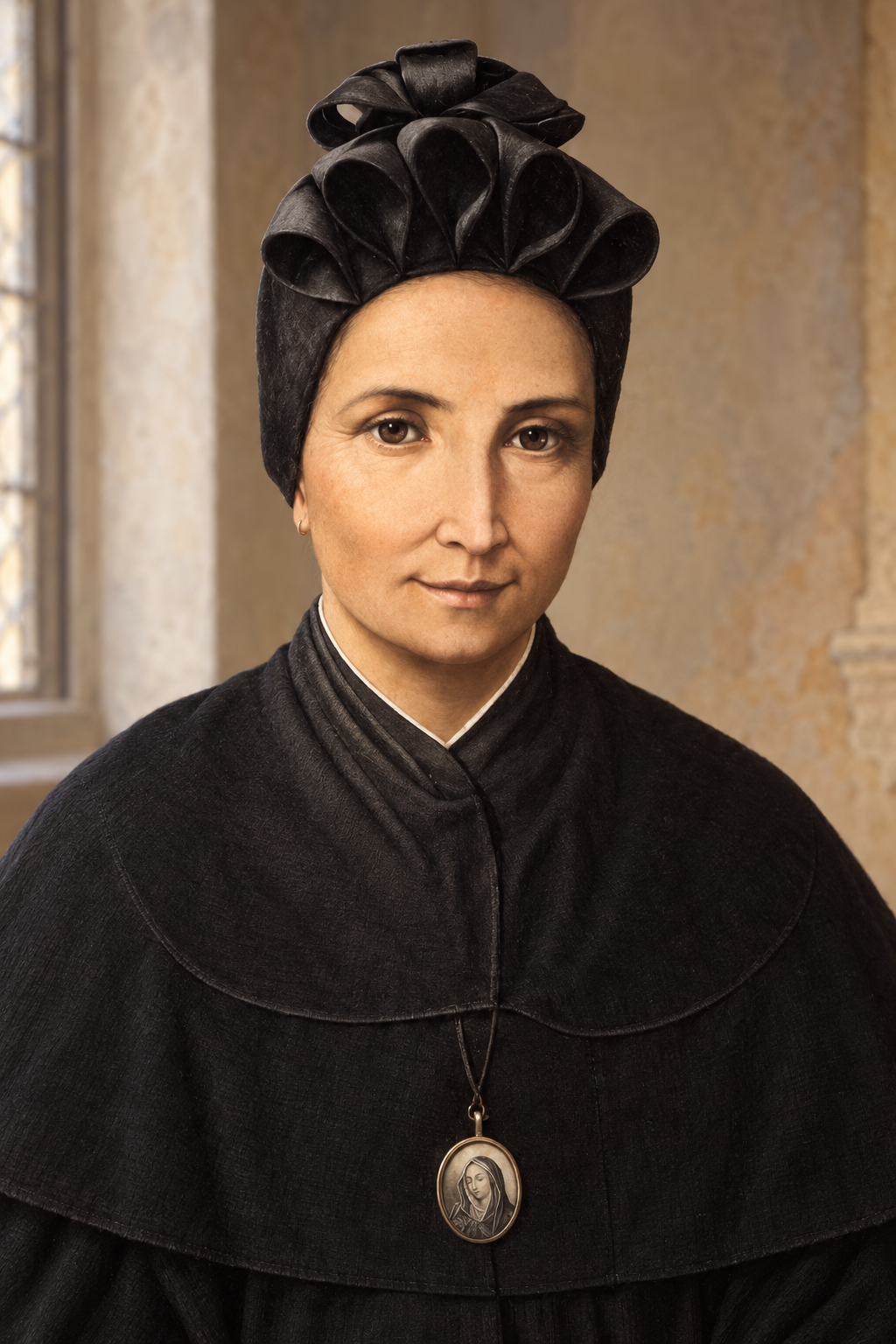
About Magdalene of Canossa
Magdalene of Canossa was born in Verona on March 1, 1774, into a noble family. Her childhood was marked by her father’s death, her mother’s remarriage and illness. She twice explored life in a Carmelite monastery, but eventually returned home and took responsibility for the family estate. Her later vocation developed through these years of searching and through encounters with poverty in a city troubled by war.
Her spiritual recollections preserve something of that uncertainty. In the text published as her Memoirs, she recalls a strong desire to consecrate her life to God after recovering from serious illness. During a brief stay with the Discalced Carmelites, she felt drawn toward their life yet troubled by the thought that enclosure would prevent her from helping others directly. She initially resisted that thought as a temptation. The account presents a decision gradually discerned, rather than a plan she understood completely from the beginning.
Magdalene began gathering abandoned girls in 1800. By 1802 they had a house in the San Zeno parish under the care of the teacher Matilde Bunioli, and a charity school followed. In 1808 she moved into a former monastery assigned to her through Napoleon’s intervention. Giansante’s historical study places this support within the government’s effort to gain allies among Catholic traditionalists and the nobility. Her work responded to suffering caused by war while also benefiting from political connections and access to property. She also studied earlier religious rules and writings, including those associated with Vincent de Paul and Jane Frances de Chantal, while seeking a workable form for her community.
The Daughters of Charity combined several kinds of service: schools, religious instruction, care for women in hospitals, training for rural teachers and spiritual retreats. The institute spread to other Italian cities, and Leo XII approved its rule in 1828. Magdalene also pursued a male branch; in 1831 an oratory for boys and men opened in Venice under Francesco Luzzo, assisted by Giuseppe Carsana and Benedetto Belloni.
Cooperation did not remove differences of judgment. Antonio Rosmini admired Magdalene and discussed her plans for a male community, but they disagreed about its composition, devotional practices and pastoral responsibilities. He initially preferred a group of laymen directed by a priest; later disagreements remained even after he accepted a clerical community. Giansante explains that their different understandings of religious life led their foundations along separate paths. The eventual Canossian men’s institute should therefore not be confused with Rosmini’s own congregation.
The Memoirs also show why her interior life cannot be reconstructed as a continuous diary. Pollonara’s editorial introduction explains that the notes were written at spiritual directors’ request, often without precise dates, and were interrupted for several years. The edition combines Magdalene’s recollections with later historical commentary. In the opening chapter, her director advises a period of waiting rather than an immediate new commitment. Prayer and uncertainty appear together in this account of her search. The notes stop in 1827, eight years before her death; Pollonara cautions that they do not recount the whole of her life or all her activities.
At her canonization on October 2, 1988, John Paul II interpreted her service through her devotion to the crucified Christ. He emphasized that she gave her own presence and energy, as well as money, to people in need. His homily recalls hospital visits, assistance to abandoned children and young prisoners, and support for struggling families. It also describes the humility she expected of her companions: service was not to become a way of obtaining gifts, rewards or recognition. The pope presented this practical charity as inseparable from her religious faith, rather than simply as the philanthropy of a wealthy benefactor. He recalled the surprise her choices caused among people close to her, including relatives who shared her faith but found her decision difficult to understand. Her social position did not remove the cost of that choice.
Education remained central to the tradition she founded. Canossa Catholic Primary School’s account explains that Magdalene wanted free schooling for poor girls and women. Her aims reflected her time: she saw educated Christian wives and mothers as a means of strengthening family and social life. The school, founded by her sisters in Singapore in 1941, now describes its community as welcoming children of all faiths and races. It connects her legacy with personal growth, respect for others and the formation of character. This is a later development of her educational tradition, not a school that she herself established. Today it is a co-educational primary school.
Singapore’s Archdiocesan Commission for Catholic Schools identifies her as patron of four schools: Canossa Catholic Primary, Canossian School, and St Anthony’s Canossian Primary and Secondary schools. These named communities give a specific setting to her continuing patronage.
Magdalene died in Verona on April 10, 1835. Her liturgical memorial falls on April 10.
Wondering how to weigh the stories and sources? Learn how to read a saint biography.