Biography
Magnus of Füssen
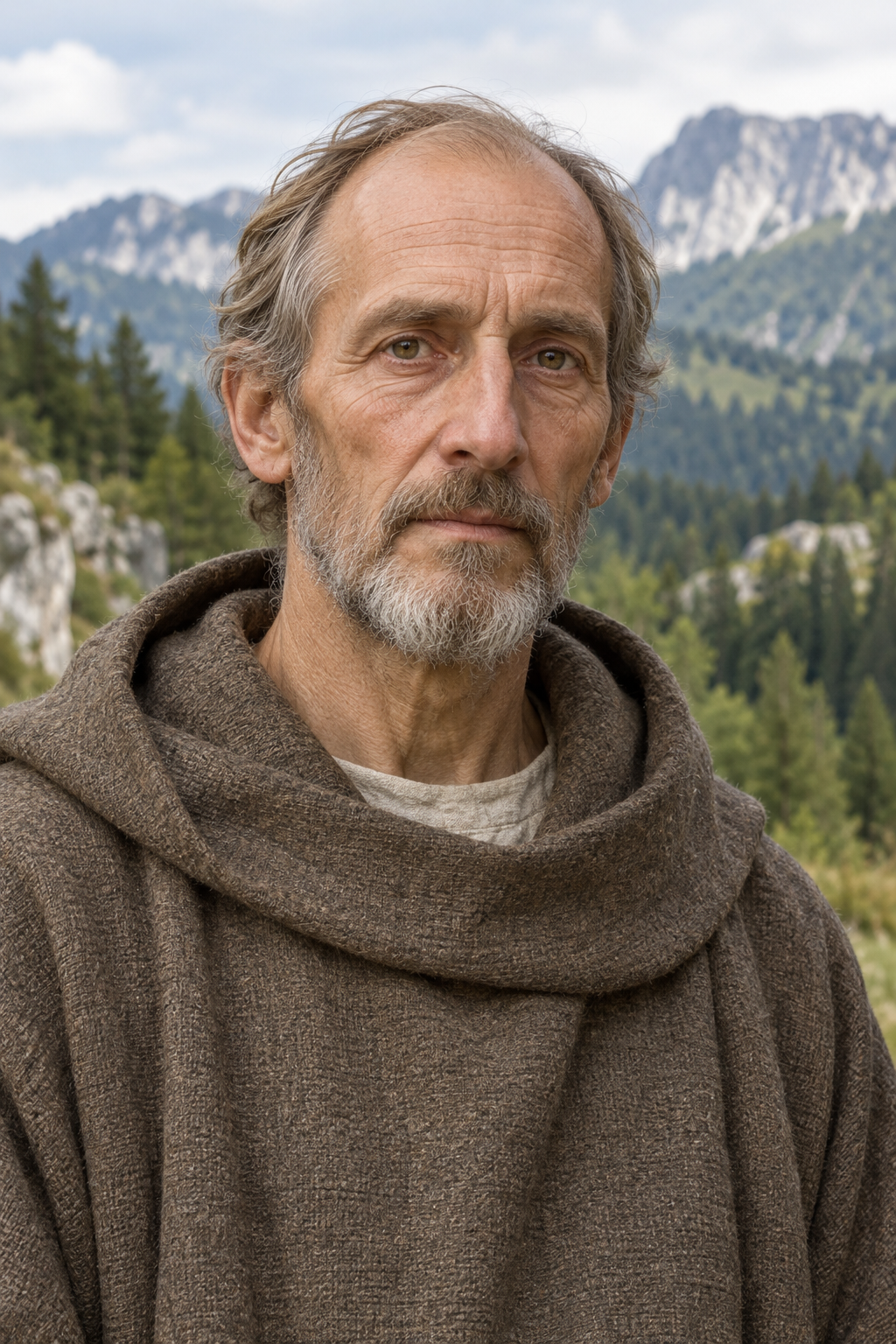
About Magnus of Füssen
Magnus is remembered as a monk who carried the Christian faith from the community of Saint Gall into the Allgäu. In the account summarized by the Historical Dictionary of Switzerland, he traveled with a companion named Theodor at the request of Wikterp, bishop of Augsburg. Their work brought monastic life and local church building into the same story.
Theodor remained in Kempten. Magnus continued to Waltenhofen, where he built a church, and then established a monastic cell at Füssen. The dictionary also regards Füssen as his probable burial place. These associations give his remembrance a recognizable setting even though much of the detail of his life comes through later narratives.
His early years are obscure. Manfred Weitlauff’s scholarly account leaves both his ancestry and youth uncertain, considering an Alemannic or Rhaeto-Roman background possible. It places him more plausibly in the generation of Abbot Otmar of Saint Gall than among the companions who traveled with Columban and Gallus a century earlier.
The dates remain approximate. The Swiss dictionary and Augsburg’s diocesan notice give a birth around 700 and death around 750; Weitlauff instead discusses the traditional estimate of 683 and a possible death in 756. The record follows the first estimates without presenting them as fixed years. His birthplace is not supplied.
The surviving Life of Magnus requires particular care. The Bavarian Academy’s reference work describes a late ninth-century text that borrows from the Lives of Columban and Gallus. It also records disagreements over the relationship between its longer and shorter versions. Attribution to a companion named Theodor is part of the text’s claim to authority, not a secure guarantee that an eyewitness wrote the surviving account.
Weitlauff reads the dragons and hostile spirits in the Life as a way of representing the struggle against pagan worship. Those scenes belong to the religious storytelling surrounding Magnus. They cannot serve as reports of literal animals he defeated, nor do they establish a detailed itinerary beyond the places supported by the historical discussion.
Füssen’s municipal history distinguishes Magnus’s cell from the larger monastery that followed it. The settlement stood on an important route across the Alps, near the gorge where the Lech emerges into the surrounding country. After Magnus’s death his cell declined. The bishop of Augsburg later initiated the Benedictine monastery of Saint Mang in the middle of the ninth century.
That distinction matters for his legacy. Magnus is remembered as the religious predecessor of the monastery, whose community subsequently became a center of faith, culture and economic activity for the district. The surviving baroque monastery buildings belong to this much longer institutional history, rather than to the hermit’s own lifetime.
The Augsburg diocesan notice places the elevation of his relics around 840–850. It reports their later disappearance during the Hungarian invasions, while a chalice and staff from his raised tomb survived. The same notice assigns him an obligatory memorial on September 6, preserving his place in the diocese’s calendar.
Today the former monastery houses Füssen’s municipal museum. Its displays include the history of the religious community and the remembrance of Magnus, whom the town honors as its patron. His significance lies in this continuing connection between a remembered missionary, a monastic foundation and the community that grew around it.
Wondering how to weigh the stories and sources? Learn how to read a saint biography.