Biography
Majolus of Cluny
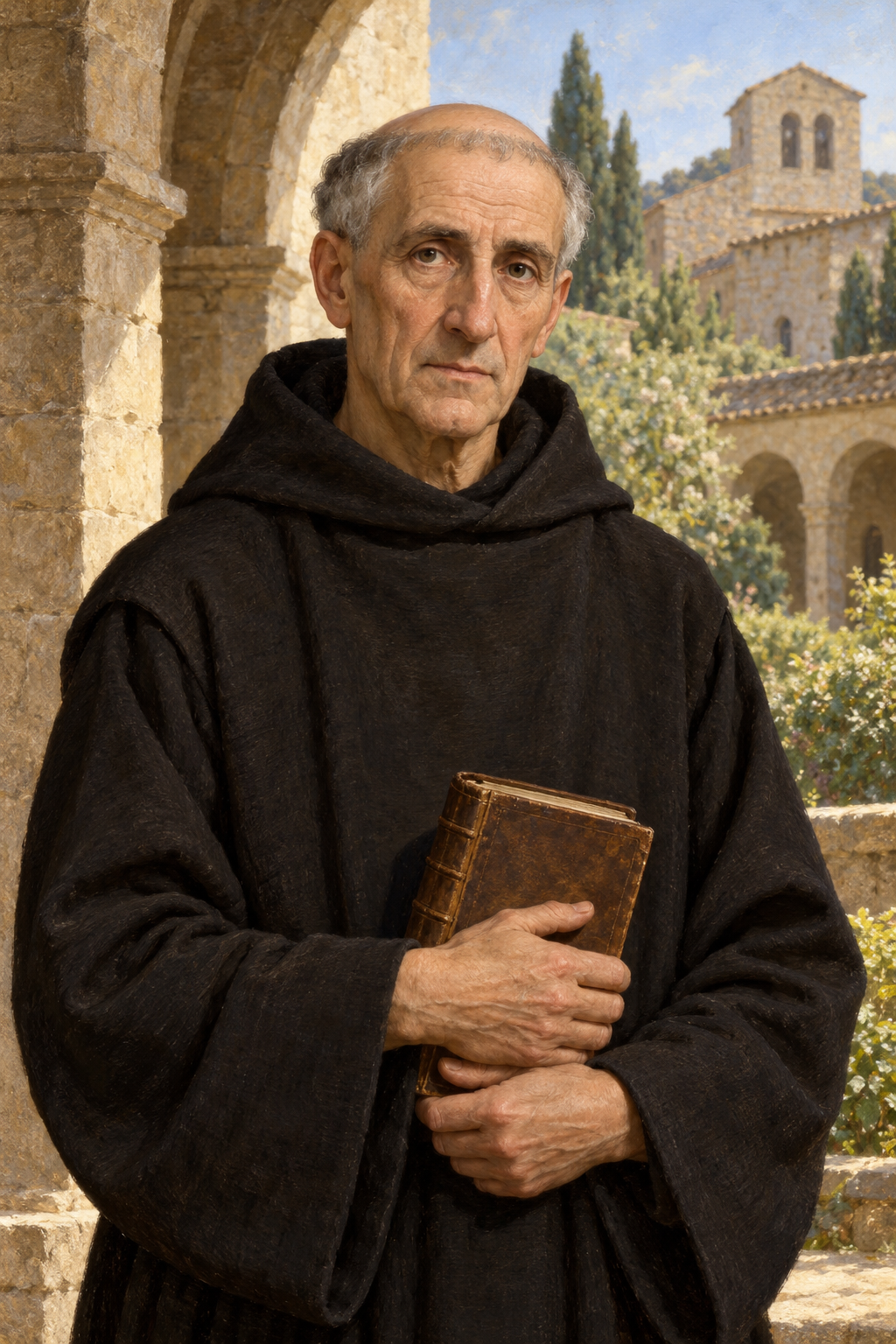
About Majolus of Cluny
Majolus, also called Mayeul, was the fourth abbot of Cluny, a Benedictine monastery whose influence spread widely in tenth-century Europe. After studying at Lyon and serving as archdeacon at Mâcon, he entered Cluny. The New Catholic Encyclopedia places his birth somewhere between about 906 and 915, in either Valensole or Avignon. The uncertainty makes a precise birth date or birthplace inappropriate. He had declined the bishopric of Besançon before entering the monastery.
His responsibilities grew gradually. He served as librarian and assisted Abbot Aymard, whose blindness led him to appoint Majolus as coadjutor in 954. Majolus later succeeded him. He helped reform monasteries in Burgundy, Italy and France, sending William of Saint-Bénigne to Dijon. His standing extended beyond monastic circles: Emperor Otto II offered him the papacy in 974, but he declined. In 991 he appointed Odilon as his own coadjutor, hoping to devote his remaining years to prayer while providing the monastery with continuity in its leadership.
Reform depended partly on powerful relationships. Laura Attardo’s account for the European Federation of Cluniac Sites describes Majolus’s close connections with bishops, counts, dukes and the imperial family. Donations increased, and Cluny became an important regional power. Growing numbers of monks required a larger church, consecrated in 981. The monasteries touched by his work did not all acquire the same relationship with Cluny: some received his personal help and remained under other abbots, while others became directly attached to his house. Cluny’s privileged relationship with the papacy protected its independence from outside interference. Its abbot was chosen by the monks, a structure that mattered within this world of powerful patrons.
Travel also exposed him to danger. In 972, while returning from Rome through the Alps, he was captured by Muslim raiders and released for ransom. Attardo explains how Odilon’s later Life turned this event into a religious account of Provence’s liberation, connecting the abbot’s captivity with the expulsion of the raiders. That narrative belongs to the way his community interpreted and promoted his memory; it should not be confused with a neutral record of every detail.
Majolus died at Souvigny on May 11, 994, while on his way to reform Saint-Denis at Hugh Capet’s request. His successor Odilon later died at Souvigny too. Their shared burial became an important focus of devotion. Archaeologists Pascale Chevalier and Arlette Maquet describe how excavations in 2001 and 2002 uncovered the changing arrangements around their tomb in the priory church.
The tomb reused an older stone coffin: its trough and lid came from different Merovingian sarcophagi. Medieval monks secured it with iron bands, while a small opening allowed contact with the relics. The arrangement combined protection with access. These surviving features reveal how the community organized devotion around its saints, and how the material setting of their remembrance changed over time. They provide evidence for the history of the shrine without supplying a portrait of Majolus’s appearance or an eyewitness account of his life. The reused pieces were made of local gray sandstone and dated from the sixth or seventh century. Their antiquity gave them prestige in the eyes of the medieval community.
Written remembrance developed alongside the shrine. Historian Franz Neiske distinguishes the Lives and miracle collections composed around Majolus from the calendars and lists used to commemorate the dead. Writers associated with Cluny, including his successor Odilon, helped spread his reputation through narratives, sermons and hymns. Their texts are valuable evidence for his early cult, while also reflecting the religious purposes of the people who wrote them.
Neiske also examines a condolence letter acknowledging news of Majolus’s death. It promised prayers and commemoration, and asked Cluny to remember the sender’s own deceased brethren in return. This exchange placed the abbot within a wider practice of mutual prayer between monasteries. His memory was not preserved only through dramatic stories: it also entered the repeated, ordinary work of worship. Later commemorative entries in different parts of Europe reveal the reach of his reputation beyond the community where he had lived. Neiske places such records within a culture that joined remembrance of the dead to material charity: gifts supported prayers, meals and alms. The written names therefore belonged to relationships involving both spiritual hopes and practical responsibilities.
His local patronage is documented in different kinds of records. The Bibliothèque nationale de France catalogs an 1810 printed litany whose title identifies him as patron of Valensole. The title establishes that historical devotion; it does not resolve the uncertainty about where he was born.
A more recent association bears his name. In Valensole’s July 2023 municipal bulletin, Les Drailles de Saint-Mayeul explicitly calls him its patron and reports adding a statue of him to its church. The same report describes restoration work and a local cultural gathering, placing the association’s devotion within practical care for shared religious heritage.
His feast is observed on May 11.
Wondering how to weigh the stories and sources? Learn how to read a saint biography.