Biography
Malchus of Syria
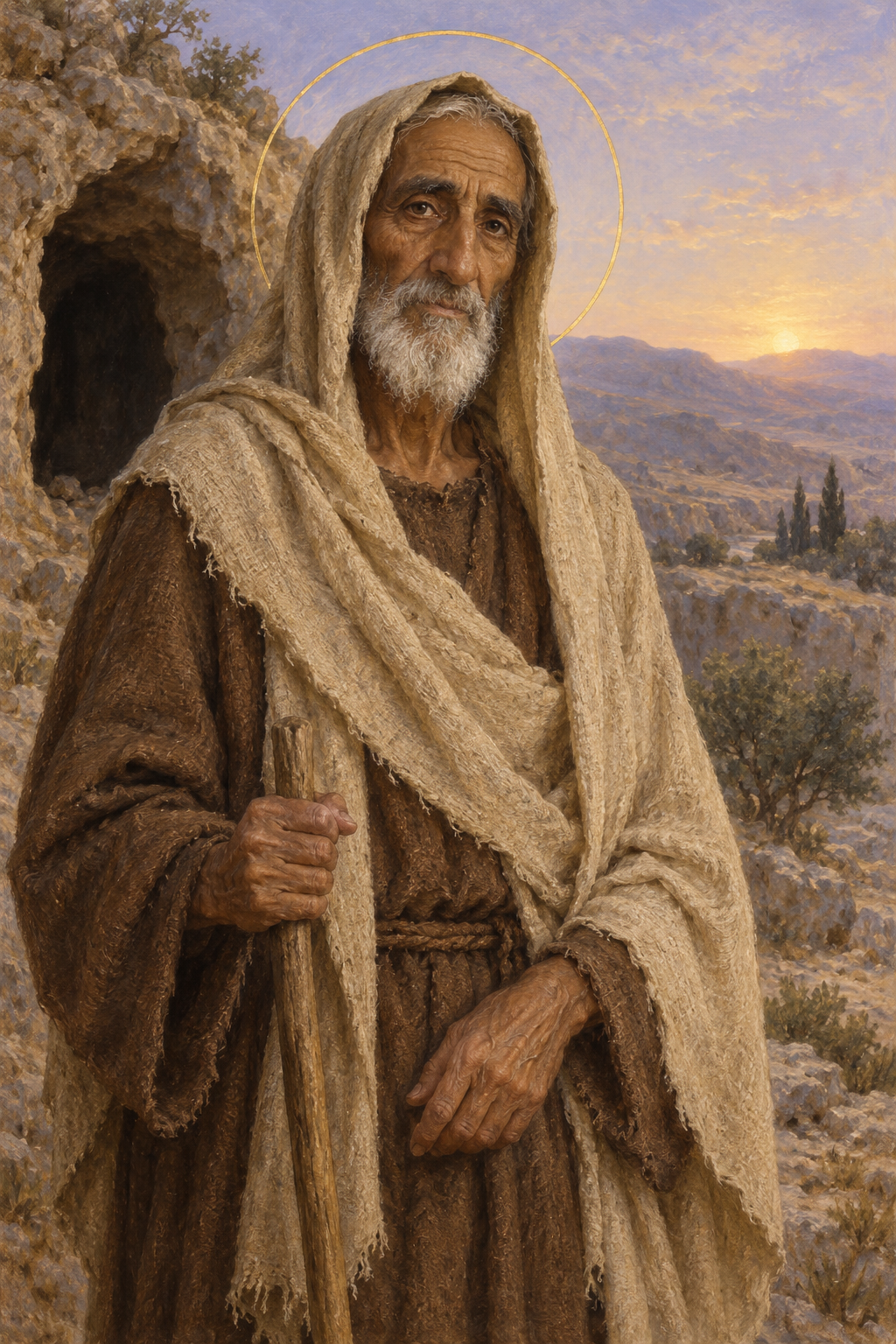
About Malchus of Syria
Malchus of Syria is remembered through a story that Jerome says he heard from him in old age. William Henry Fremantle’s signed biographical entry places their meeting in 374, when Jerome was staying in Syria, and describes Malchus living at Maronia near Antioch. The younger listener later became the author who preserved the elderly monk’s account. The surviving narrative tells of captivity, a forced marriage and escape, rather than supplying a continuous record of Malchus’s whole life.
In Jerome’s account, Malchus was the only son of a farming family near Nisibis. He left home to avoid an arranged marriage and joined monks in the desert of Chalcis. Years later, after his father’s death, he set out toward home despite his abbot’s warning. Raiders captured his travelling party, and Malchus was enslaved and made to tend sheep. His owner then ordered him to take another captive as his wife. She already had a living husband, and the two agreed to preserve a chaste companionship while appearing to accept the imposed marriage. They eventually escaped together, crossing a river on inflated animal skins. Pursued into a cave, they survived while a lioness killed the men following them. After reaching a Roman camp they regained their freedom. Malchus returned to monastic life, and his companion entered a community of women. Jerome frames their survival as an example of fidelity under coercion.
The unnamed woman is essential to that story. Susan Haskins and Jacobus Kritzinger emphasize her part in finding a way through the crisis of the forced union. She proposes the spiritual companionship that allows both captives to maintain their commitments. Their study also examines the instability of the labels given to her: captive, fellow slave, wife and sister. She is neither merely a reward offered by an owner nor a silent obstacle in a monk’s spiritual progress. Her speech and decisions help make their survival possible within Jerome’s narrative.
Modern literary study also cautions against treating the adventure as a plain chronological report. The scholarly selections edited by William Turpin note its affinities with ancient romance, including capture, threatened marriage, danger and an unexpected rescue. Christa Gray’s reading stresses that Malchus is a struggling, sometimes failing monk rather than an untouched model of perfection. Jerome’s purpose is religious instruction through a shaped story of perseverance. The Orthodox Church in America commemorates Malchus on March 26 and remembers his return to the ascetic life. His precise birth and death dates remain unestablished.
Wondering how to weigh the stories and sources? Learn how to read a saint biography.