Biography
Mamerto Esquiú
About Mamerto Esquiú
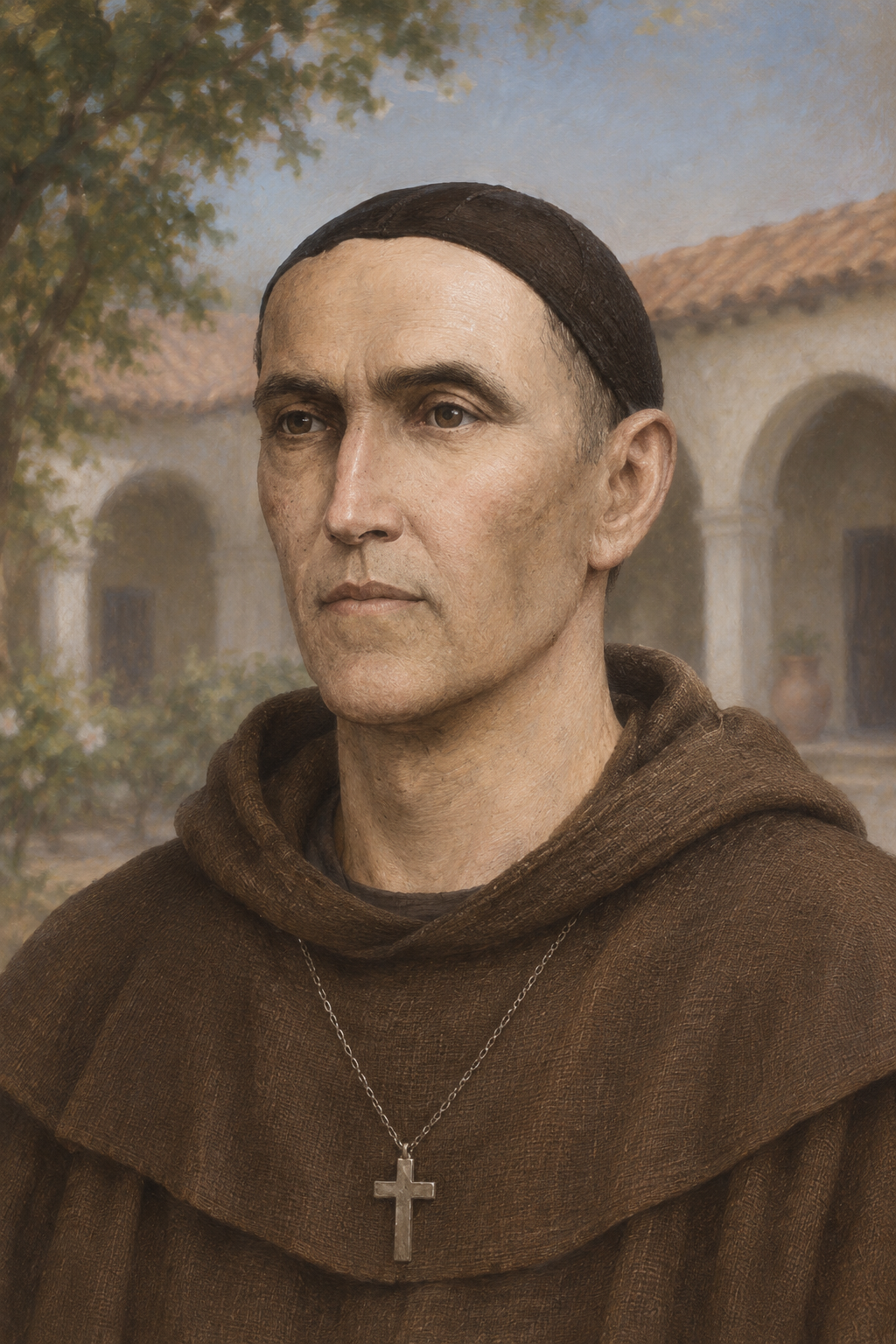
Mamerto Esquiú’s life joined the routines of a Franciscan friar to the unsettled public life of nineteenth-century Argentina. Born at San José de Piedra Blanca in Catamarca in 1826, he entered the Franciscan novitiate in 1841. He made religious profession the following year and was ordained a priest in October 1848. Teaching and preaching soon became central parts of his work. The later national orator had first been formed within a religious community and continued to understand his work through that vocation.
His classrooms included both advanced students and children. Cardinal Luis Héctor Villalba’s beatification homily recalled his teaching of philosophy and theology alongside his work as a schoolteacher. He also heard confessions and offered spiritual direction. These quieter duties remained part of the account of his priesthood even when public speeches drew wider attention. His ministry involved the sustained work of explaining, listening and accompanying individuals as well as addressing a congregation from a pulpit.
The constitutional crisis of 1853 gave his preaching a national audience. Catamarca’s provincial historical account describes reservations among local leaders about the new constitution, especially religious freedom and the abolition of ecclesiastical legal privileges. Governor Segura nevertheless agreed to have the constitution sworn and asked Esquiú to preach at the occasion. The friar urged support for a fundamental law that could hold the country together. His speech connected religious conviction with the practical need for public order after years of division.
The provincial account identifies Catamarca’s delegates to the constituent congress as Pedro Alejandrino Zenteno and Pedro Ferré. Both had signed the constitution despite reservations. Esquiú’s task was to address a community whose religious concerns were already present among its own representatives.
The published text of his sermon shows the tension within that argument. Esquiú celebrated independence, yet also described the suffering produced by conflict among Argentines after separation from Spain. He distinguished national independence and personal rights from the refusal of every common obligation. A constitution, he argued, required people to cooperate even when its provisions did not satisfy all their interests. He did not conceal his preference for a more explicitly Catholic settlement. Instead he asked Catholics to accept a shared political framework rather than prolong disunion. His language belonged to a particular nineteenth-century religious and political setting, in which national peace and obedience to law were closely joined.
He also argued for stability without rejecting every possible legal change. Amendments made through competent institutions could answer new circumstances, he said. What he opposed was the continual remaking of public rules to suit particular interests. The sermon therefore treated cooperation as a lasting civic responsibility, beyond the ceremony of taking an oath.
Esquiú himself also entered public office. The Franciscan order’s account records service as a deputy and on Catamarca’s governing council. Yet he sought a more regular religious life and moved to Bolivia in 1862. His work there included teaching theology at the seminary in Sucre. These years placed him outside the Argentine political circle in which he had become known, without ending his responsibilities as a teacher and priest. The same account presents the move as a deliberate effort to renew his Franciscan life.
His movements extended beyond Bolivia. Villalba recalled missionary journeys to Peru and Ecuador, followed by a return to Tarija. He later travelled to Rome and the Holy Land. In Rome the minister general of his order asked him to help restore common life in the Argentine Franciscan convents. He returned to Catamarca in 1878 after a long absence. The assignment gave his return a specific purpose within the order: strengthening the shared religious life he had repeatedly sought for himself.
Appointment as a bishop was something he had resisted. When proposed for Buenos Aires, he considered himself unworthy. A later proposal for Córdoba was followed by his acceptance in obedience to the pope and episcopal consecration in December 1880. The Franciscan account remembers his support for poor people, the formation of seminarians, religious associations and parish missions. His period as bishop was brief, but the work included both the teaching responsibilities familiar from earlier years and material help for people in need.
As bishop, he visited chapels and small settlements as well as established parishes. Villalba emphasized journeys through an extensive diocese and care for people who were ill, describing a ministry marked by personal austerity.
He died at the posta of El Suncho in Catamarca on 10 January 1883. His Catholic beatification was celebrated in Catamarca on 4 September 2021.
A separate civic recognition had already marked his place in Argentine memory: Law 26.965, enacted in 2014, named him among the outstanding figures associated with the nation’s bicentenary. It also directed Congress to place a commemorative plaque at the structure preserving his birthplace. The law honored his public legacy, while the beatification recognized his life within the Catholic tradition.
Wondering how to weigh the stories and sources? Learn how to read a saint biography.