Biography
Mardarije of Libertyville
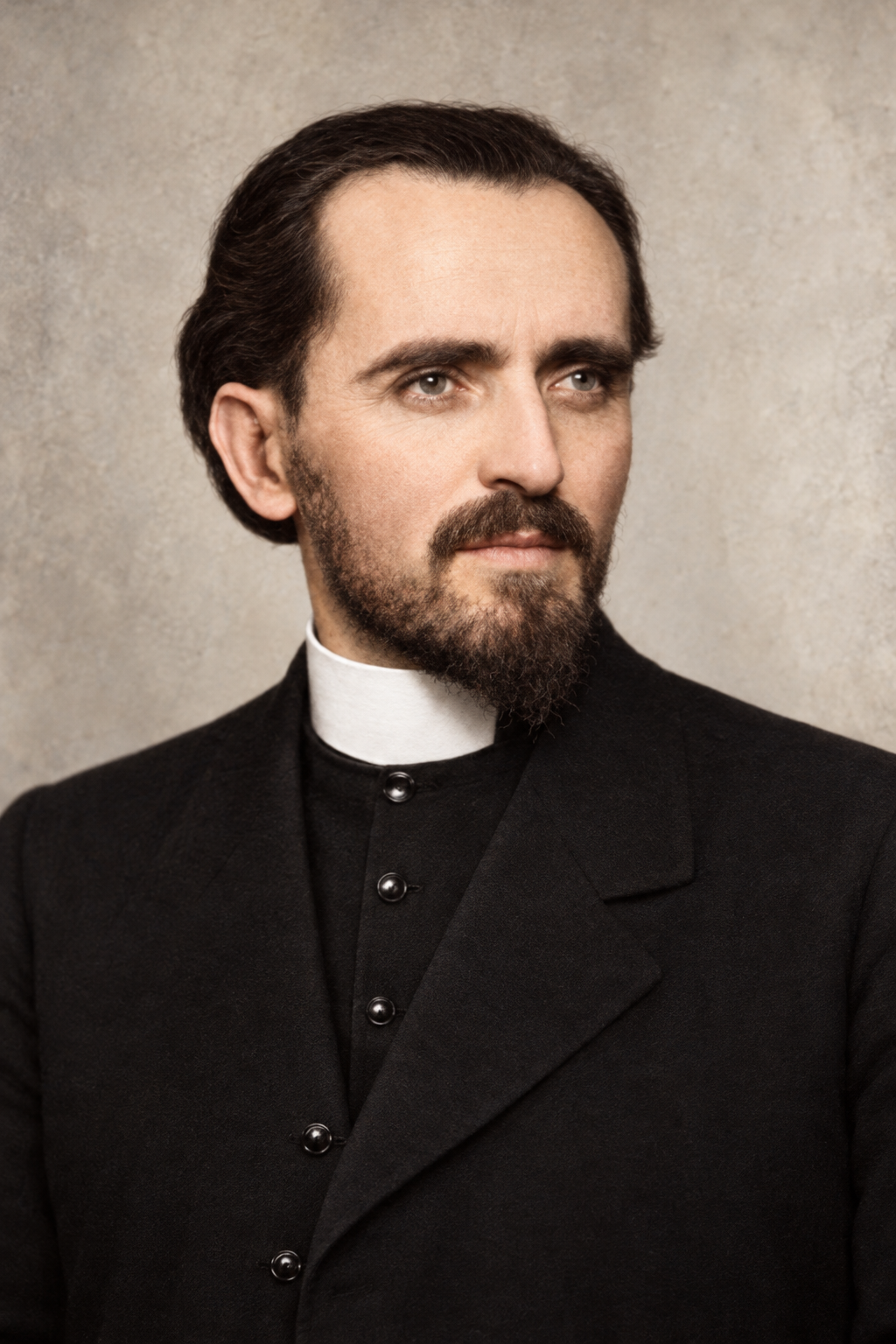
About Mardarije of Libertyville
Mardarije of Libertyville helped organize Serbian Orthodox church life in North America and became the first bishop of its American-Canadian diocese. Born Ivan Uskokovic in Kornet, Montenegro, in 1889, he pursued his education in Montenegro and Serbia. At Studenica Monastery he became a monk and received the name Mardarije. He continued his theological education in Russia before being sent to serve in the United States.
Mardarije studied at the Saint Petersburg Theological Academy from 1912 to 1916. A study of his student file by Konstantin Kostromin and Vladislav Puzović shows that his admission was exceptional: he had to make up his preparation in Greek and pass the required examination. He later fulfilled that requirement.
His activities outside the classroom sometimes troubled his superiors. Metropolitan Mitrofan asked whether charitable fundraising and public engagements were distracting him from his studies. During the First World War, however, the Russian Synod authorized him to visit Slavic prisoners of war to investigate their religious needs. His work among prisoners therefore had official authorization, even though the academy’s own administrators had not arranged the journey.
He completed a theological degree in 1916 with a thesis on Russia and the Slavic world in the thought of Aleksei Khomyakov. The examiner, Ivan Palymov, criticized its limited secondary reading and some generalizations, while finding that Mardarije understood his subject and presented it clearly enough to merit the degree.
His American ministry included public remembrance of the First World War. Historian Stanislav Sretenović records his participation in Chicago’s Vidovdan celebration in 1919, when he conducted a memorial service for the fallen in a park near the Serbian church. The gathering included Serbian associations and veterans of the American army, linking religious commemoration with the immigrant community’s experience of the war.
He participated in the 1919 All-American Sobor in Cleveland, where his advancement to the episcopate was proposed. He later returned to Serbia and directed the monastery and monastic school at Rakovica. After returning to America, he worked under Bishop Nikolai Velimirovic and continued administering the diocese after Nikolai departed.
As diocesan administrator in 1923, Mardarije acquired land in Libertyville, Illinois, for Saint Sava Monastery. He was consecrated a bishop in 1926. The monastery became a lasting part of his work in America.
The monastery project brought together church leadership and lay support. Maxim Vasiljević’s study states that Nikolai had charged Mardarije with establishing a diocesan center and monastery. It also identifies the Serbian American scientist Mihailo Pupin as a benefactor who contributed money toward the monastery’s building debts. Mardarije’s foundation thus depended on assistance from others in the Serbian American community.
His responsibilities extended beyond building a monastery. In 1927 he convened a national church assembly to address the diocese’s organization. At a 1931 clergy conference in Youngstown, he appealed for cooperation and unity. The OCA account remembers his preference for patience over punitive measures during disputes.
The timing of gatherings at Libertyville also reflected the working lives of immigrants. Sretenović connects the monastery’s early celebrations and its 1927 assembly with Labor Day and Decoration Day. He explains that gatherings on American holidays helped workers travel to the monastery during time away from their jobs. Religious observance and community meetings could therefore fit the calendar of their adopted country.
His diocesan work also intersected with the political interests of the Yugoslav state. Historian Srđan Mićić, drawing on diplomatic correspondence, describes officials supporting Mardarije’s authority among Serbian immigrants while seeking his help against communist and separatist movements. In this account, diplomats recognized a practical difficulty: the bishop was expected to exercise authority among communities on whose financial support he depended. The foreign ministry granted him a monthly subsidy after his consecration, although the surviving records cited by Mićić do not establish the precise decision date within 1926–1928. The same study records a consul’s proposal in 1928 to replace him because illness limited his activity. These documents present the expectations and judgments of diplomatic officials alongside the church accounts of his pastoral responsibilities.
His Paschal epistle of 1935 gives a personal account of the illness that interrupted his ministry. He recalled becoming seriously ill while working with others on the monastery grounds. Writing to his scattered congregations, he connected his own suffering with a deeper understanding of people facing hunger or illness. He described praying for more time to preach, improve the monastery and help his family. The letter presents his recovery as an answer to prayer; it records his religious understanding of the experience.
Mardarije died in hospital in Ann Arbor, Michigan, on December 12, 1935. He was buried at Saint Sava Monastery in Libertyville.
The Serbian Orthodox bishops added him to their saints in 2015. A major celebration at Libertyville followed in July 2017, led by Patriarch Irinej. During the services, his 1935 epistle was read to the gathered congregation. The commemoration linked his continuing religious influence with the monastery he had helped establish.
Wondering how to weigh the stories and sources? Learn how to read a saint biography.