Biography
Margaret of Hungary
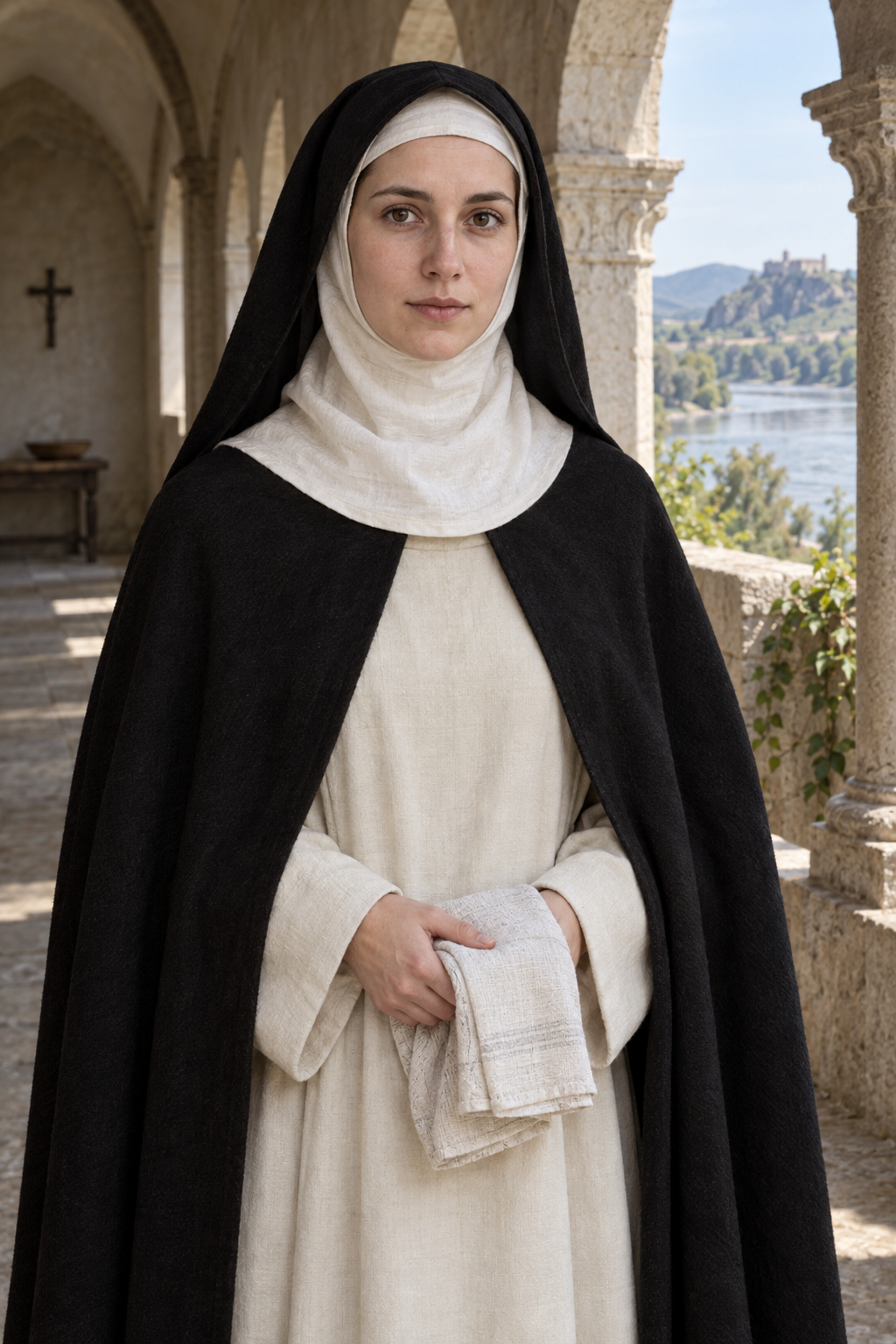
About Margaret of Hungary
Margaret of Hungary was a royal daughter who spent almost her entire life in a Dominican community. She was born around 1242, the child of King Béla IV and Mary Lascaris. Her sisters included Kinga and Jolenta, who also became associated with religious life and saintly devotion. Margaret’s own vocation took shape in the convent at Veszprém, where she was placed while still a small child. She later belonged to Saint Mary’s convent on a Danube island near Buda, a house founded by her father. There she made her religious profession in 1254.
Her childhood unfolded during the upheaval caused by the Mongol invasion. The royal family took refuge in Dalmatia, and her parents promised to dedicate a daughter to God if their country were delivered. Margaret was entrusted to the Dominican nuns at about four years old. The promise made in a time of national danger thus shaped the household in which she grew up. The Vatican City State account describes a young woman who later chose the life already begun for her and resisted an effort to arrange her marriage to Ottokar II of Bohemia.
The Croatian Catholic account remembers the island convent as the setting of a life of simplicity and service. Royal birth continued to make Margaret attractive as a possible marriage partner, and proposals to release her from her vows were presented. She refused to leave. In the tradition preserved by that account, her response was not a temporary reluctance but a settled decision to remain a nun. The same narrative associates her with care for people in need and with efforts to make peace. Her religious commitment included concern for the welfare of others.
Inside the community, Margaret’s work was ordinary and demanding. The Dominican Province of Saint Joseph recalls her sweeping and washing dishes, as well as tending sisters who were ill. Its account emphasizes that she did not choose patients according to the kind of sickness they had. These tasks belonged to the shared daily life of the house. The princess who might have been expected to receive service instead took her place among those who supplied it. The Dominican remembrance joins this practical care to her decision to remain faithful to her profession, rather than treating religious commitment as a matter of rank.
The memories attributed to the nuns who lived with her also describe severe ascetic practices. According to the Dominican account reprinted by the Nashville sisters, Margaret accepted the least desirable work even when winter cold made her hands bleed. She fasted frequently and refused fine clothing and the comforts available through her royal family. Gifts sent by her relatives became help for poor people. Prayer and devotion to the Eucharist accompanied this material generosity. The testimony presents a life in which poverty was expressed through what she wore, the work she undertook and the use she made of goods that others gave her.
Margaret’s concern for people outside the monastery also appears in the Spanish Dominican account. It says that she urged her father to protect widows and orphans, support churches, give alms and defend poor people. That tradition connects her influence on the king with concrete needs rather than courtly advancement. Her prayer was centered on the Holy Spirit, Christ crucified, the Eucharist and Mary. The same account remembers her as cordial toward her companions and ready for humble work. These recollections place concern for justice beside the silence and prayer of the convent.
Margaret died on 18 January 1270. Her brother, King Stephen V, sought an investigation into her reputation for holiness. A papal inquiry developed in stages; a surviving bull of Gregory X is dated 4 May 1272. In 1276, papal delegates examined witnesses on the island between 27 July and 12 October. The surviving record contains 110 testimonies and is incomplete. These proceedings preserved unusually detailed evidence about Margaret and the people around her. Reports of miracles formed part of the case, but the process did not reach canonization during the Middle Ages. Later royal and Dominican supporters repeatedly tried to revive it, including efforts in 1306, around 1340 and 1379.
Her memory also traveled through written lives. The Hungarian Repertorium Fontium identifies an early Latin legend whose author called himself an older brother and was probably Margaret’s confessor, Marcellus. Later versions developed during the fourteenth century. German translations followed, and Italian and Hungarian versions appeared in the fifteenth century. These texts carried her story beyond the convent and beyond Hungary. They also gave her remembrance a long literary afterlife, alongside the surviving legal testimony of the canonization hearings. The oldest Latin legend was rediscovered by Béla Iványi and published by Kornél Bőle in 1938.
Formal recognition came centuries after the first inquiries. Pius XII canonized Margaret on 19 November 1943. The Spanish Dominican account recalls his appeal to her intercession for peace founded on justice and charity, extending beyond her homeland to the wider world. The Order of Preachers now lists her optional memorial on 18 January, the anniversary of her death. Her enduring place in Dominican memory rests on the combination visible throughout her life: a firm choice of religious commitment, prayer sustained within a community, and practical service to people whose needs could easily be overlooked.
Wondering how to weigh the stories and sources? Learn how to read a saint biography.