Biography
Maria Bernarda Bütler
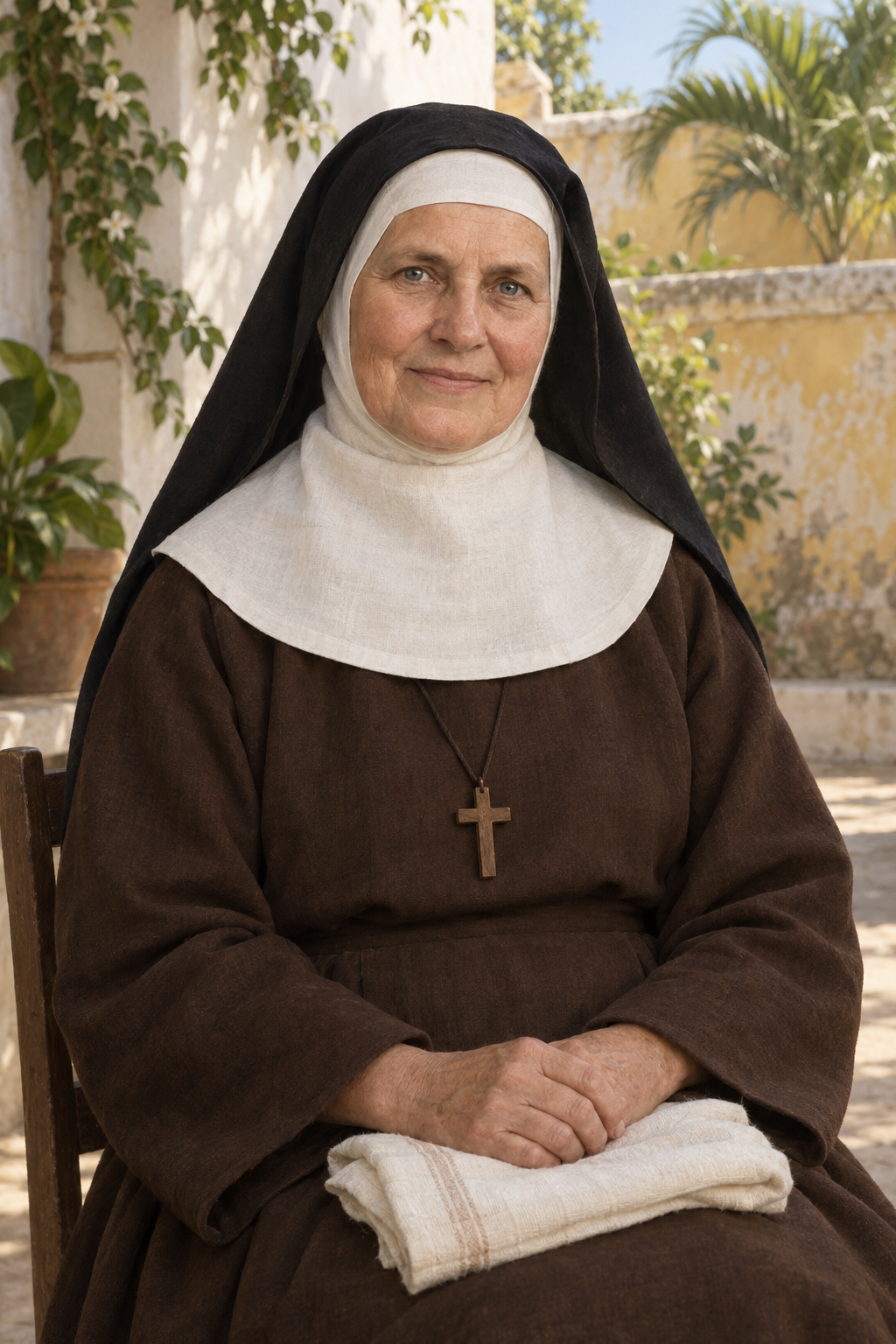
About Maria Bernarda Bütler
Maria Bernarda Bütler was born Verena Bütler at Auw in the Swiss canton of Aargau on May 28, 1848. She grew up in a farming family as the fourth of eight children. After elementary school she worked on the farm, and for a time considered marriage. A first attempt to enter religious life ended with a return home. Her desire for consecrated life continued through work, prayer and service in her parish, before she entered Maria Hilf at Altstätten in 1867.
At Maria Hilf she became Sister Maria Bernarda. Her responsibilities eventually included teaching, work within the household, economic administration and the formation of novices. She was elected superior in 1880. Victor Conzemius’s scholarly biography follows this succession of duties, which gave her experience of both the daily needs of a community and responsibility for its future members. Her later foundation grew from years of service within an established convent, rather than from a missionary project conceived without that preparation.
The convent’s own history gave particular weight to that work. Johannes Vogel’s account describes a nineteenth-century community weakened by shortages of money and interruptions in episcopal oversight. Bernarda restored its finances and worked with Bishop Augustin Egger on a broader reform. The changes included the introduction of the Roman breviary. The growing community also maintained a substantial role in girls’ education at Altstätten. By 1888 the number of sisters had to be limited to thirty. Renewed internal life and educational work formed the setting for the next decision.
The invitation came from Peter Schumacher, bishop of Portoviejo in Ecuador. He described the shortage of people available for the Church’s work in his diocese. Bernarda sought permission to leave the Swiss convent with a small group of sisters. After overcoming the initial resistance of the bishop of Saint Gallen and receiving papal authorization, she departed with six companions in 1888. The journey changed the setting of her service from a Swiss convent to communities whose circumstances and needs were unfamiliar to her.
At Chone, the sisters combined education and religious instruction with care for sick people. Their congregation’s account remembers material poverty, flooding and difficult conditions as part of the work’s setting. They prayed with local people and undertook practical works of mercy. What had been intended as a dependent mission of the Swiss convent developed into a separate congregation. Distance and the difficulty of communication helped bring that separation about. The Franciscan Missionary Sisters of Mary Help of Christians therefore emerged through the demands of the mission itself.
Political upheaval in Ecuador forced another departure in 1895. Bernarda and the sisters left the country and sought a new place to work. Bishop Eugenio Biffi welcomed them to Cartagena in Colombia. They were given accommodation in a wing of the women’s hospital known as the Obra Pía. Cartagena became Bernarda’s home for the rest of her life, and the base from which the congregation developed further houses. The move preserved the community through exile while giving its care of sick and poor people a new setting.
Bernarda remained superior general until 1920. Conzemius records the growth of the congregation and the wide correspondence through which she maintained contact with its houses. The community received diocesan recognition in 1912 and papal recognition in 1938, after her death. Its activities extended beyond schools to nursing, care for disabled people, adult education and the building of hospitals. These forms of service made the congregation’s institutional growth visible in practical work among different groups of people.
Writing was a substantial part of her leadership. The sisters’ introduction to her spiritual writings describes letters addressed to individuals, local fraternities and the whole congregation. It lists thirteen volumes containing 2,159 letters, together with doctrinal instructions and spiritual diaries. The correspondence offered encouragement, consolation and guidance in carrying out the mission. It also allowed a superior who travelled comparatively little to remain involved in distant communities. During the First World War, interruptions in communication prevented her from sending letters to sisters in Europe and Brazil. Those difficulties show how much the work depended on sustained contact.
After stepping down as superior, Bernarda continued with prayer and writing. She died at Cartagena on May 19, 1924. Her congregation remembers those final years as part of the same life of service, rather than a new public office. The community continued after her death, carrying forward the schools, care and missionary work that had grown from the original group sent from Altstätten.
John Paul II beatified her in 1995, and Benedict XVI canonized her on October 12, 2008. In the canonization homily, Benedict linked her missionary service in Ecuador and Colombia with her Eucharistic spirituality and her commitment to her neighbors. The recognition brought together the contemplative beginnings of her vocation and the practical works of mercy through which it had developed.
Wondering how to weigh the stories and sources? Learn how to read a saint biography.