Biography
Maria Cristina of the Immaculate Conception Brando
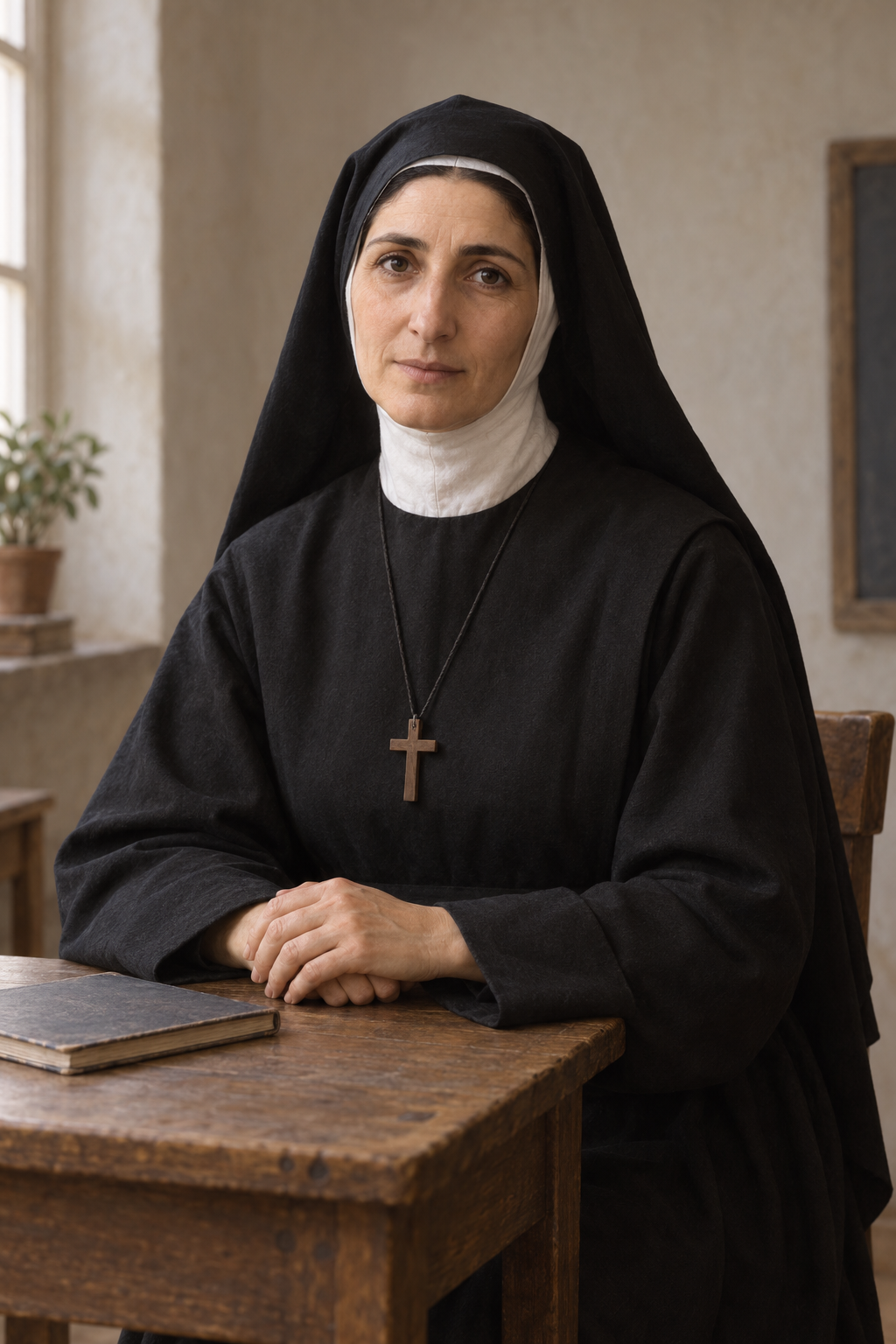
About Maria Cristina of the Immaculate Conception Brando
Maria Cristina Brando was born Adelaide Brando at Naples on May 1, 1856. Her mother died soon after her birth. As a girl she was drawn to prayer and religious life, and she made a private commitment to chastity while still young. Her wish to enter a community met resistance from her father. When he eventually allowed her to join the Poor Clares at the Fiorentine monastery, illness interrupted the attempt. Twice she had to return to her family for treatment.
She later entered the Sacramentines at San Giuseppe dei Ruffi in Naples, taking the religious name Maria Cristina of the Immaculate Conception in 1876. Again her health prevented her from continuing. In 1878 she stayed at a religious house in Torre del Greco with her sister. Other women gathered around her, and the community passed through several temporary homes. In 1884 it settled at Casoria with the assistance of clergy who supported its work. A stable house and a church for Eucharistic adoration gradually gave the foundation a more settled form.
The community joined prolonged Eucharistic prayer with the education of children and young people. The Dicastery’s account describes attention to children without parents, Christian instruction, the formation of girls and retreats for adolescents. Brando sought a form of religious life in which prayer and service could support one another. The sisters received papal approval in 1903, and she made perpetual vows that November with nineteen companions. She served as superior general, carrying responsibility for a congregation whose growth continued despite her own repeated illnesses.
Her advice to the sisters addressed the conduct of ordinary community life. In recommendations preserved through her biographer Gaeta, she urged them to cultivate an attentive spirit rather than treating punctuality at the bell as the whole of obedience. She asked them to help one another, to listen when someone needed assistance and to allow for another person’s weakness. A sister’s readiness to serve mattered in small encounters as well as in the formal rhythm of common prayer.
The same collection connects humility with restraint in speech, forgiveness and the faithful observance of the community’s rule. Brando cautioned against substituting unusual fasts or disciplines for daily duties. She also insisted that sisters were equal whether they had entered with a substantial dowry or had been received without one. Those instructions gave a practical shape to the family she was forming: money brought from outside was not to determine a woman’s standing within the community.
Brando made a small room near the church her place of rest, so that she could remain close to the Eucharistic worship around which the foundation had grown. Her health continued to be fragile. She became seriously ill in January 1906 and died at Casoria on January 20. The sisters carried on the work after her death, preserving both the memory of their founder and the educational responsibilities she had placed at the center of their common life.
John Paul II beatified her on April 27, 2003. In his homily he connected her love of God with her love of other people, emphasizing the educational work through which her religious commitment took effect. He described that work in relation to human dignity and the possibility of opening a life to mercy. The public recognition thus recalled a teacher and founder whose prayer had consequences for the children entrusted to her sisters.
The congregation’s later explanation of its charism develops the same connection. It presents Eucharistic remembrance as participation in a living relationship that calls for solidarity and service. In that account, reparation involves charity and a concern for human freedom. The language helps explain why a community centered on adoration also maintained schools and forms of assistance, rather than limiting its work to the chapel.
The sisters’ own history records a first house outside Italy at Jundiaí in Brazil in 1967. Further foundations included work in Manila in the Philippines and Modelia in Colombia. Teaching, care for children and the formation of new sisters accompanied the expansion. These later houses belong to the history of the congregation after Brando’s lifetime, showing how the educational and religious work she began continued in other communities.
Her memory also remains connected with the places where the sisters taught in Italy. At a January 20, 2022 celebration in Amorosi, Bishop Giuseppe Mazzafaro spoke about that continuing educational presence and the congregation’s houses in his diocese. He recalled Brando’s health difficulties alongside the service that developed from her foundation. The local remembrance places her legacy among people educated by the sisters and communities still shaped by their work.
Pope Francis canonized Brando on May 17, 2015. His homily described her Eucharistic prayer as a source of strength in suffering and of generosity toward others. Her recognition as a saint brought together the persistent vocation of a woman often interrupted by illness and the shared work through which that vocation endured.
Wondering how to weigh the stories and sources? Learn how to read a saint biography.