Biography
María de la Purísima Salvat Romero
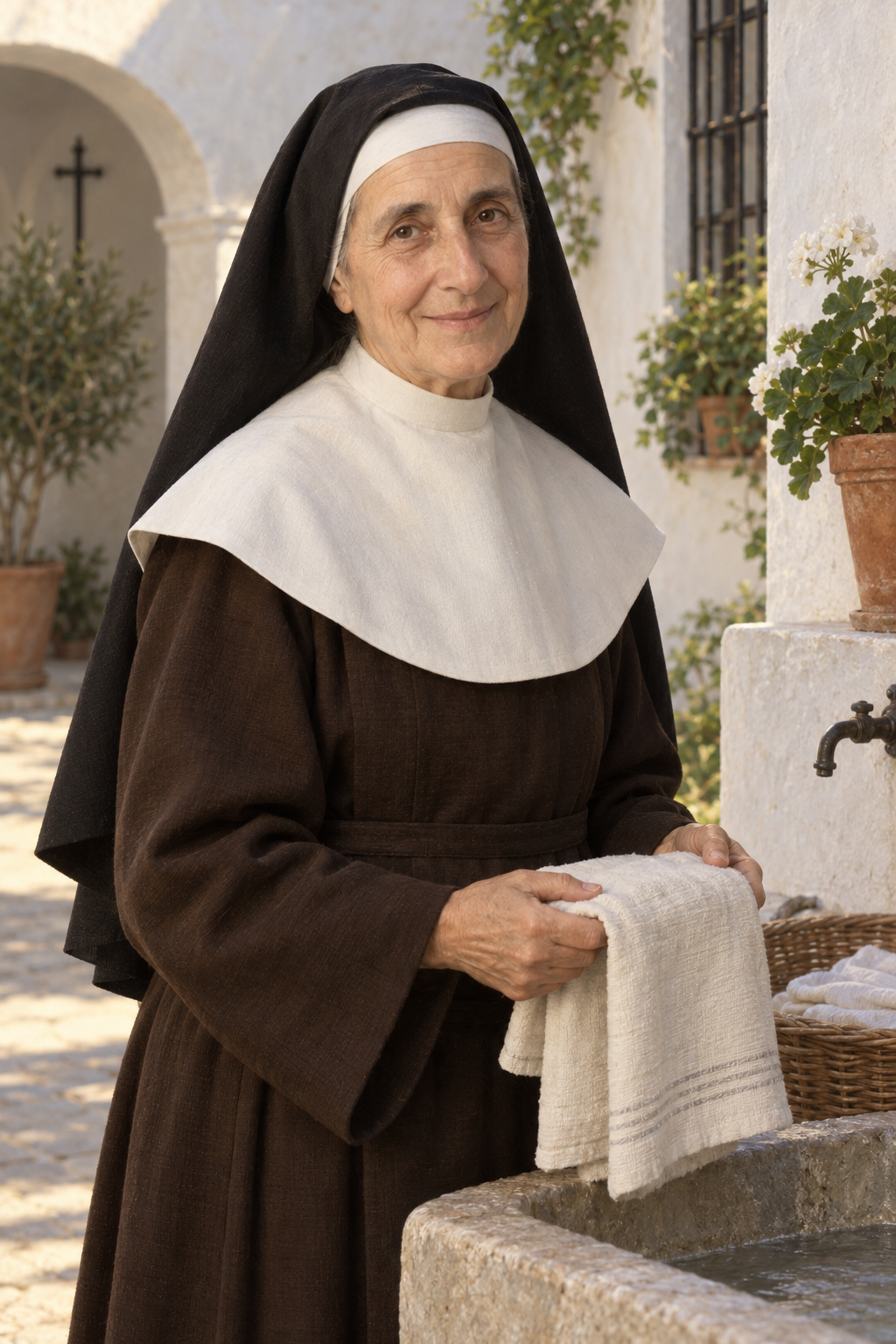
About María de la Purísima Salvat Romero
María de la Purísima Salvat Romero was born María Isabel in Madrid on February 20, 1926. Her family was comfortable, and she attended the school of the Irish Sisters. The Spanish Civil War disrupted that childhood. The family spent time in Portugal before returning to Madrid, where she continued her education. During these years she began to recognize a desire for religious life. In 1944 she entered the Sisters of the Company of the Cross at Seville, joining the community founded by Angela of the Cross.
Her concern for poor and sick people had already taken practical forms. The Dicastery’s account describes her helping to feed elderly people, visiting poor households and teaching catechism with her sister and friends. Those encounters helped direct her choice of community. She began her novitiate in 1945, made temporary vows in 1947 and perpetual vows in 1952. The congregation later entrusted her with schools and responsibilities in the formation and government of its members.
School leadership did not remove her from ordinary work. The congregation’s early biography remembers her cleaning floors and lavatories while also arranging retreats and times of prayer for her pupils. In the afternoons she taught English. She took a particular interest in girls living in the sisters’ boarding houses, including those affected by poverty or difficult family circumstances. Their education involved encouragement and a sense of belonging as well as classroom instruction.
She also went out to care for elderly women in their homes. The sisters recall her washing them, tending wounds, preparing meals and dealing with their laundry. She listened to their troubles while undertaking the work. These visits joined material help with companionship for people living in poverty and loneliness. The tasks belonged to the congregation’s daily service, and they remained part of her life while she carried responsibilities within the community.
Before becoming superior general, she served as novice mistress and general councillor, among other duties. Her election to lead the whole congregation came on February 11, 1977. Vatican Radio’s account of her life emphasizes her fidelity to Angela’s foundation and her personal austerity. She encouraged the sisters to take care over small matters and retained a particular concern for the girls in their boarding schools. Her authority developed from the work and common life she had shared with them.
The years of her leadership followed the Second Vatican Council, when religious communities were responding to substantial changes. The official canonization biography notes her attention to sisters who were experiencing uncertainty or difficulty. She sought to sustain their continuing formation and a climate of confidence within the community. Reelected three times, she remained responsible for the congregation until her death. Her work therefore included helping other women understand and persevere in a vocation that had to be lived through changing circumstances.
Letters were an important means of that guidance. Archbishop Juan José Asenjo’s study describes circular letters written before the major seasons of the Church’s year. They addressed the sisters as communities while also remembering the sick, elderly people and children in their care. Advent, Christmas, Lent and Easter gave a rhythm to these instructions. Through them she connected the celebration of the liturgy with the interior work of prayer, humility and charity in daily life.
Asenjo also draws attention to the ordinary difficulties discussed in her letters. Changes of plan, unforeseen events and the demands of living with other people could become occasions for patience and generosity. She encouraged fidelity in daily obligations and confidence after failures. The teaching was directed toward the lives her sisters actually shared. Her letters offered a way of approaching both the responsibilities of service and the strains that could arise within a religious household.
In 1994 she was diagnosed with cancer. She continued carrying out the duties of superior general during the following years. The Dicastery records a visit to the congregation’s houses in Argentina only two months before her death, when her illness was already advanced. She died on October 31, 1998. Her work of teaching, visiting sick people and guiding the community had continued into the final period of her life.
The canonization brought pilgrims from Spain and Andalusia to Rome, including sisters of the congregation and clergy accompanying them. Vatican Radio reported the presence of the archbishop of Seville and recalled the 2010 beatification in the city’s Cartuja stadium. These celebrations extended the remembrance of her life beyond the community in which she had lived and worked.
She was beatified in Seville in 2010 and canonized by Pope Francis on October 18, 2015. In the canonization homily, Francis recalled her humble life and her commitment to people in need. He linked that service with contemplation of the suffering Christ. Her recognition as a saint gave public expression to a life shaped by a religious community’s daily works of care.
Wondering how to weigh the stories and sources? Learn how to read a saint biography.