Biography
María de las Maravillas de Jesús
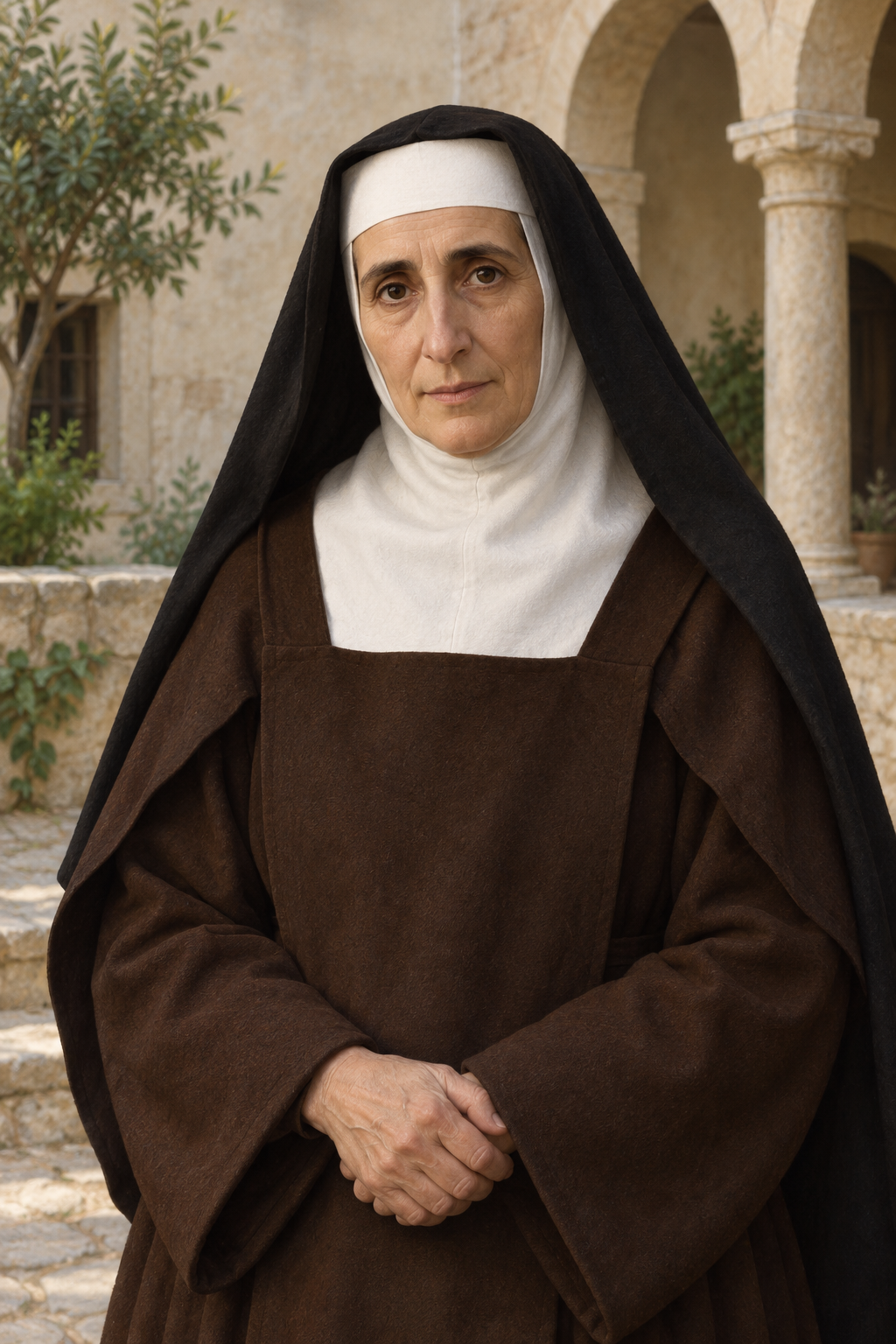
About María de las Maravillas de Jesús
María de las Maravillas de Jesús was a Spanish Discalced Carmelite nun whose foundations extended from Spain to India. Born in Madrid on November 4, 1891, she was drawn to the writings of Teresa of Jesus and John of the Cross. She entered the Carmelite monastery of El Escorial on October 12, 1919. The Holy See’s biography remembers her early concern for people in need alongside her desire for a life devoted to prayer.
She came from the family of the marquesses of Pidal. Her father, Luis, served as Spain’s ambassador to the Holy See; her mother was Cristina Chico de Guzmán. Educated privately, Maravillas studied languages and general subjects while taking part in charitable work. Her religious name recalled a Marian devotion cherished by her family, Our Lady of the Marvels of Cehegín. That Marian title should not be confused with a patronage belonging to Maravillas herself.
Her entry into religious life came after a long wait for her mother’s consent. The biography by José María Iraburu describes her visits to poor and sick people before she entered the monastery, drawing on the recollections of her attendant María Sagredo. He also records her interest in books and music. These details place her vocation within an educated household and an existing pattern of personal service.
In 1924 she began a new Carmelite foundation near the monument to the Sacred Heart at Cerro de los Ángeles. The community first lived in temporary accommodation in Getafe. Maravillas made her solemn profession there before becoming prioress of the new house. Prayer for the Church and Spain lay at the heart of this foundation.
She wanted the buildings themselves to express poverty. Iraburu reproduces her objections to an ornate façade at the Cerro and describes how she sought smaller, plainer houses in later foundations. Establishing a monastery involved practical negotiations over land, money, plans and construction, as well as the formation of a community. At Mancera and Duruelo she visited building works and worked with a local builder.
The Spanish Civil War uprooted the sisters. In July 1936 they were ordered out of the Cerro monastery and received by the Ursulines at Getafe. They subsequently lived in hiding in Madrid before leaving through France and returning to Spain at Las Batuecas. The community returned to the damaged Cerro in 1939. The Abbey of Clairval’s devotional account describes these movements together with the fear, searches and shortages the sisters experienced.
Foundations continued after the war, including Mancera, Duruelo, Arenas de San Pedro and La Aldehuela. The latter became her home in 1961. As her health declined, she continued to arrange help for religious communities and people outside the cloister. Clairval’s account describes support for seminarians, schools and housing, as well as provision for contemplative nuns who needed medical care. Her remaining strength went into correspondence, decisions and assistance carried out from the monastery.
The Carmel of La Aldehuela’s account gives concrete examples: prefabricated homes for sixteen families living in makeshift shelters, assistance toward a neighborhood of two hundred houses, and a school. She also arranged accommodation in Madrid for sisters undergoing medical treatment. Such projects depended on cooperation and resources reaching beyond her enclosed community.
Her understanding of Carmelite life also brought disagreement. Iraburu describes her wish to preserve traditional observance while making the changes required by Church authority. In 1972 the Holy See approved the statutes of the Association of Saint Teresa, bringing together monasteries sharing that approach.
Carmelite writer Jakov Mamić places her legacy within the wider debate over renewal after the Second Vatican Council. He recognizes her emphasis on reparation while criticizing accounts that portray other Carmelite communities as spiritually inferior because they followed different constitutions. His discussion makes clear that fidelity to the Carmelite vocation was understood in more than one way within the order.
That disagreement continued after her death. In a 1991 letter, John Paul II explained that the Church had approved two constitutional texts for the nuns, allowing monasteries to choose between them. He described both as faithful interpretations of the same spiritual inheritance and urged unity across the order. The distinction concerned ways of adapting religious life to changed circumstances, rather than separate degrees of holiness.
Maravillas died at La Aldehuela on December 11, 1974. John Paul II canonized her in Madrid on May 4, 2003. At the ceremony he emphasized that contemplation and enclosure had not prevented her from answering the needs of others. Her religious life joined sustained prayer with the practical work of founding communities and helping people around them.
Her feast is December 11. A parish in Madrid explicitly honors her as patron, and the Santa Maravillas community in the Altos Verdes neighborhood of Catamarca does likewise. Reports of their celebrations describe shared worship, processions and community gatherings, showing how remembrance of a cloistered nun has taken root beyond the monasteries she founded.
Wondering how to weigh the stories and sources? Learn how to read a saint biography.