Biography
María Encarnación Rosal
About María Encarnación Rosal
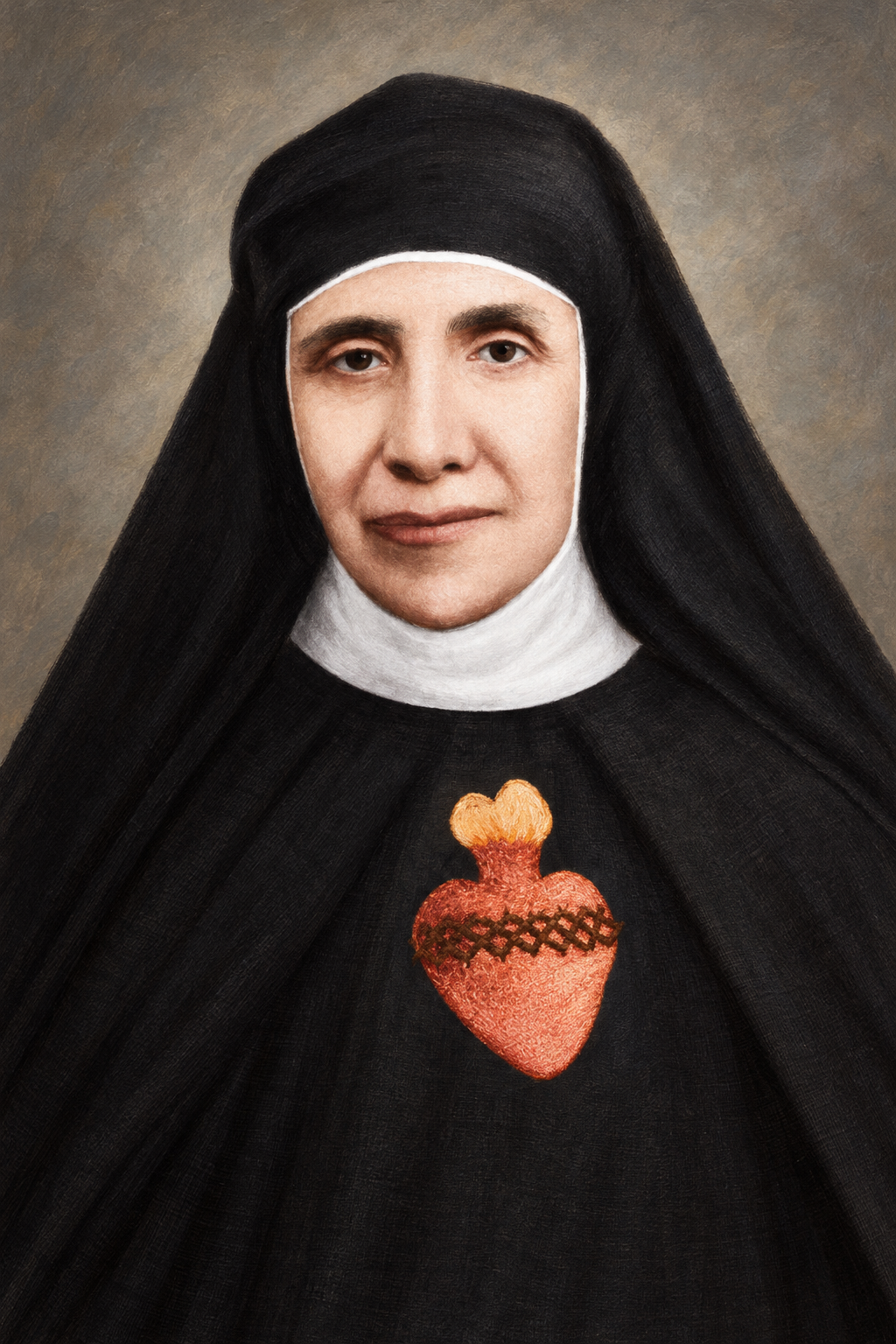
María Encarnación Rosal renewed the Bethlemite sisters’ community life and educational work. Her reform joined devotion to Christ’s birth and suffering with revised constitutions and the organization of the sisters’ apostolate. The congregation traces the establishment of new houses from 1861 to this renewal.
Born in Quezaltenango, she was baptized María Vicenta Rosal. The published extracts from her beatification dossier identify her parents as Manuel de la Encarnación Rosal and Leocadia Benítez. Her family supported her wish to enter religious life. She joined the Beaterio de Belén in January 1838 and made her profession in 1840. Dissatisfied with its observance, she obtained permission to move to the convent of Santa Catalina in 1842. She returned to Belén the following year. That year she was entrusted with school supervision and administrative responsibilities, followed by leadership and the training of novices.
The sisters had been governed by rules written for the Bethlemite fathers. Rosal obtained episcopal permission to prepare constitutions for their own community, drawing on advice from Dominican and Jesuit confessors. Some older sisters resisted the changes, which took effect in the houses at Quezaltenango and Cartago.
The congregation’s account of the Quetzaltenango foundation describes a school opened in 1862 with both boarding and day pupils. Rosal arranged academic preparation for the sisters who taught there. A larger building opened in 1865, with separate spaces for the school, infirmary, novitiate and convent. When the Sisters of Charity took over the care of sick women, Rosal used the former infirmary for a free school.
The congregation’s retrospective timeline records her correspondence with Dolores Jiménez and Concepción Giralt about taking charge of their school in Cartago, Costa Rica. It places the sisters’ arrival there in December 1877 and the opening of the school year in 1878. Alongside teaching, Rosal continued to organize the religious community: permission to print its constitutions followed, and a novitiate opened in Costa Rica. The timeline also records her request to Bishop Thiel for permission to direct Braulio Morales’s school in Heredia. After another expulsion, the sisters left Cartago and traveled through San José to the coast, where they embarked for Colombia. These institutional recollections preserve the practical work of seeking permissions, arranging schools and establishing communities through repeated moves.
Fustillos also examines the teaching program published for the Cartago school in 1878, drawing on Alejandro Ortiz’s history of the congregation. The program combined religious instruction with arithmetic, geography, natural history, English and French. Drawing, music, bookkeeping and domestic economy also appeared alongside reading and writing. The researcher interprets this range as an effort to provide intellectual and practical preparation within the expectations placed on women at the time. She traces its influence on the later Bethlemite foundations in Colombia and Ecuador.
Her spirituality emphasized the humanity of Christ and devotion to the suffering of his heart. Political opposition forced her sisters to move from Guatemala and later Costa Rica; they subsequently established themselves in Colombia. In 1886 she accompanied a group traveling to make a foundation in Ecuador.
The Tulcán foundation answered a request from the town’s municipal council. In her study of Bethlemite education, María Inés Fustillos Toapanta describes the council’s January 1886 decision to establish a secondary school for girls under the sisters’ direction. The town assigned money for teachers and a building, and the proposal received support from the civil and ecclesiastical authorities. Rosal accepted the arrangements and accompanied the sisters chosen for the new community, which Guadalupe Arrazola would lead. The study reports that Rosal remained involved in preparing the foundation even when illness confined her to bed.
An accident during the journey left her suffering, and she died at Tulcán on August 24.
John Paul II beatified Rosal on May 4, 1997. In his homily he identified her as the first Guatemalan woman to be beatified and placed her reform within the spiritual inheritance of Pedro de San José Betancourt. He emphasized the combination of educational work with contemplation, adoration and reparation to the Heart of Jesus. The address also recognized the lay association working alongside the sisters. Its portrait of her vocation joined service to others with a demanding life of prayer, rather than treating her schools as separate from her religious commitments.
Her educational legacy is described in personal terms by Ramiro Robles, a Tulcán teacher and school administrator. Writing in 2023 after thirty-eight years with the Bethlemite institution, he credited its approach with shaping both his classroom teaching and his exercise of authority. He understood its concern for people in need to include affection, encouragement, companionship and attentive listening. His account allows room for mistakes and correction among teachers, families and pupils alike. For this educator, learning about Rosal’s life belonged to the continuing work of teaching, linking the school’s inherited religious purpose with the everyday relationships through which education takes place.
Wondering how to weigh the stories and sources? Learn how to read a saint biography.