Biography
María Inés Teresa del Santísimo Sacramento
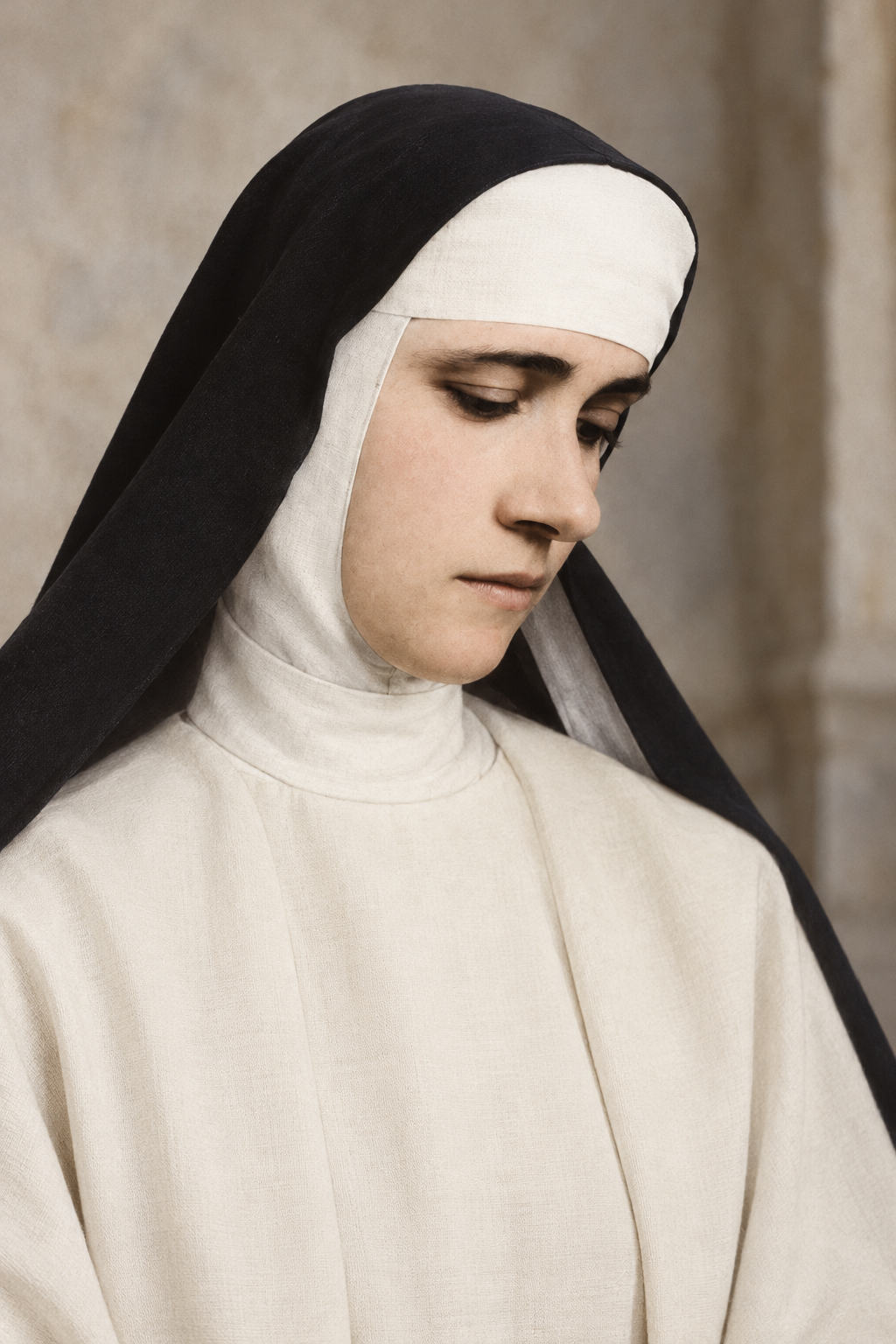
About María Inés Teresa del Santísimo Sacramento
María Inés Teresa grew up in Mexico as María Manuela de Jesús Arias Espinosa. Her family was from Guadalajara, but her father’s work took them to Ixtlán del Río, where she was born. She spent her childhood and adolescence in Guadalajara and Ciudad Guzmán.
Ixtlán del Río is now in Nayarit, a state in western Mexico created in 1917 from the former federal territory of Tepic.
She was baptized at the parish of Santiago Apóstol two days after birth. Her first Communion took place in Guadalajara on December 8, 1911.
In her recollections, she associated the beginning of her religious vocation with illness and reading. During a journey in 1924, she read Thérèse of Lisieux’s Story of a Soul. She described that reading, and the Eucharistic Congress later that year, as turning points in her desire to enter religious life.
Religious persecution in Mexico shaped the path she took. The Poor Clares she hoped to join were then living in Los Angeles, California. Entering their community meant leaving her country as well as her family.
She joined the Ave María monastery in June 1929 and received her religious name when she began the novitiate that December.
She made her first profession on December 12, 1930, the feast of Our Lady of Guadalupe. The community returned to Mexico in 1931, and she made perpetual vows in 1933.
Her account describes a community living with considerable material hardship. Laundry and ironing provided an income, and this work was entrusted to her for several years. She linked the hours of manual labor with a growing wish to devote time to direct missionary work. She also recalled a spiritual promise of help from Our Lady of Guadalupe, an experience that she understood as encouragement for her future apostolate.
In 1940 she discussed her missionary hopes with the abbess. The proposed foundation would begin as a Poor Clare monastery with the intention of becoming a missionary congregation. Bishop Francisco González Arias of Cuernavaca supported the proposal and sought permission from the Holy See.
Her recollections describe both practical preparations and uncertainty. She resigned her responsibility for the novices before leaving. Her brother-in-law helped provide a house, and the sisters made its best room their chapel.
She remembered the first house as Quinta Jesús-María, with five rooms and a garden. Its chapel contained a carved cedar altar and an image of Our Lady of Guadalupe.
According to the congregation’s biography, permission came in May 1945, and she left for Cuernavaca with five sisters that August.
The later beatification letter places their departure in the following year, an unresolved difference in the published chronology. The Holy See approved the transformation into a missionary congregation on June 22, 1951. The new institute joined contemplative prayer with active missionary service.
The beatification letter records another community established at Puebla in 1948 as new members joined. It counts twenty-one communities founded between 1951 and 1961, documenting the expansion that followed the institute’s approval and accompanied her years of leadership.
As superior general, María Inés accompanied sisters to missions and visited communities abroad. The beatification homily recalls travel by train, ship and airplane, undertaken to support sisters working far from their original home. It describes a congregation extending from Mexico to places including Japan, the United States, Costa Rica, Sierra Leone and Indonesia. Alongside the religious communities, the Van-Clar movement offered laypeople a way to share the missionary vocation within their families, occupations and church life.
A men’s institute grew from young members of that lay movement who wanted to enter priestly life while retaining the same missionary spirituality. The institute’s own history records that María Inés presented the proposal to the sisters’ general chapter in 1973. In October 1979 she asked Juvenal Porcayo Uribe, bishop of Tapachula, to provide juridical protection. His affirmative reply arrived the following month, and the Misioneros de Cristo para la Iglesia Universal dates its foundation at Monterrey to November 23, 1979.
The proposal included accompanying and preparing the young men for this new branch of religious life. The institute describes its members as living together in fraternity and making vows of chastity, poverty and obedience. Their priestly service emphasizes the Eucharist and spiritual guidance, with fidelity to the pope and attention to the needs of the Church.
During her later years she continued visiting communities and directing the sisters from their general house in Rome. She died in 1981 and was beatified in 2012.
At the beatification, Cardinal Angelo Amato emphasized the combination of prayer and missionary activity that characterized her foundations. He identified catechesis, personal witness and mission among those unfamiliar with Christianity as central to her work.
The men’s institute continues to describe its vocation in terms of shared religious life, priestly service and the contemplative and active pattern inherited from its founder.
Wondering how to weigh the stories and sources? Learn how to read a saint biography.