Biography
María Josefa Sancho de Guerra
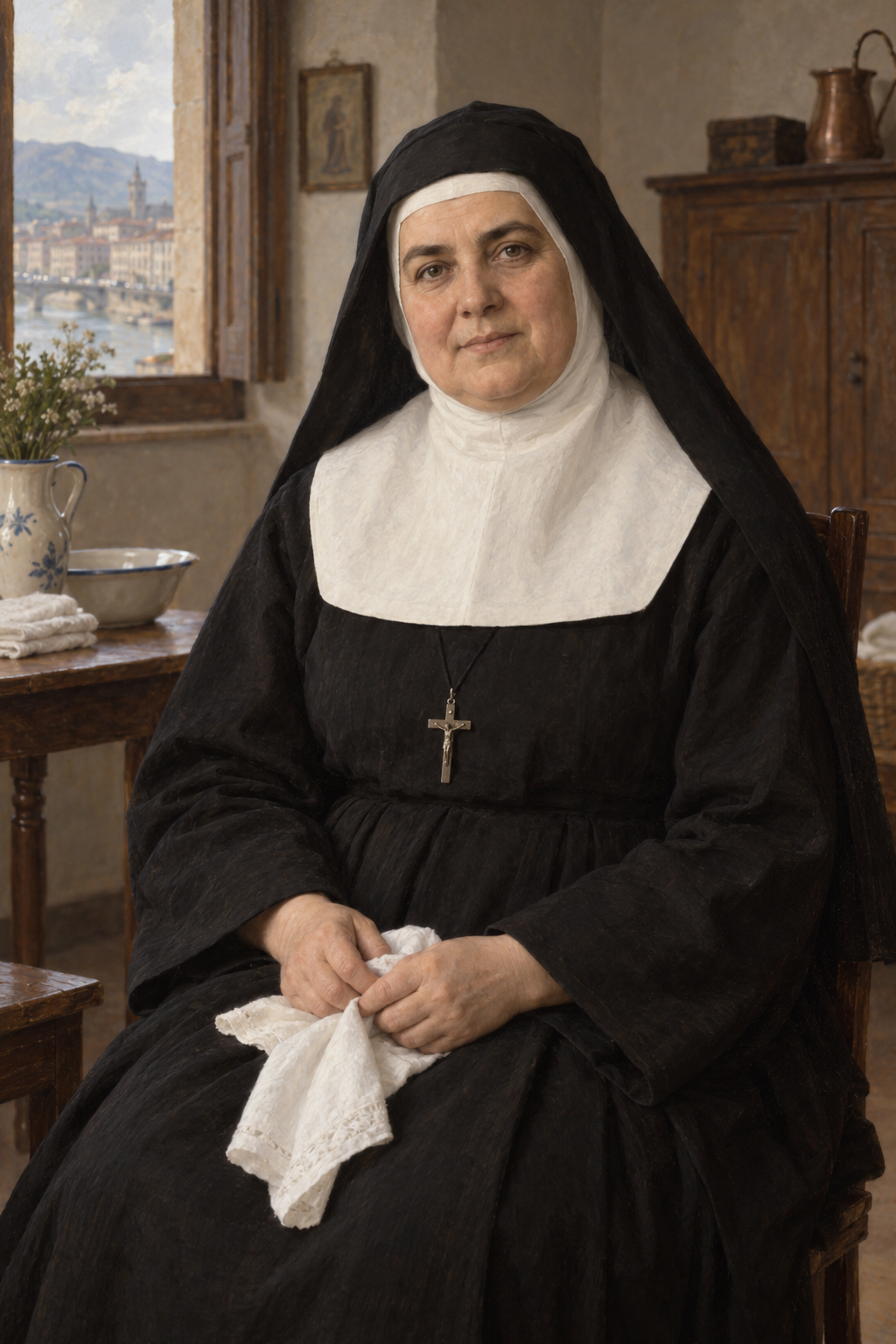
About María Josefa Sancho de Guerra
María Josefa Sancho de Guerra was born at Vitoria in Spain on September 7, 1842. Her father made chairs, and her mother cared for the household. After her father’s death, the family’s circumstances helped form a childhood marked by responsibility and religious devotion. As a teenager she went to relatives in Madrid for further education. On returning to Vitoria, she told her mother that she wanted to enter religious life. At first she was particularly drawn to a contemplative community.
Illness interrupted that plan. She eventually joined the Servants of Mary, a congregation devoted to nursing sick people. Yet as the time for vows approached, she remained uncertain about whether she should stay. She discussed her doubts with Soledad Torres Acosta and consulted Antonio María Claret. The congregation’s account remembers a period of prayer and reflection in which she tried to distinguish an enduring vocation from the particular form of life she had first chosen.
A new foundation took shape at Bilbao in 1871. The sisters’ historical chronicle describes a small group arriving without a settled home. A woman named Lina helped with their luggage and offered lodging. Through her connections they met the priest Mariano José de Ibargüengoitia, who became a supporter and cofounder of the work. Their meeting on July 25 gave practical direction to the plan: the women would devote themselves to assisting sick people. A religious project began with hospitality and introductions in an unfamiliar city.
Their first years required resilience. The same chronicle recalls the founder drawing water from a nearby public well, and the poverty and uncertainty surrounding the community’s beginnings. War and the siege of Bilbao brought hunger, danger and discomfort. The sisters continued developing their work under these conditions. Diocesan recognition came in 1874. She also travelled to Vitoria to explain the project to the bishop, who initially authorized the sisters’ ministry for a year. Their experience of care grew within the hardships of the city around them, while they also had to find the resources and stability needed for their own common life.
The congregation’s institutional history traces the steps that followed. Its constitutions received diocesan approval in 1874, a papal decree of praise followed in 1880 and definitive papal approval came in 1886. Houses opened beyond Bilbao, beginning with Castro Urdiales. By the founder’s death, the community had become a substantial religious institute. The development required rules, formation and recognized responsibilities as well as the willingness to enter a sick person’s home and undertake the immediate work of nursing.
María Josefa served as superior general until her death and spent many years forming the congregation’s members. The Institute of Theology of Religious Life describes her long responsibility for formation alongside her government of the community. The two tasks belonged together: new sisters needed to learn how to live a shared religious vocation while meeting the demands of caring for people whose illnesses and circumstances differed from one household to another.
Her letters give a more personal view of that leadership. In the correspondence discussed by the biographer Mª Icíar Elguea Isasi, she asks about the health of her sisters, the costs of building and the needs of new houses. Writing to Sacramento Miguel, a companion of the foundation, she urges her not to work beyond her strength. Practical administration and affection appear together. A shortage of funds or an overworked sister could require attention just as urgently as a new foundation.
The same biography follows her close involvement in preparations for sending sisters to Chile. She arranged recommendations and asked about modest lodging in a country unfamiliar to the community. Once the sisters travelled, she wanted regular news of their journey and the place where they would settle. These letters show how a founder remaining in Spain could accompany a distant venture through detailed questions, encouragement and a sustained desire to know how her companions were managing.
Illness limited the last twelve years of her life, but she continued directing the congregation. She died at Bilbao on March 20, 1912. John Paul II beatified her in 1992 and canonized her on October 1, 2000. In the canonization homily he recalled her work among sick people and the importance she attached to sympathy with the person who suffered. He presented nursing as care for the whole person, joining material assistance with spiritual and personal attention.
Her memory remains visible in Vitoria, where her birthplace on Herrería Street became a museum preserving objects associated with her life. The diocese’s report for the twenty-fifth anniversary of her canonization also describes a parish bearing her name and the sisters’ continuing service among elderly people. These places connect public remembrance with the work that shaped the foundation. The community’s presence carries forward a vocation formed through household nursing, religious formation and attention to people facing suffering and loneliness.
Wondering how to weigh the stories and sources? Learn how to read a saint biography.