Biography
Maria Katharina Kasper
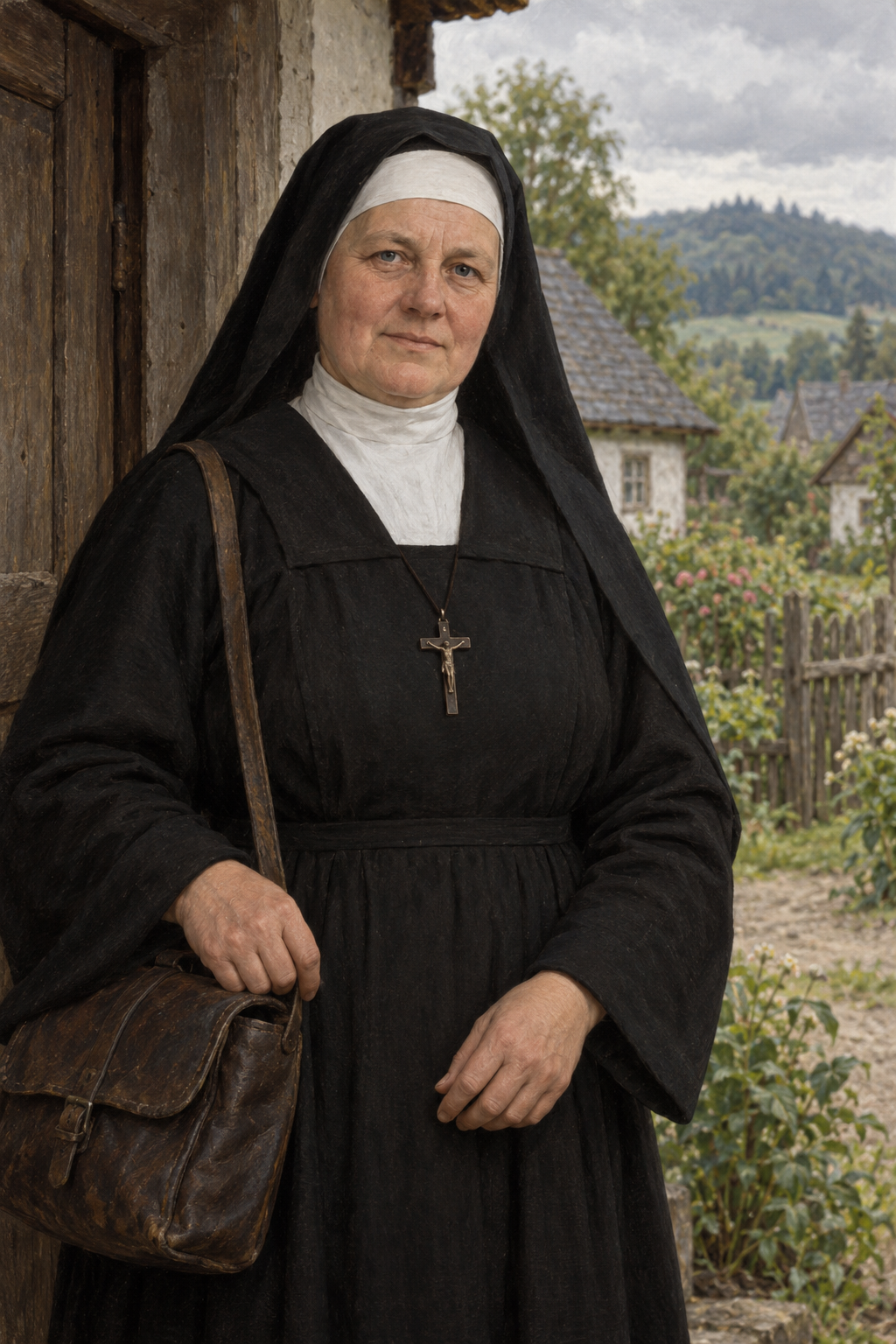
About Maria Katharina Kasper
Maria Katharina Kasper was born at Dernbach in the Westerwald on May 26, 1820. Her family farmed on a small scale and had little money. Her opportunities for schooling were limited, but she liked to read, especially the Bible and the Imitation of Christ. Work began early. She helped in the fields, gathered wood and took on difficult manual tasks, including breaking stones for road construction. The poverty surrounding her was part of her own daily experience.
The death of her father in 1842 made the family’s circumstances more difficult. Katharina worked to help support her mother while continuing to visit people who needed assistance. Other young women began to share her interests in prayer and practical care. She wanted a house where this work could develop, although she had few resources with which to build it. The effort depended on help from people in the parish and on persistence through setbacks.
The small house opened in 1848, after interruptions caused by heavy rain and illness. Katharina’s mother had died during the preparations. The house became a center for assistance to poor people in the surrounding area. The project drew further companions and the attention of Peter Joseph Blum, bishop of Limburg. He helped give the group an organized religious form. A shared desire to help was becoming a community with rules, leadership and a lasting place in village life.
On August 15, 1851, Katharina and four companions made their commitments before Bishop Blum at the parish church of Wirges. She took the religious name Maria and became the first superior of the Poor Handmaids of Jesus Christ. The name expressed the service she wanted the sisters to undertake. The congregation’s historical account remembers women who travelled on foot, entering homes to nurse sick people, read to them and help with household needs. Their work was closely connected with the places and people they visited. A pair of her worn shoes is still preserved at Dernbach, recalling the distances she covered.
The work spread beyond the Westerwald. The first sisters went to a neighboring country only eight years after the foundation, and the Netherlands later offered refuge during the Kulturkampf. In the 1860s, requests came for sisters to assist German emigrants in the United States. Sending companions so far away was difficult for Katharina, but the foundation gradually became international. Its expansion grew from people asking the sisters to stay and undertake the care needed in their own communities.
Katharina remained at the head of the congregation through successive elections. The Dicastery’s account describes houses bringing together nursing, care of elderly people and provision for children. Recognition by the Holy See followed the early years of local organization. The community’s different duties required more than a single kind of service: the sisters had to sustain households in which prayer, practical responsibilities and the needs of vulnerable people could coexist. Schools and institutions of care became part of that continuing development.
Her correspondence preserves the way she encouraged this shared life. In a Christmas letter she asked that spiritual gifts be sought first, remembering both the community and other people in its prayer. Other letters acknowledge the bustle of Advent and urge the sisters to find recollection within it. She wrote about peace in the heart and the house, and about supporting one another in the work they had undertaken. These concerns place her religious teaching within the ordinary pressures of a busy community.
She did not suppose that everything could be made perfect. In the letter numbered 182 in the congregation’s collection, she counsels continuing despite what remains incomplete. Another letter reminds the sisters to do what they can, trusting that God asks no more than that. Her advice brings determination together with a recognition of human limits. It offered a way of carrying on when a new beginning was difficult or daily responsibilities seemed greater than the strength available.
Katharina died on February 2, 1898. Paul VI beatified her on April 16, 1978. In his homily he recalled her care for poor children, sick people and the elderly, and the schools she had opened. He emphasized a holiness expressed in small daily duties and a generosity rooted in prayer. The account joined the founder’s personal poverty with the practical institutions that had grown from her response to the needs around her.
Pope Francis canonized her on October 14, 2018. In an interview that year, the congregation’s superior Gonzalo Vakasseril described the founder’s continuing importance for its international work. She emphasized the dignity of each person, irrespective of religion, social position or sex. Communities in different countries could respond in different ways while meeting the same needs for food, companionship, education and care. That continuing work carries forward a foundation begun among the poor households of a small German village.
Wondering how to weigh the stories and sources? Learn how to read a saint biography.