Biography
María Micaela Desmaisières
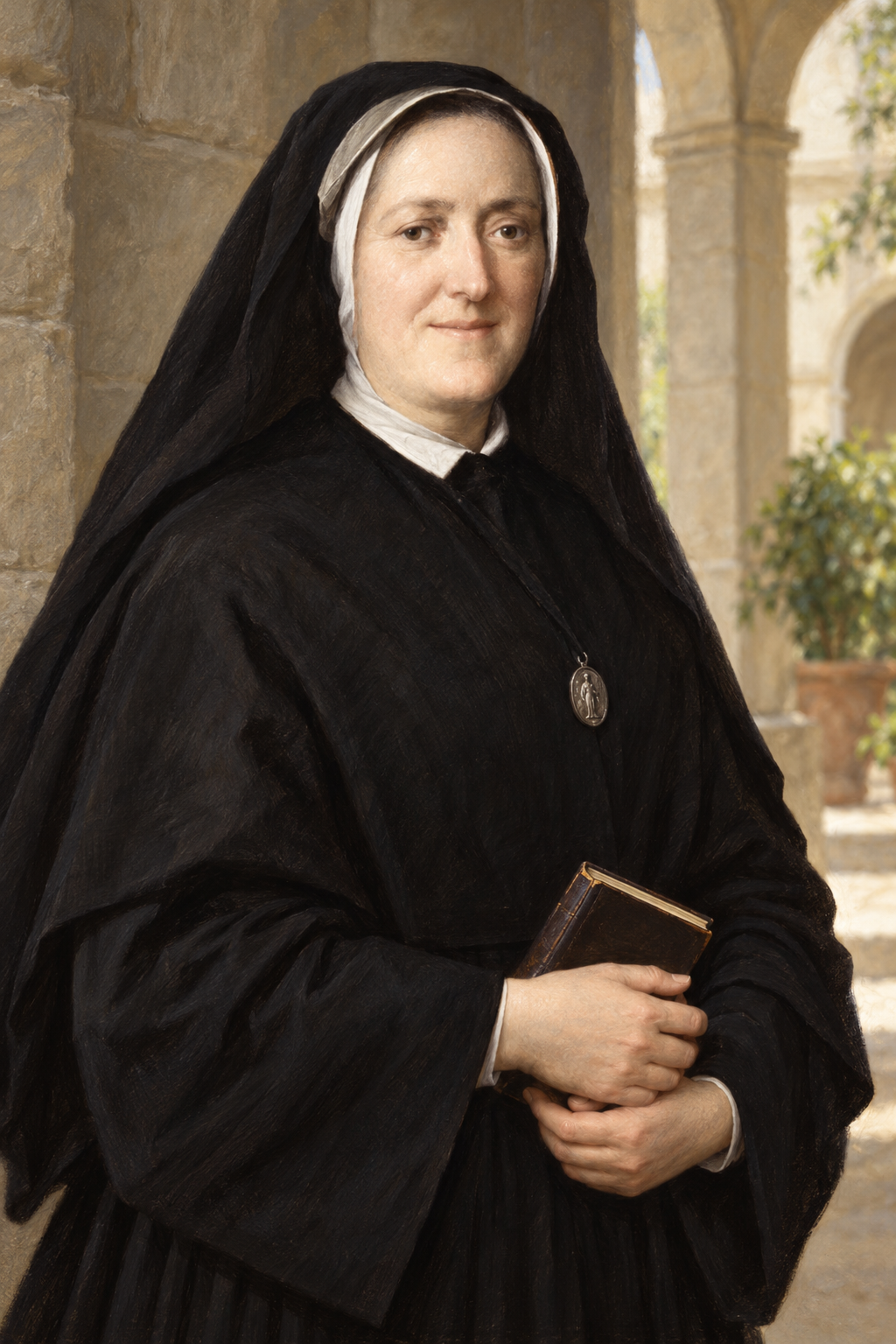
About María Micaela Desmaisières
María Micaela Desmaisières was a Spanish religious founder whose work grew from encounters with women leaving prostitution. Born in Madrid on January 1, 1809, she belonged to an aristocratic family and held the title of Viscountess of Jorbalán. Her interests included painting, music and charitable work. During a cholera epidemic in Guadalajara in 1834, she helped care for people who were ill. She had studied with the Ursulines in Pau.
Visits to Madrid’s Hospital of San Juan de Dios brought her into contact with women whose recovery did not end their difficulties. They needed somewhere to live and a means of supporting themselves after leaving hospital. In 1845 she helped establish a small house for them. At first a committee of women shared responsibility for the undertaking; maintaining it proved difficult, and the original support gradually fell away.
Micaela’s religious life also changed during these years. A retreat in 1847 under the Jesuit Eduardo José Rodríguez de Carasa deepened her commitment. Yet spiritual direction did not remove disagreement. Historian Raúl Mínguez Blasco describes Carasa’s attempts to regulate her dress, social appearances and religious choices. He discouraged her from joining existing communities, preferring that she continue her charitable work without religious vows.
In 1850 she moved into the house she supported. Her family opposed the decision, but a letter to her brother expressed her own longstanding desire for this life. Later, several churchmen questioned whether a charitable undertaking should become a religious congregation. Mínguez’s study shows her negotiating these obstacles through persistence and influential contacts, including the queen. Her correspondence complicates any picture of a founder simply following clerical instructions. The same historian cautions that her autobiography selects events for a religious purpose; it should be read alongside letters, rather than treated as a complete neutral record. Her case illustrates the room for action that some women found within religious institutions, even while accepting a spiritual framework that placed considerable authority in the hands of male advisers.
The community that emerged became the Adoratrices, Servants of the Blessed Sacrament and of Charity. Micaela took the religious name Mother Sacramento. Eucharistic adoration stood at the center of its prayer, alongside practical service. She made her perpetual profession on June 15, 1860. Her work expanded beyond Madrid to other Spanish cities, creating houses where religious life and the care of women were closely joined.
After Carasa’s death in 1857, Antonio María Claret became her spiritual director. He supported the institute materially and spiritually, helped revise its constitutions and encouraged her to write her autobiography. Their collaboration continued through her remaining years.
The congregation’s account describes admission as voluntary and says that corporal punishment was forbidden. The women were taught reading and writing as well as skills, including sewing, cooking and laundry work. Such training sought to provide a livelihood within the restricted employment opportunities available to women at the time. Micaela also hoped to develop professional workshops, though inadequate premises limited what she could establish. Financial difficulties prevented another ambition: providing each woman with a dowry on leaving. The account also describes play and shared recreation as part of household life. Its picture of education includes the conditions in which women lived together, alongside the skills they were expected to learn.
This work belonged to a nineteenth-century Catholic understanding of moral reform. The surviving congregational biography often describes the women through the language of sin and rescue. It also preserves Micaela’s insistence on listening to individuals, offering practical help and creating a cheerful household. Reading these elements together helps retain both the historical setting and the attention to daily needs that the community remembers. Religious instruction, useful work and personal care were interwoven in the institution she built.
In August 1865 Micaela went to Valencia during another cholera epidemic to help the community there. She contracted the disease and died that month. Sources commonly give August 24, although some congregational accounts print August 25. Seven houses had been founded by her death. Pius XI canonized her on March 4, 1934. Her story is remembered through her writings, the congregation she founded and communities that continue to bear her name.
Her feast is observed on June 15 in the Diocese of Sigüenza-Guadalajara, where an official diocesan 2020 bulletin also identifies her as a patron invoked against pandemics. That association recalls her care for people with cholera. The diocesan notice links this invocation to her journey to assist those who were sick, giving the patronage a specific connection with her final work in Valencia.
Specific communities name her as their patron: the parish of Santa María Micaela in Guadalajara and the Escuela Técnica Santa María Micaela in Talagante, Chile. The school’s regulations connect her example with its educational identity and daily work. These documented patronages keep her memory within the ordinary life of a parish and a school.
Wondering how to weigh the stories and sources? Learn how to read a saint biography.