Biography
María Natividad Venegas de la Torre
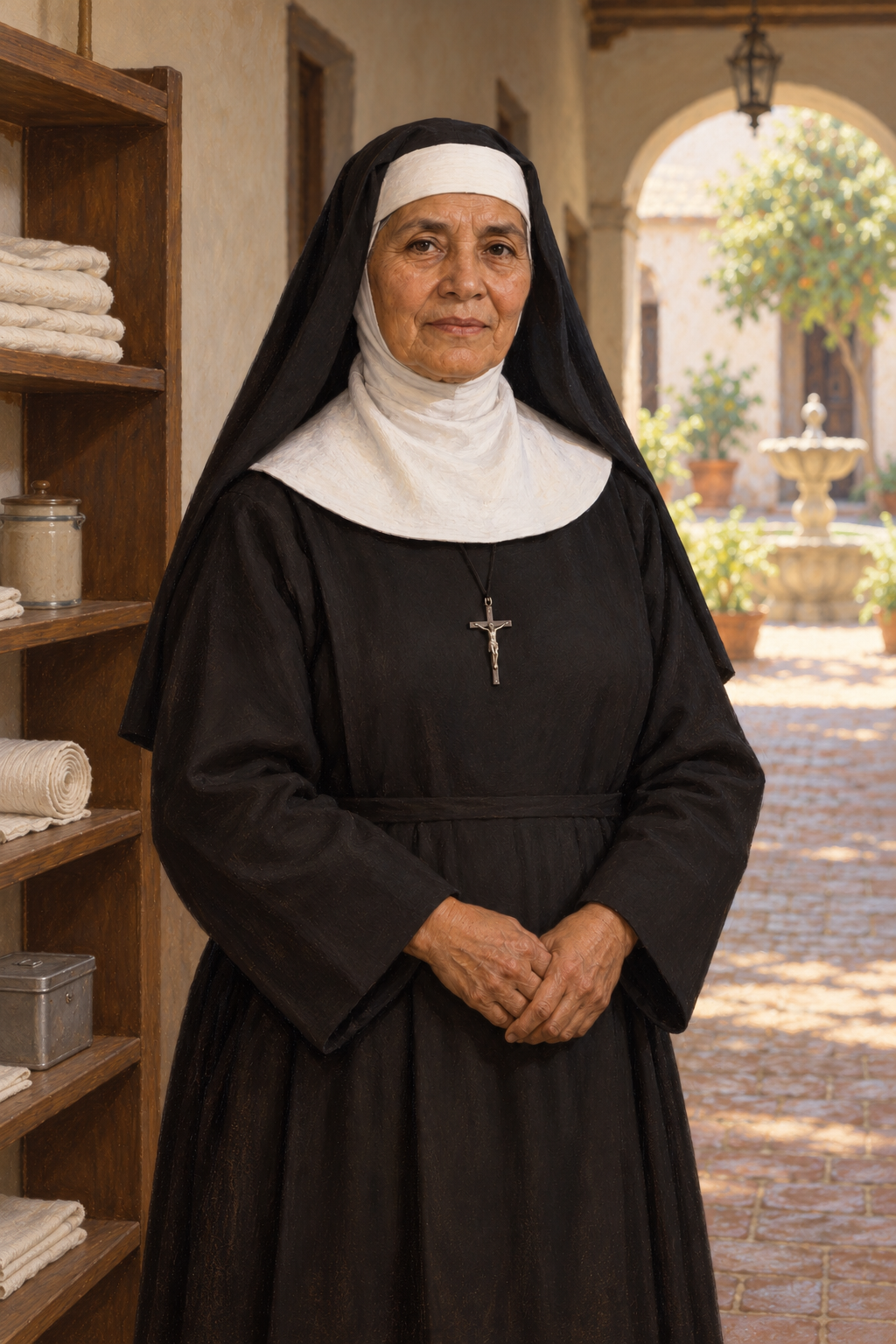
About María Natividad Venegas de la Torre
María Natividad Venegas de la Torre was born in the municipality of Zapotlanejo, Jalisco, Mexico, on September 8, 1868. Her early life unfolded within a practicing Catholic family. After losing her parents, she lived under the care of a paternal aunt. Religious life attracted her, but the vocation she eventually followed took shape through a gradual movement toward the care of sick people. A retreat at Guadalajara in 1905 helped bring that desire into a definite form.
She joined the women serving at the Hospital of the Sacred Heart of Jesus in Guadalajara. The hospital already had a history of its own. Héctor Jesús Solano Muñoz’s study traces its origins to María Guadalupe Villaseñor’s concern for poor sick people and the support of the priest Atenógenes Silva. A modest house of care opened in 1886, before the larger institution was built. Venegas therefore entered an existing work, whose nursing community she would help consolidate over the following decades.
Her duties brought her into several parts of hospital life. She began with nursing, later worked in the pharmacy and then took responsibility for the community’s accounts and expenses. Solano Muñoz records her service as assistant to the director from 1912 and her election as superior and hospital director in 1921. The progression joined direct care with the administration needed to sustain it. Medicine, supplies, money and the organization of the community all formed part of the work entrusted to her.
The official account remembers her humility and approachable manner with sisters, patients and other people who came to the hospital. Her devotion to the Sacred Heart gave a religious meaning to this care. She also showed particular attention to bishops and priests, understanding their ministry in relation to Christ. Her vocation developed within the hospital’s everyday relationships, where a religious commitment had to be expressed through the treatment of people rather than through a separate public career.
As superior, she helped give the community a stable canonical form. The New Catholic Encyclopedia explains her recognition as foundress through the constitutions she wrote, which received approval in 1930. That role did not erase the institution’s earlier beginnings. It concerned the organization of the religious family that had grown around its work. The rule provided a shared framework for women whose common life was directed toward the needs of patients and the responsibilities of service.
The task took place amid financial difficulties and a period of religious persecution in Mexico. Carlos Villa Roiz’s account describes her determination to keep the community faithful to its mission. The work required both firmness and a manner that others remembered as gentle. She resisted discouragement when it threatened the care of patients. Prayer accompanied the service, rather than becoming an excuse for leaving necessary duties undone. Her religious teaching thus remained closely connected with the obligations of the hospital.
In 1930 the community received diocesan recognition, and she made perpetual vows under the name María de Jesús Sacramentado. The official Norwegian church account connects that recognition with the approval of the constitutions she had prepared. The name expressed the Eucharistic devotion central to her life. The nursing community now had a more settled religious identity, while the care that had first drawn the women together remained at the center of their vocation.
She died at Guadalajara on July 30, 1959. The Church opened her cause in 1978, and John Paul II beatified her on November 22, 1992. The process recognized a life lived largely within the work of one hospital and its religious community. Her public recognition came after the long responsibilities of nursing, government and the drafting of a rule had ended. The congregation continued carrying out the vocation that had developed through those years.
Her final illness began only a few days before her death. Villa Roiz’s account describes the reception of the sacraments and the funeral that followed. The community’s remembrance centered on the woman whose service had become inseparable from its hospital life.
John Paul II canonized her on May 21, 2000. In his homily he linked her Eucharistic devotion with charity toward poor and sick people. He recalled that her service continued as physical strength declined and trials accumulated. The recognition presented the founder’s life as a form of lasting dedication to suffering people, rooted in prayer and expressed through the community she had helped establish. She became the first Mexican woman to be canonized.
The Daughters of the Sacred Heart of Jesus describe their continuing mission in terms of accompanying sick, elderly and poor people. Their own account places the congregation’s origins at Guadalajara in 1886 and remembers Venegas alongside Atenógenes Silva among its founders. Hospitals, homes for elderly people, health ministry and catechesis remain part of that inherited work. Its later extension beyond Mexico carries forward a vocation formed through the ordinary demands of caring for people whose suffering calls for help.
Wondering how to weigh the stories and sources? Learn how to read a saint biography.