Biography
María Romero Meneses
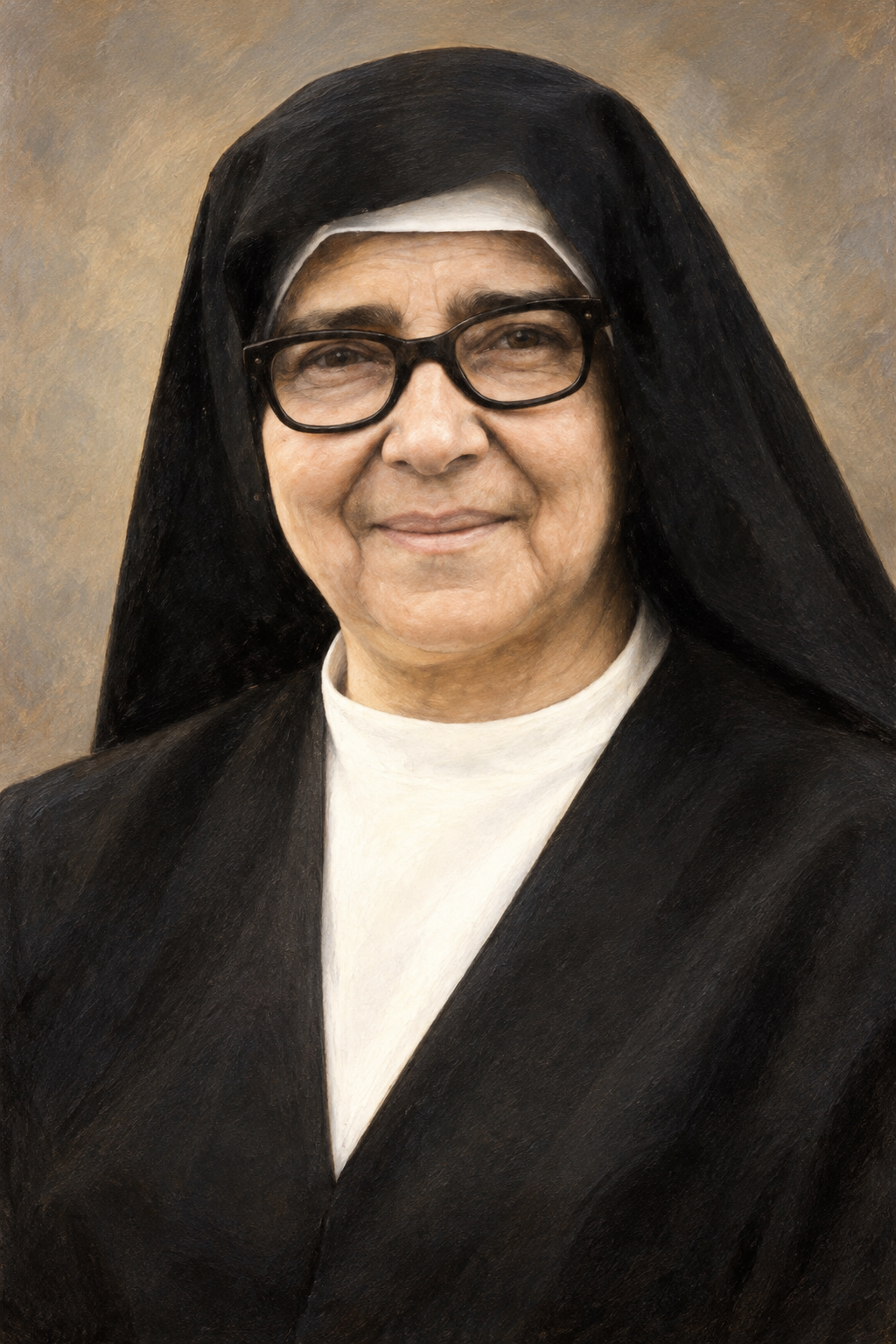
About María Romero Meneses
María Romero Meneses brought her work as a teacher into the poor neighborhoods of San José, Costa Rica. Born in Granada, Nicaragua, she grew up in a prosperous family and studied music and art. She entered the Daughters of Mary Help of Christians and made her final profession in 1929. Assigned to Costa Rica in 1931, she taught music, drawing and typing while developing religious instruction and practical assistance beyond the school. Her pupils became volunteers in that work.
Her early artistic education included piano and violin as well as drawing and painting. She also attended the Salesian sisters’ school. Father Emilio Bottari, her spiritual director, helped her discern a religious vocation, and she entered the congregation in 1920. She was one of eight children.
Her classroom manner did not always meet her community’s expectations. A recollection published by Ana María Cavallini, quoted in a later Salesian study, describes pupils confiding their troubles and successes to Romero, while she struggled to maintain discipline. She lost responsibility for supervising boarders because of that difficulty. The account preserves both the affection she inspired and a practical weakness in her teaching.
The same study quotes former pupil Emma Marta Holmann’s testimony that contact continued for more than thirty years, through letters, telephone calls and visits. Holmann remembered seeking advice about her married life. For this pupil, Romero remained a trusted adviser long after school.
Romero also examined the teaching materials she used. In a letter of January 2, 1964, summarized by Marianela Fernández Alfaro, she requested First Communion catechism booklets from Francisco E. Erdey in Mexico and proposed specific revisions to bring them into line with church guidance.
Fernández describes further educational plans, including a kindergarten, a commercial school and evening classes for working women. The proposal that took shape was an artisan school, later developed into the Escuela de Orientación Social.
The young volunteers, known as misioneritas, combined catechism with visits and material help. Historian Nidia Varela Aguilar places this outreach within Catholic efforts to respond to Protestant evangelization and communist organizing. The movement’s own chronicle expressed those concerns in explicitly adversarial terms. It was a Catholic evangelizing project as well as a response to poverty. Varela also describes tensions within the sisters’ community as the growing number of visitors exceeded the school’s space. A small building on congregation land became the basis of the Casa de María Auxiliadora. Its activities eventually included vocational classes, a medical clinic and help with housing. The clinic served people outside social-insurance coverage; former students helped teach sewing, embroidery and cooking.
A letter to her superior Ersilia Canta, dated March 11, 1973, shows the practical limits behind the housing project. Romero reported that only three houses had been built so far because funds were scarce and construction costly. She also described her continuing work with young women, including singing lessons accompanied by religious instruction. The same letter turned to the devastation after Nicaragua’s December 1972 earthquake. She wrote of visiting her sister, who had lost most of her property, and of families sheltering people displaced by the disaster. Her gratitude for international help appeared alongside fears of looting and communism. These were her own observations and anxieties, rather than a detached assessment of the disaster.
Housing expanded through the lay association ASAYNE. The later testimony collected by Varela distinguishes the seven houses standing at Romero’s death from the much larger settlements developed afterward. Her collaborators continued the project after losing the person who had inspired it.
Her spiritual writing connects the same practical concerns with prayer. In a passage selected for her liturgical office, she asks to relieve hunger, thirst and suffering, comfort anxious people and help reconcile those divided by anger. It presents service as a way of expressing divine mercy, joining material assistance with her desire to lead others toward God. The passage survives here through an edited translation of her writings, rather than an original manuscript.
The selected text also asks for patience and understanding in the person offering help. Romero wished her conduct to make God’s kindness visible to those she met. Her language addresses both outward need and the character of the helper, placing humility alongside the wish to relieve suffering.
She died on July 7, 1977, while resting at Las Peñitas in the department of León, Nicaragua.
Her body was taken to Granada before its return to Costa Rica. In a recollection preserved by Gordillo, Juan Burgos described arranging an aircraft through a friend and driving the coffin to Managua’s airport. His account records the practical arrangements made by friends and religious sisters after her death.
John Paul II beatified her on April 14, 2002. His homily linked her Nicaraguan birth, Salvadoran formation and Costa Rican service, and called for the works she founded to remain faithful to their purpose.
Wondering how to weigh the stories and sources? Learn how to read a saint biography.