Biography
María Vicenta de Santa Dorotea Chávez Orozco
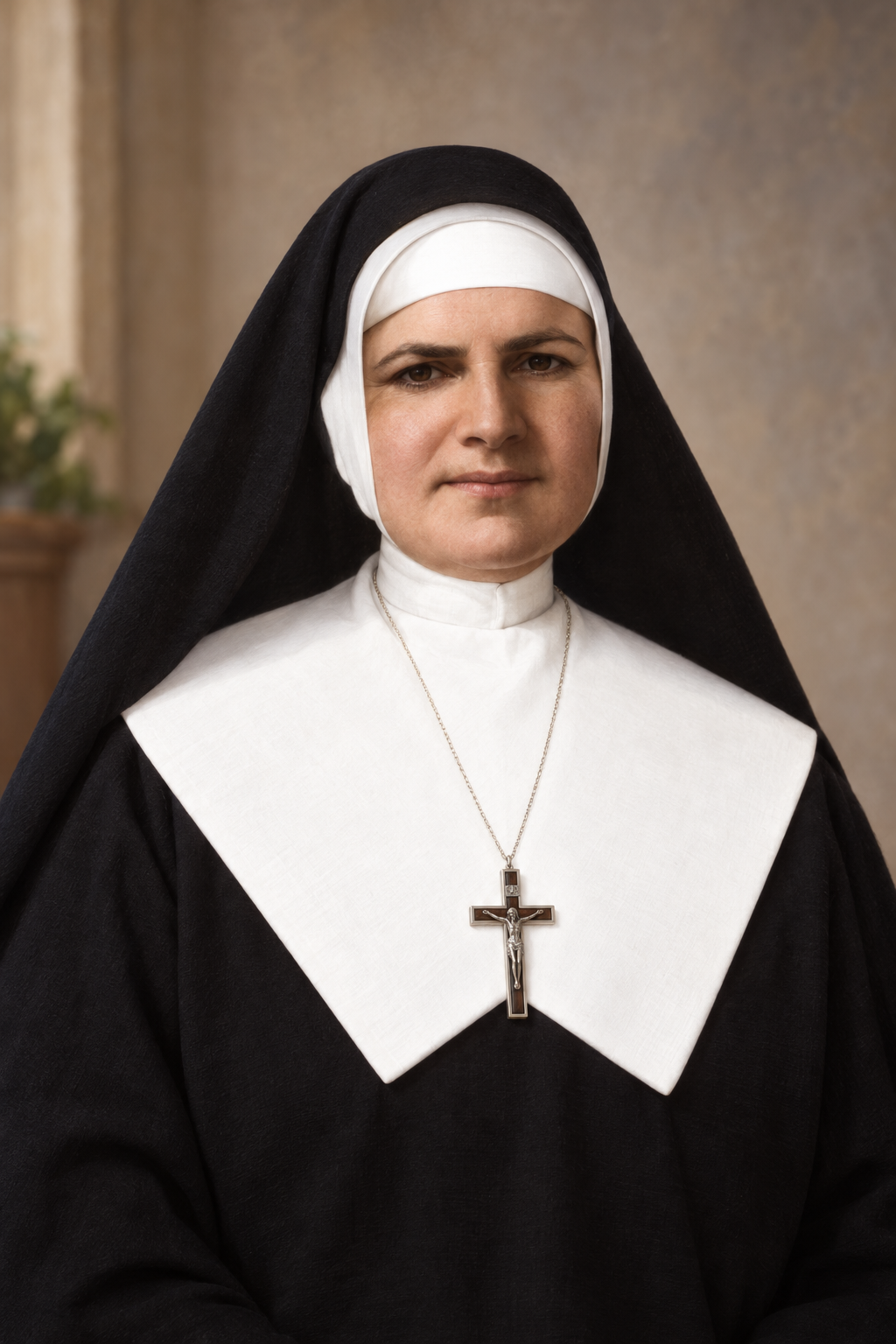
About María Vicenta de Santa Dorotea Chávez Orozco
María Vicenta de Santa Dorotea Chávez Orozco grew up in Cotija, Mexico, where her brother Eligio taught her at home. Her family later moved through Cocula to Guadalajara, settling in the working district of Mexicaltzingo. There, parish priest Agustín Beas helped establish a small hospital supported by women of the Saint Vincent de Paul association.
In 1892, Chávez Orozco entered the Hospital of the Holy Trinity as a patient. After recovering, she returned to care for sick people. She and two companions made private religious vows in 1895.
The nursing community received diocesan approval in 1905. Its formation involved several people: priest Miguel Cano Gutiérrez helped organize it, and Franciscan sister Isabel Ruiseco served as its early superior. Chávez Orozco received the habit in 1908 and later became mistress of novices.
Born Dorotea, she took the religious name María Vicenta de Santa Dorotea in 1910. She made her canonical profession in 1911 and was elected superior general in 1913.
Under her leadership, the sisters’ work extended to hospitals, clinics and homes for elderly people. Their communities served towns across Jalisco and later worked in Puebla, Torreón and Culiacán. Her years of leadership included a period out of office during the religious conflict of the 1920s.
The sisters staffed privately owned hospitals. According to Tomás de Híjar’s historical account, the community itself held no property and depended on assistance rather than rental income to sustain its work.
The Church’s decree on her virtues describes a dispute over the community’s direction. In 1925, a new hospital director sought to introduce rules proposed by two sisters; Vicenta resisted the changes and was asked to leave the leadership. She then served as superior at Zapotlán before being elected superior general again in 1929. The decree places the end of that later term in 1942. This account distinguishes her long responsibility for the congregation from an uninterrupted tenure, and records that disagreements within the institution accompanied the pressures from outside it.
The sisters continued caring for wounded soldiers when their hospital at Zapotlán was used by the military in 1926.
The virtues decree also records assistance beyond the hospital wards. Vicenta helped poor seminarians and received elderly priests who lacked care, as well as priests facing difficulties. It presents these actions as part of her concern for both material and spiritual needs.
A later congregational account recalls that, as her eyesight failed, another sister read Scripture aloud to her. It also describes her encouragement to read biblical accounts of healing to patients.
Chávez Orozco died in Guadalajara on July 30, 1949.
The formal examination of her life began in Guadalajara with an informative process in 1966–1967, followed by another inquiry in 1977–1981. The Congregation for the Causes of Saints reviewed the proceedings and her virtues. On December 21, 1991, John Paul II authorized the decree recognizing her heroic practice of Christian virtues. This was a stage in her cause, before beatification.
The miracle considered for her beatification concerned a seven-year-old boy, Miguel Tejeda, whose right foot was seriously injured by a cart wheel in Tuxpan, Jalisco, in November 1951. According to the Church’s decree, doctors considered amputation, but his mother objected. They cleaned the wound, removed damaged tissue, repositioned the bones and applied a cast. The boy, his mother, sisters of the congregation and others prayed for Vicenta’s intercession. The decree reports that his foot healed without amputation and that its function returned. A diocesan investigation followed in 1970–1971. In 1996, the congregation’s medical consultants judged the recovery rapid, complete, lasting and scientifically unexplained; theological and episcopal reviews followed. The decree of July 7, 1997 recognized it as a miracle attributed to her intercession. This is the Church’s assessment of the reported healing, rather than an independent medical finding.
John Paul II beatified her on November 9, 1997. In his homily, he named the Servants of the Most Holy Trinity and of the Poor as the congregation she founded in Guadalajara. He emphasized its care for sick and elderly people and the continuation of that work in hospitals and clinics. His interpretation joined her religious convictions to her nursing vocation: serving suffering people was, for her, a way of serving Christ. He described her strong character as shaped by difficulties, and used the image of a cornerstone to explain her place in the institute. These were the pope’s spiritual judgments about her life and its significance.
Guadalajara’s 2024–2025 liturgical calendar provides an optional memorial on July 19.
Addressing pilgrims the following day, John Paul II returned to her work in hospital wards. He identified love for Christ crucified as the motive behind her particular concern for sick, elderly and poor people. He also recalled her efforts to help patients understand suffering through Christian faith. His address asked the congregation to continue its vocation with simplicity and self-sacrifice. The remembrance therefore embraced both the practical service of nursing and the religious companionship offered to patients, while recognizing that the sisters would carry that work forward.
Wondering how to weigh the stories and sources? Learn how to read a saint biography.