Biography
Mariam Thresia Chiramel
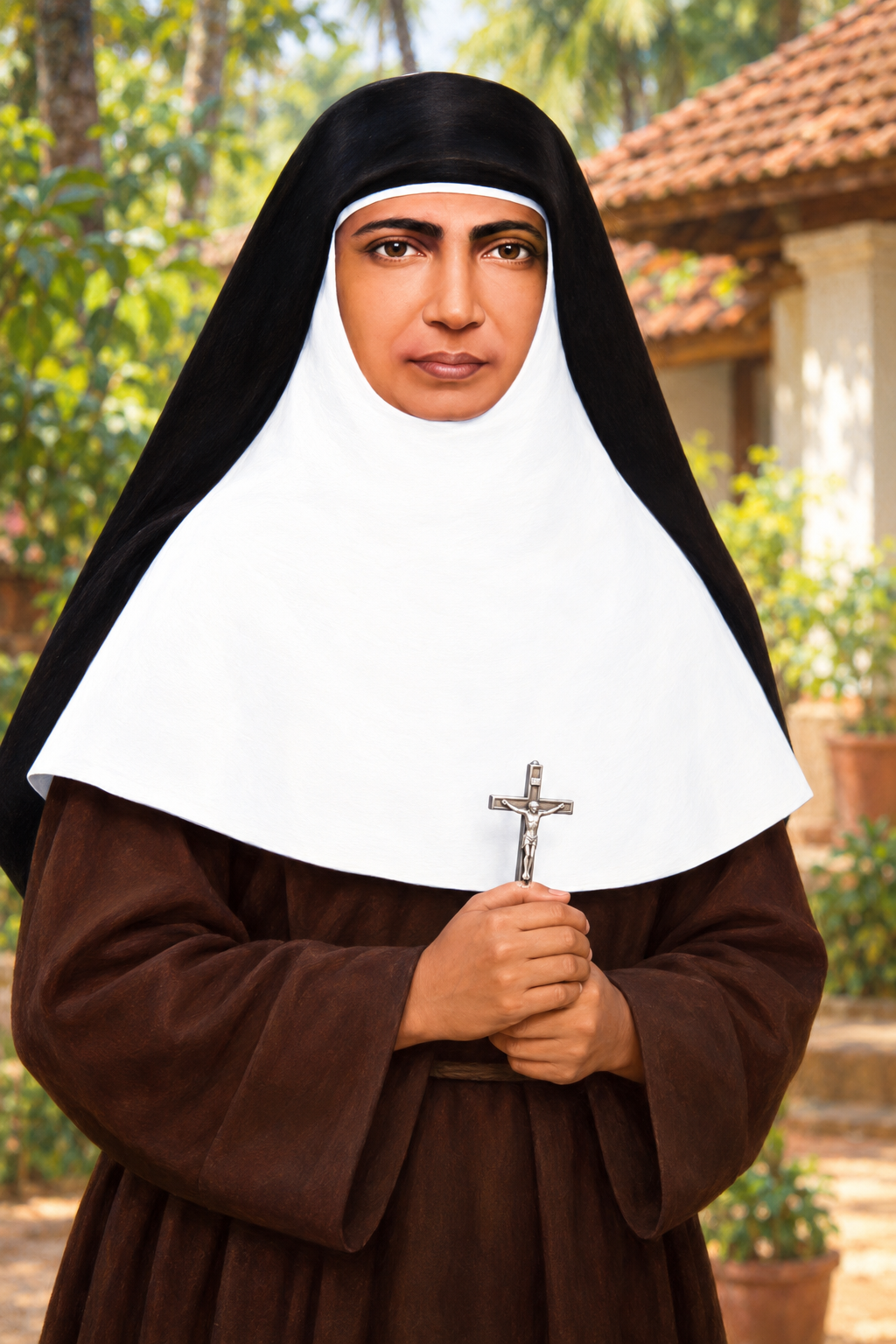
About Mariam Thresia Chiramel
Mariam Thresia Chiramel was an Indian religious founder whose service centered on families. She was born on April 26, 1876, in Puthenchira, Kerala, and belonged to the Syro-Malabar Catholic community. Her mother died when she was twelve. The family had lost much of its former wealth, and the New Catholic Encyclopedia describes the difficulties created by her father’s and elder brother’s drinking.
Prayer and service grew together in her life. With three companions, she visited people who were poor, ill or isolated. Going out without a male escort challenged local expectations of women and brought criticism. Their work crossed boundaries of caste and religion. Her religious biographies also report visions, ecstasies and stigmata. These belong to the accounts of her mystical life, rather than independently established physical events. Church authorities initially questioned her experiences and ordered exorcisms between 1902 and 1905. The Vatican biography records fifty-five surviving letters, most addressed to Vithayathil for spiritual advice.
Her wish for solitude took time to find a lasting form. She spent a period with the Carmelite community at Ollur but concluded that she was called to a different way of life. The congregation’s history says that local people also asked for her return. A house was built at Puthenchira in 1913 with help from her spiritual director, Joseph Vithayathil, and other supporters. When funds ran short, she sought donations with a companion.
The House of Solitude became a home for prayer and service rather than a withdrawal from everyone around her. On May 14, 1914, Bishop John Menachery formally established the Congregation of the Holy Family, with Mariam Thresia as its superior. The community adopted an adapted rule from the Holy Family Sisters of Bordeaux. A girls’ school followed at Puthenchira in 1915, and education became an important part of the sisters’ work. A boarding house opened at Thrissur in 1918 to support the sisters’ English education. The institutional history links this undertaking with preparation for the congregation’s expanding responsibilities in teaching and service to families.
The roles of the people involved in founding the congregation later required careful distinction. Jossy Veliyan’s study, discussing research by George Nedungatt, identifies Mariam Thresia as the person who conceived its mission and formed its first members. Vithayathil supplied indispensable spiritual and practical support, while the bishop gave the community its formal ecclesiastical establishment. These responsibilities were related, but they were not identical. The distinction preserves her initiative while recognizing the help that made the foundation possible.
Veliyan also notes that the title of cofounder can be used in different ways and can therefore obscure the particular contribution of each person. In this case, the evidence includes accounts of Mariam Thresia’s family visits before the congregation formally existed. Her work with her companions preceded the legal recognition of their community. The history of the foundation consequently begins with their shared prayer and service, as well as with the later act of church authority.
Her health declined after a leg injury, complicated by diabetes. She died at Kuzhikkattussery on June 8, 1926.
The congregation’s account describes treatment at Chalakudy, followed by her return to Kuzhikkattussery shortly before death. Sisters gathered with Vithayathil to pray beside her. Her burial in the convent chapel became the focus of continuing remembrance, and the community preserved her writings and testimony about her life.
John Paul II beatified her on April 9, 2000. In his homily he emphasized the relationship between her contemplative prayer and love for people in poverty. He also recalled the misunderstandings and spiritual trials she had faced. His account presents her vocation as something patiently discerned over time, expressed through visits, advice and prayer. The commemoration therefore looked beyond extraordinary experiences to the sustained service through which she lived her faith.
Pope Francis canonized her on October 13, 2019. In preparation, the congregation asked each sister to visit at least fifty families. Superior General Sister Udaya explained that the visits would attend to spiritual and other needs. She also described plans for housing assistance and support for students, people who were sick and couples preparing for marriage. These were practical ways the sisters chose to honor their founder. Udaya said that the congregation planned to spend four times as much on charitable projects as on the canonization celebrations. Preparation also included retreats and shared prayer, joining practical commitments with the community’s religious observance.
The congregation calls Mariam Thresia a patroness of families. The Causes of Saints account also records invocation by couples without children; her feast is June 8.
Her legacy continues in institutions such as the Society for Family Harmony at Santhitheeram in North Paravur. Its stated work includes counseling, educational programs and support for vulnerable women. The society describes its mission as an expression of the spirituality it received through her congregation. Such work carries the remembrance of family visits into different circumstances and forms of care.
Wondering how to weigh the stories and sources? Learn how to read a saint biography.