Biography
Marie-Anne Blondin
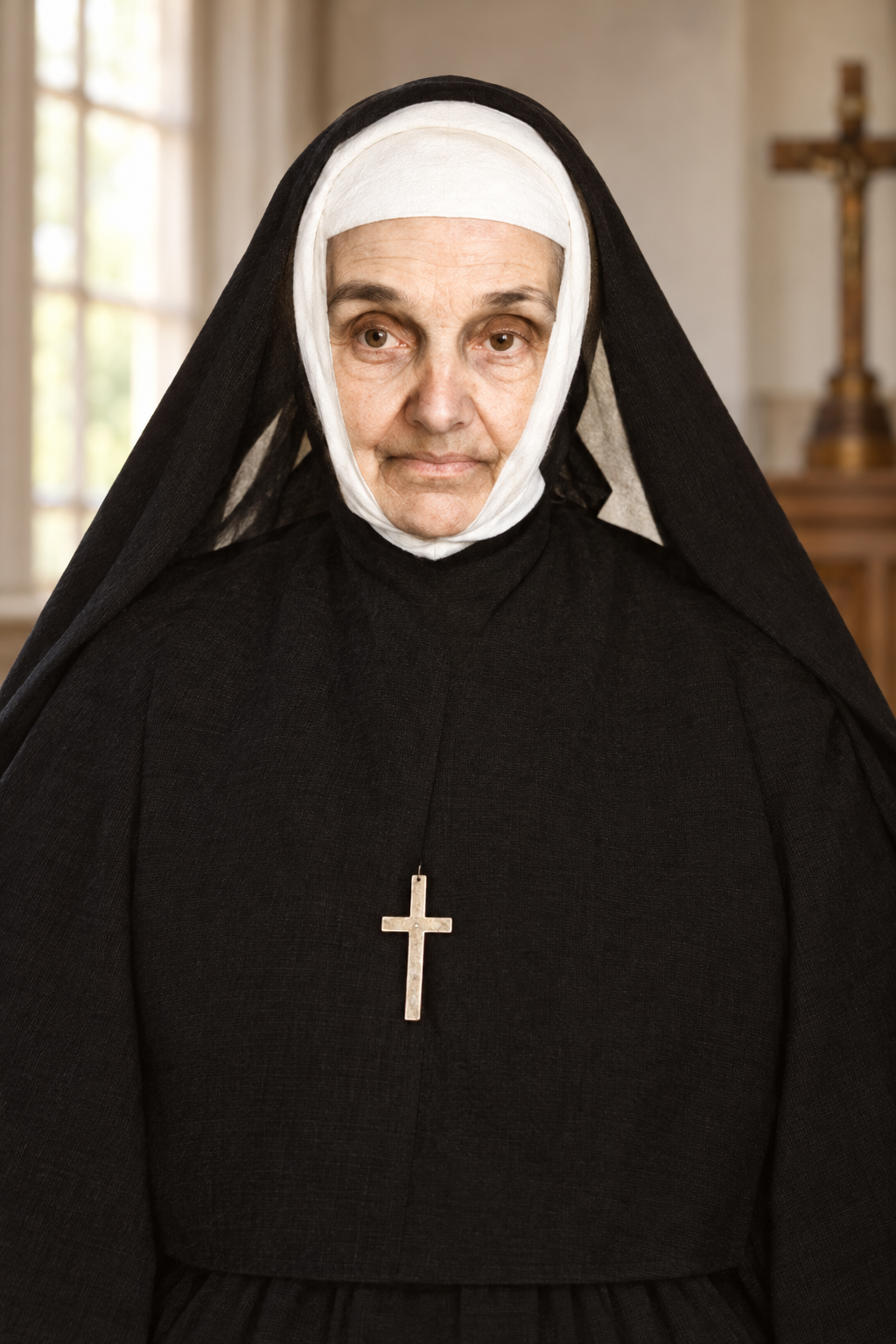
About Marie-Anne Blondin
Esther Sureau dit Blondin was born in Terrebonne, Lower Canada, on April 18, 1809. As an adult, she studied with the Congregation of Notre-Dame, but illness ended her novitiate. She began teaching in Vaudreuil in 1833.
The Sisters of Saint Anne describe an additional purpose of her school: preparing young women to teach in rural classrooms. Blondin had herself learned to read and write after working as a domestic servant. Her experience of limited schooling became part of her work to improve access to education for poor country children.
Her teaching work included managing a school and finding colleagues with complementary skills. In his 1922 history, Élie-J. Auclair describes her appointment as director in 1839 and her recruitment of assistant teachers for English and music. He reports that her classes reached forty or forty-five pupils. His account also places her in the parish association of the Children of Mary, where she led readings and religious exercises when the priest was absent.
In 1848, she proposed a teaching congregation to Bishop Ignace Bourget of Montréal. According to the Vatican biography, rules separating boys and girls made schooling unaffordable for parishes unable to maintain two schools. Her proposal included mixed classes. Bourget allowed an initial experiment.
The first community took shape through practical decisions as well as religious commitments. Auclair reproduces Bourget’s August 1848 permission for women to prepare to teach both sexes and live under a common rule; the bishop was not yet promising recognition as a religious congregation. Auclair also describes a September letter signed by Blondin and six companions. They requested rules, appointed officers, a religious dedication, and decisions about their name and clothing. The parish priest supplied provisional rules and named Blondin director. The schoolhouse became their first convent.
Responsibilities within the young community changed before the first religious profession. The later decree on her virtues records that, in May 1849, the bishop entrusted Blondin with forming the young women and managing the community’s property, while appointing another companion as superior. The Sisters of Saint Anne were founded at Vaudreuil on September 8, 1850, with Blondin as their first superior under the religious name Marie-Anne. She also became novice mistress. Her role therefore combined administration with preparing new members for their religious life.
The growing community moved to Saint-Jacques-de-l’Achigan in 1853. There, disagreement with its chaplain, Louis-Adolphe Maréchal, brought her leadership to an end. Historian Eugène Nadeau describes a struggle over the chaplain’s interference in community affairs. Bourget removed her as general superior in August 1854. She subsequently led the convent at Sainte-Geneviève.
That appointment did not end the difficulties. The congregation’s history records a second removal in 1858, followed by a return to Saint-Jacques. She later worked as sacristan and undertook other manual duties. The motherhouse moved to Lachine in 1864. Before her death there in 1890, she renewed her forgiveness of Maréchal.
The Vatican biography describes the laundry as a place where she worked alongside novices and spoke about the value of their work. It also records the confiscation of her correspondence with Bourget, illustrating the restrictions imposed on her within the community she had founded.
Later appointments to advisory offices did not restore her effective authority, according to Nadeau. She died at Lachine on January 2, 1890. By then, the sisters worked in forty-two establishments across North America.
The congregation’s recovery of her story continued after her death. A series of talks in 1917 drew on people who had known her. In 1950, Archbishop Paul-Émile Léger authorized the beginning of official work toward recognition of her holiness. Nadeau’s full biography appeared in 1956.
The official cause record identifies another step in recovering her history: in 1919, superior general Marie-Léopolda Lécuyer encouraged systematic archival searches for documents concerning the founder. A diocesan inquiry followed in Montréal between 1955 and 1959. After historical and theological review, John Paul II formally recognized her heroic virtues on May 14, 1991. This was the Church’s judgment about her Christian life, preceding her later beatification.
A separate decree concerned Marguerite Prévost, who became gravely ill after abdominal operations in 1991. According to the decree, her priest brother, sisters of the congregation and friends prayed for Blondin’s intercession. Prévost recovered and left hospital that December. The Vatican’s medical advisers judged the recovery rapid, complete and lasting, and considered the disappearance of a serious intestinal fistula medically unexplained. Theologians then considered the attribution to Blondin’s intercession. On June 28, 1999, John Paul II approved the healing as a miracle. This account reports the Church’s investigation and religious conclusion; it does not independently establish a supernatural cause.
Pope John Paul II beatified Marie-Anne Blondin on April 29, 2001. In his homily, he connected her religious vocation with the education of poor rural children. He emphasized her continuing concern for the formation of teachers despite losing her position of leadership. His tribute presented prayer and practical service to the sisters as enduring parts of her life.
Wondering how to weigh the stories and sources? Learn how to read a saint biography.