Biography
Marie-Clémentine Anuarite Nengapeta
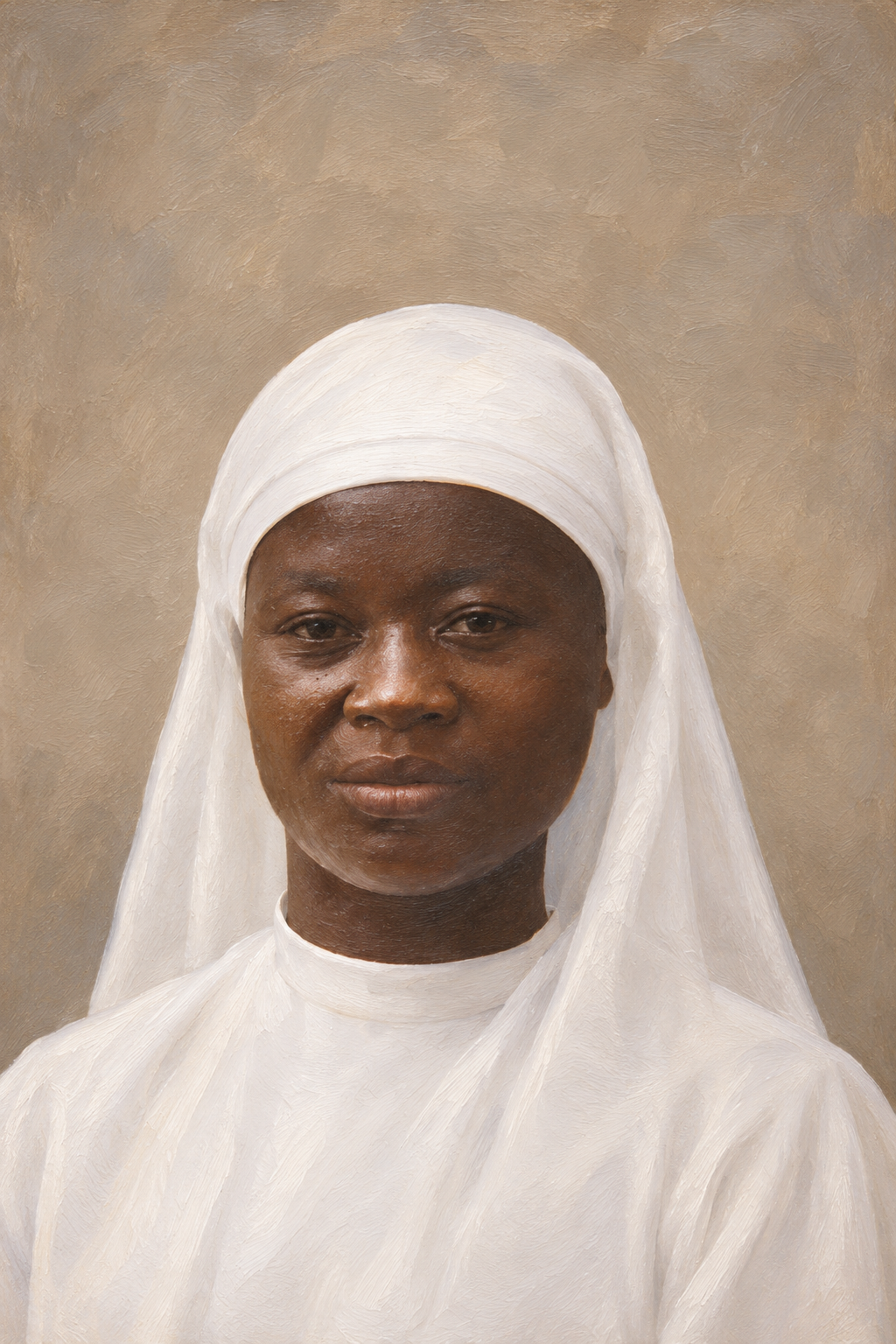
About Marie-Clémentine Anuarite Nengapeta
Marie-Clémentine Anuarite Nengapeta lived her religious vocation through teaching and the daily work of a community in northeastern Congo. The current Catholic profile places her birth at Wamba in December 1939. She received baptism as a child alongside her mother. The account does not present her as a person without difficulty or limitation. It remembers a lively temperament, a capacity for humor and a willingness to work at personal change. Her later recognition grew from this ordinary life as well as from the circumstances of her death. The papal account places her life between Wamba and Bafwabaka, in the region it calls Upper Zaire.
The names attached to her life reflect different stages of that story. Alphonsine was her baptismal name. The Vatican Radio account explains that Anuarite, originally her sister’s name, was entered for her at school and remained in use. When she made her religious profession in 1959, she took the name Marie-Clémentine. Her vocation led her to the Sisters of the Holy Family at Bafwabaka, known by the Swahili name Jamaa Takatifu. Her first religious profession was celebrated on 5 August 1959.
This was a diocesan congregation, founded at Bafwabaka in 1936 by Bishop Verfaillie. The Dehonian account identifies Bishop Joseph Wittebols among the people who accompanied her spiritual formation. It describes prayer, humility and readiness to serve as central concerns in her life. This places her within a local religious community and a particular network of teachers and church leaders, rather than presenting her vocation as an isolated act. The Dehonian dossier also reproduces short passages attributed to her writing. They express concern about preserving faith and pray for strength when confidence in herself was not enough.
Teaching occupied a substantial part of her short life. She also worked as a sacristan and cook in the community. The Vatican Radio account remembers her care for students, her welcome to other people and her attention to sick people. It also acknowledges that study required effort and that managing her temperament was an ongoing task. Those details keep the account close to daily responsibilities. Her service involved lessons, shared work and the effort to live with others, without depending on extraordinary public achievements.
In November 1964 Simba fighters detained the sisters at Bafwabaka. Anuarite joined the other members of the community, and they were taken first to Ibambi and then to Isiro. The Dehonian account recalls her urging the sisters to remain together and to pray during their detention. In Isiro the women faced sexual coercion. Anuarite repeatedly refused the demands made of her. She was beaten and killed in the early hours of 1 December. The account preserves her reported words of forgiveness toward the person attacking her.
Pope John Paul II beatified her at Kinshasa on 15 August 1985. The Catholic recognition honored her as a religious sister and martyr. Its account connects her final resistance with the commitment she had freely made in religious life.
The remembrance of her life continued in the Congolese Church. During the fiftieth anniversary in 2014, the bishops’ conference planned celebrations throughout the dioceses. Its secretary-general, Léonard Santedi, described a pilgrimage to Isiro and plans for a sanctuary there. The report identified Wamba and Isiro as the principal places linked with the commemoration. These were plans announced for the jubilee, not a claim here that every proposed building or celebration was subsequently completed. They show the continuing place of her memory within the country where she lived.
The bishops also connected that memory with the country’s experience of violence. Santedi presented her witness as a point of reference for Catholics and for other Congolese people. The report emphasized reconciliation, dignity and respect in a society marked by armed conflict and violence against women. It treated forgiveness as a response to violence, without denying that violence had occurred. This public interpretation extended the remembrance beyond the devotional life of her congregation.
A later anniversary in 2018 placed particular emphasis on young people. Bishop Julien Andavo Mbia of Isiro-Niangara presided at the gathering, joined by Bishop Dieudonné Madrapile Tanzi of Isangi. Pilgrims came from nearby towns and other dioceses, as well as from outside the country. The report describes a celebration at a site intended for a shrine. Again, it records a particular gathering and its stated purpose, rather than establishing the later completion or present condition of the proposed sanctuary.
The same report situated her remembrance within concern about violence against women and girls. The bishops’ appeal to young people focused on steadfastness in Christian life. Anuarite’s specific place in that remembrance remains that of a Congolese teacher and sister whose community was attacked during civil conflict. Her story preserves her own refusal of coercion and the testimony of the sisters who survived, alongside the daily service that preceded her death.
Wondering how to weigh the stories and sources? Learn how to read a saint biography.