Biography
Marie-Élisabeth Turgeon
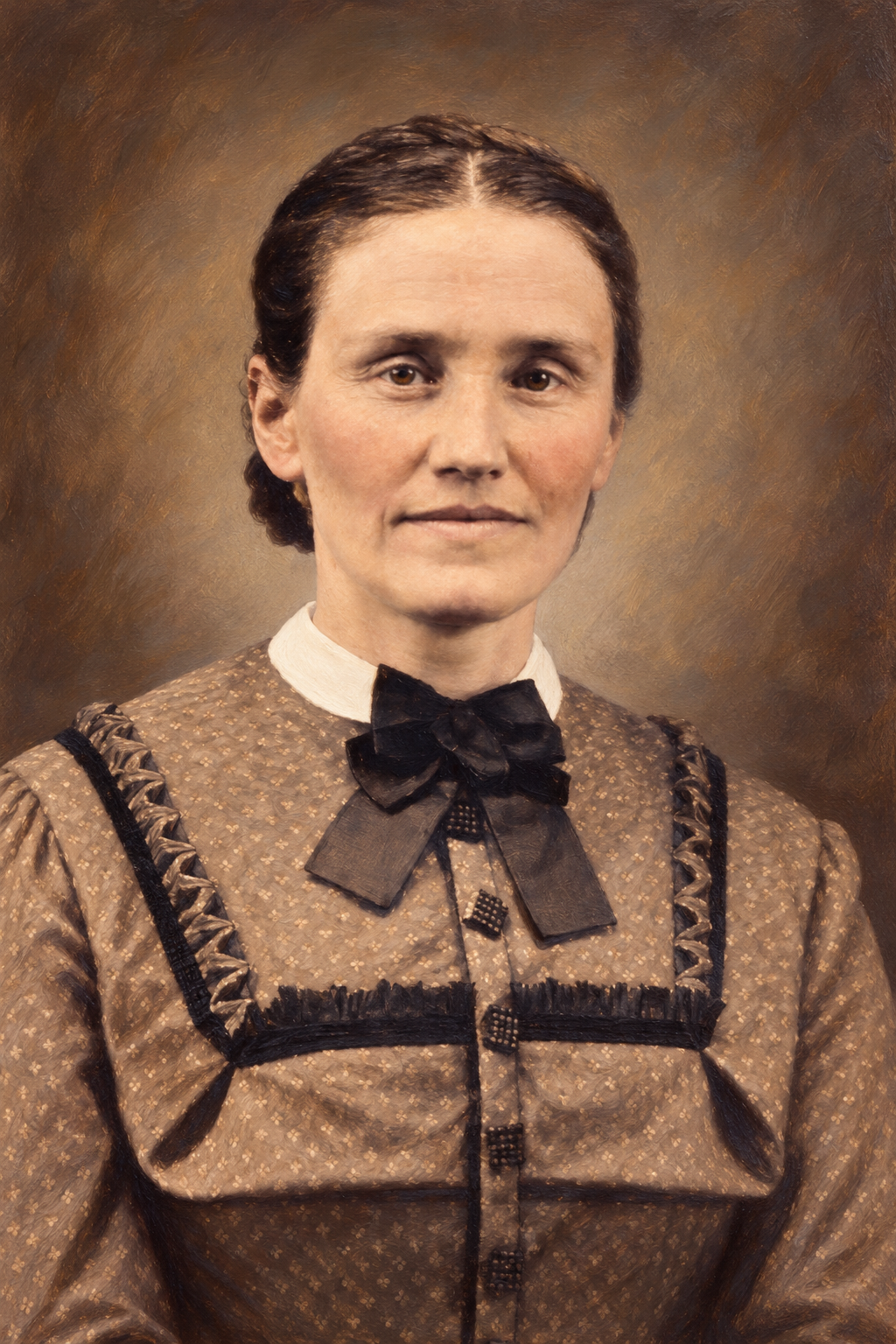
About Marie-Élisabeth Turgeon
Élisabeth Turgeon grew up at Beaumont, near Québec, with a desire to continue her education. Her father’s death interrupted those plans when she was fifteen. She remained at home to help her mother care for her younger sisters. At twenty, she entered the École normale Laval to prepare for teaching.
Canadian institutional biographies date her birth to February 7, 1840; the Vatican’s account gives February 8. The discrepancy remains unresolved.
She graduated in 1862 and taught at Saint-Romuald, Québec City and Sainte-Anne-de-Beaupré. Her vocation eventually joined classroom work with the formation of other teachers.
Illness repeatedly interrupted her employment. After leaving her position at Saint-Romuald, she opened a private class in Saint-Roch, but her health again prevented her from continuing. The Canadian bishops’ biography relates that she promised to teach without payment at Sainte-Anne-de-Beaupré if her health improved. It presents her subsequent work there as the fulfillment of that promise.
Turgeon’s efforts belonged to a wider struggle to sustain education in rural Québec. Historian Nicole Thivierge describes low pay and insecure employment for women teaching around Rimouski. An inspector’s 1879 report, cited in her study, criticized school authorities for dismissing teachers each spring and rehiring them in autumn. Thivierge places Turgeon and her companions among the women who built regional educational institutions despite limited resources and disagreements with church authorities. Their congregation provided a continuing organization for this work. Her account emphasizes both their initiative and the rural children they sought to teach.
Bishop Jean Langevin had invited her to Rimouski, where he wanted to improve teacher training. An association was already forming there under her sister Louise’s leadership. Élisabeth arrived on April 3, 1875. In May, the bishop placed her in charge of classes, novices and manual work, while Louise remained superior. The distinction matters: Élisabeth’s arrival did not immediately create the religious congregation that developed from the earlier association.
On September 12, 1879, Élisabeth and twelve companions made religious vows. She took the religious name Marie-Élisabeth.
She became the religious congregation’s first superior at that profession. The community’s early years were marked by limited resources and difficult housing conditions.
The sisters initially used the name Sisters of the Little Schools. The name Sisters of Our Lady of the Holy Rosary came later.
Under Élisabeth’s direction, sisters went in pairs to teach in the poor parishes of Saint-Gabriel, Saint-Godefroi and Port-Daniel. She also opened an independent school in Rimouski where novices could prepare for classroom work.
The congregation explains that this independent school stood outside the local school board’s control. It gave women preparing for religious vows an opportunity to learn through teaching, linking their formation with the practical demands of the classroom.
Her responsibilities included developing the community’s civil charter, constitutions and rules for schools and missions. The bishops’ account also describes her practical concern for the sisters’ health and material needs.
Her correspondence shows attention to the daily strains of teaching away from the community. In an October 1880 letter excerpt published by Sister Léona Deschamps, Turgeon asked whether the sisters at Port-Daniel seemed lonely and whether they were content with one another. Another excerpt, dated March 1881, urged the sisters to protect their health. Deschamps describes her encouraging them to explain their needs and to make time for meals and rest. These practical concerns accompanied the religious purpose of their work. The excerpts preserve her questions and advice, but do not establish how every sister responded.
Former superior general Gabrielle Côté describes Turgeon’s approach to education in a 2025 interview excerpted in the diocesan historical collection. According to Côté, Turgeon wanted teachers to recognize each child’s abilities and adapt their teaching accordingly. In rural communities, that also meant allowing for children’s responsibilities working alongside their parents. Côté remembers the founder’s correspondence as including greetings for parish priests and parents, as well as messages asking the children to pray for her. These details show the kind of educational relationships the congregation associates with its beginnings. Côté also recounts a crisis in which the gravely ill founder offered the sisters the freedom to return home rather than endure continued poverty. In this community account, the sisters prayed together and chose to remain. The interview does not provide a contemporary transcript of that conversation.
In 1881, after a seminary fire, the community gave up its convent accommodation. The sisters moved to another house provided by the bishop. Élisabeth, already seriously ill, followed them in June. She died there in Rimouski on August 17, 1881.
The formal investigation into her reputation for holiness opened in 1990. Her beatification took place at Rimouski on April 26, 2015, with Cardinal Angelo Amato representing Pope Francis.
In his address that day, Francis remembered her prayer, teaching in small communities and charitable service. His acknowledgment placed her educational work at the center of the Church’s public remembrance of her.
Wondering how to weigh the stories and sources? Learn how to read a saint biography.