Biography
Marie-Madeleine Postel
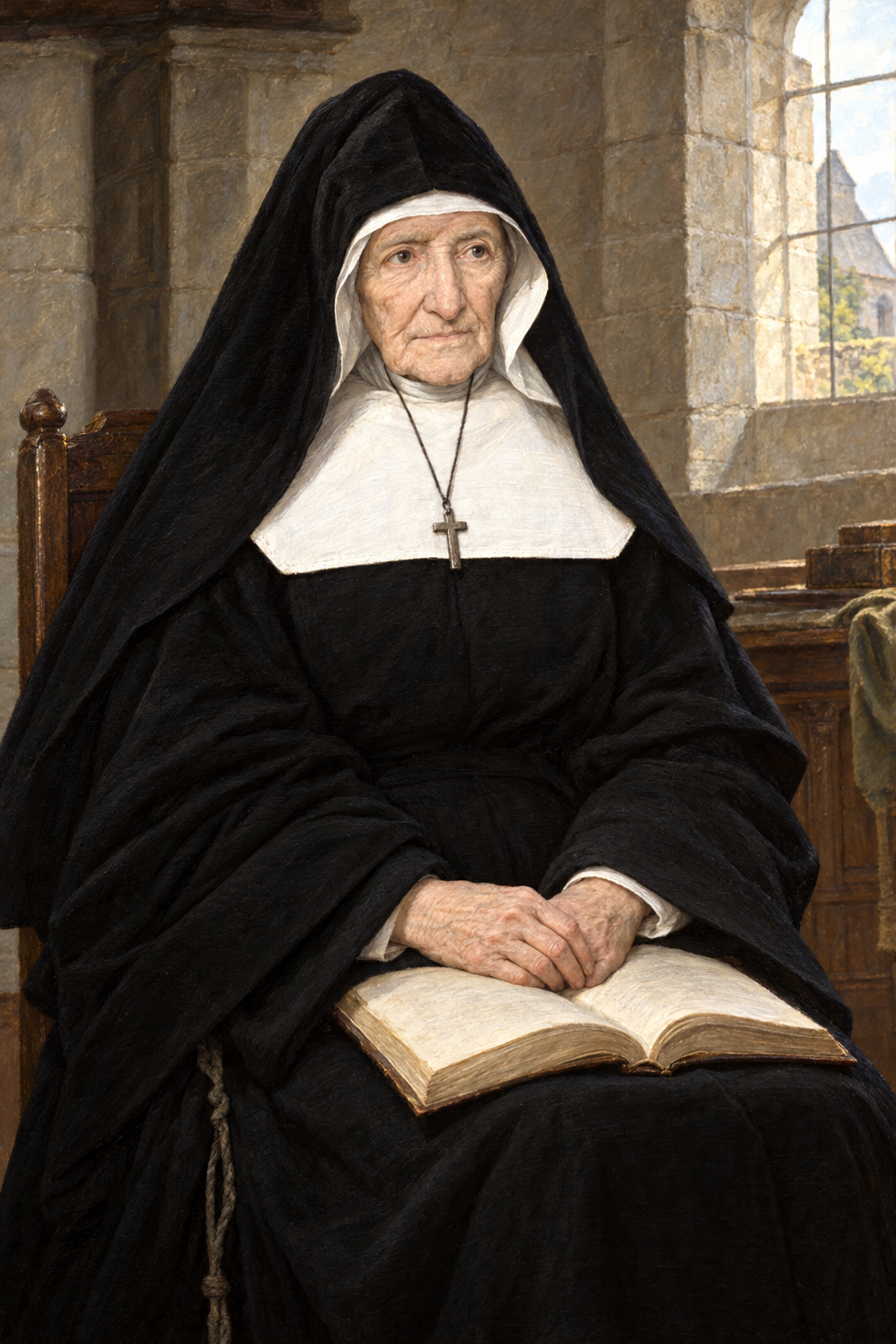
About Marie-Madeleine Postel
Marie-Madeleine Postel was a French teacher and religious founder whose work began in Normandy and continued through revolution, poverty and repeated moves. Born Julie Françoise-Catherine Postel at Barfleur on November 28, 1756, she received part of her education with the Benedictines at Valognes. The New Catholic Encyclopedia dates the opening of her school for girls in Barfleur to 1774. Teaching remained central to the community she later founded.
Her congregation remembers the image of Mary grieving over Christ in Barfleur’s parish church as an important influence on her devotion. During the French Revolution, she helped priests who were escaping to England. The congregation also recounts that she sheltered the Eucharist beneath a staircase and brought Communion to sick people. These memories associate her religious life with practical care during a period when ordinary parish worship had been disrupted.
On September 8, 1807, she founded her teaching congregation at Cherbourg. Its purpose joined education with service to people living in poverty. The sisters were to support themselves through their own labor rather than depend on rental income. Their first years were unsettled: after six years in Cherbourg, they moved repeatedly before obtaining a lasting home. The congregation’s history places the purchase of the former abbey at Saint-Sauveur-le-Vicomte on October 15, 1832.
The New Catholic Encyclopedia describes a lengthy period at Tamerville before this move. It also records the adoption of the rule associated with John Baptist de La Salle in 1837. The sisters’ curriculum extended beyond basic requirements to include sewing, embroidery, poetry and singing. By Postel’s death, the institute had grown to about 150 members in thirty-seven convents.
The abbey name can be misleading. The Bibliothèque nationale de France distinguishes Postel’s institution from the medieval monastic foundation whose buildings it occupied. Her teaching congregation retained the historic title without becoming a monastic abbey in the canonical sense. The site therefore brought together an older religious inheritance and a different form of community life, directed toward education and charitable work.
Restoring the buildings became a major undertaking. Canon E. Allain’s commemorative account, published in 1896, describes work beginning in 1838 and sisters helping to clear and sort materials. On November 25, 1842, a storm brought down the bell tower and damaged the choir and chapels. According to Allain, the destruction prompted the chaplain and sisters to consider abandoning the project, but Postel insisted that rebuilding continue.
Allain relates that she sent Placide Viel to seek help, carrying a letter to the queen of France. Contributions arrived from beyond the local community, and the sisters resumed their work. His booklet was written for the fiftieth anniversary of Postel’s death and sought to encourage devotion to her. Its account presents her persistence through the lens of that purpose; it should not be read as a neutral contemporary construction report.
The same account describes her daily recitation of the breviary and her familiarity with the writings of the Church Fathers. She drew on this reading when instructing the sisters. Prayer and study appear beside the demands of restoring the church and maintaining the community.
The German congregation’s account of its educational tradition emphasizes reason rather than punishment with a cane. It describes teaching adapted to children’s ages and imaginations, with an influence from La Salle. This account connects Postel’s legacy with the manner in which pupils are treated, as well as the subjects they study. It expresses the community’s understanding of her educational inheritance rather than establishing that every classroom always met that ideal.
Postel died at Saint-Sauveur-le-Vicomte on July 16, 1846. Pope Pius XI canonized her on May 24, 1925, and her feast is July 16.
Her congregation’s history continued beyond France. German women joined the community in the nineteenth century, and a German branch became independent in 1920 after the First World War. That community adopted Postel’s name in 1968. These developments belong to the later history of the institute, rather than to foundations she personally directed, but they help explain the international reach of her remembrance.
The German foundation began with four teachers from the Eichsfeld, introduced to the congregation through Placide Viel and other sisters. Their reception of the habit marked the Heiligenstadt foundation in 1862.
Two documented patronages are in Mozambique. Reporting on the fifteenth anniversary of the Escolinha Júlia Postel in Metarica in 2023, Sister Theresia Lehmeier explicitly identified Postel as the school’s patron. Children honored her during the celebration, which included songs, dancing and recollections of the school’s history. The association is therefore more specific than simply sharing the founder’s name.
A separate 2017 travel report describes the Santa Maria Madalena Postel church community in Cuamba. Its members had chosen her as their patron without the sisters initially knowing about their choice. The report records a local act of devotion within a living church community. Together, these associations show how her remembrance has taken root in education and parish life far from Normandy.
Wondering how to weigh the stories and sources? Learn how to read a saint biography.