Biography
Marina of Ōmura
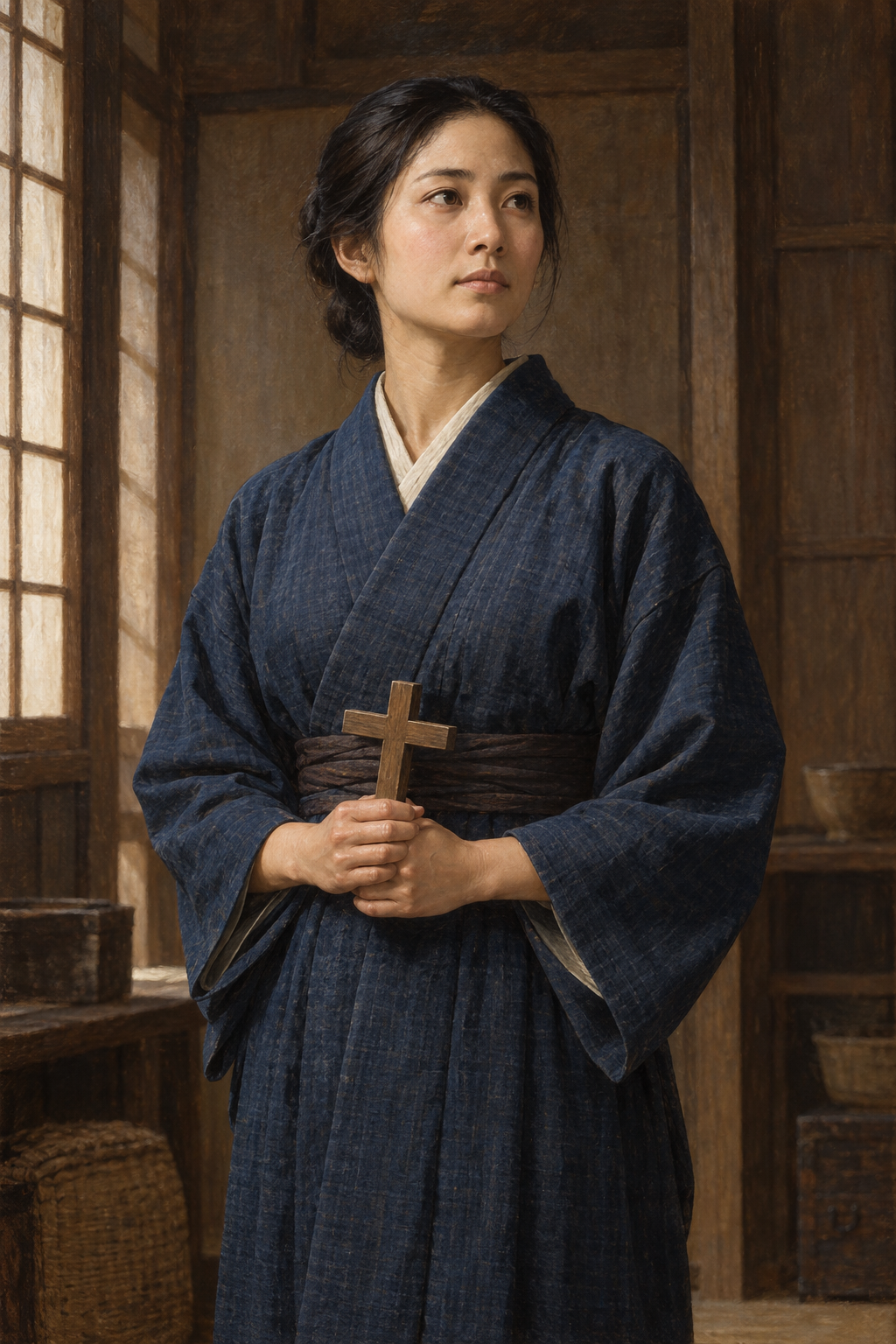
About Marina of Ōmura
Marina of Ōmura was a Japanese Dominican tertiary who helped Christian missionaries during persecution. Arrested in 1634, she endured public humiliation and was condemned to death by burning. The Vatican’s account remembers her steadfastness in the face of this violence.
A memorial at Kakomachi Church in Ōmura records her death at Nishizaka in Nagasaki on November 11, 1634. Her remembrance remains connected with the city from which she came. The surviving local memorial offers a place for prayer and recollection, rather than a detailed account of her childhood or family.
Pope John Paul II spoke about Marina during his visit to Nagasaki on February 26, 1981. He specifically noted that Japanese women invoked her for fortitude, remembering her as a strong woman. This is a documented devotional association, centered on courage and endurance rather than an occupation or a place of missionary work.
The pope placed her witness within a wider community of Japanese and foreign Christians. His homily emphasized their love for the people among whom they lived and their fidelity to Christ. Marina appears beside Magdalena of Nagasaki, another woman who assisted missionaries. The two are distinct people, remembered together for their service and martyrdom.
John Paul II canonized Marina and the other members of the group on October 18, 1987. Their common memorial in the Dominican calendar is September 28.
The Roman Martyrology also commemorates her individually on November 11.
Kakomachi Church explicitly honors her as its patron. The parish became independent from Uematsu in 1958, and its present church building dates to 1983. This local patronage links a present community of worshippers with a woman remembered for supporting Christian life during persecution.
A modern memorial garden at Nagasaki’s Nakamachi Church includes her among sixteen martyrs. In his 2015 account of making the sculptures, the sculptor explained that no contemporary portraits survived to guide him. For Marina, he sought a restrained pose expressing courage and humility. His explanation makes clear that the statue is an artistic interpretation of her remembrance, rather than a recovered likeness from her lifetime.
Wondering how to weigh the stories and sources? Learn how to read a saint biography.