Biography
Martin In Eon-min
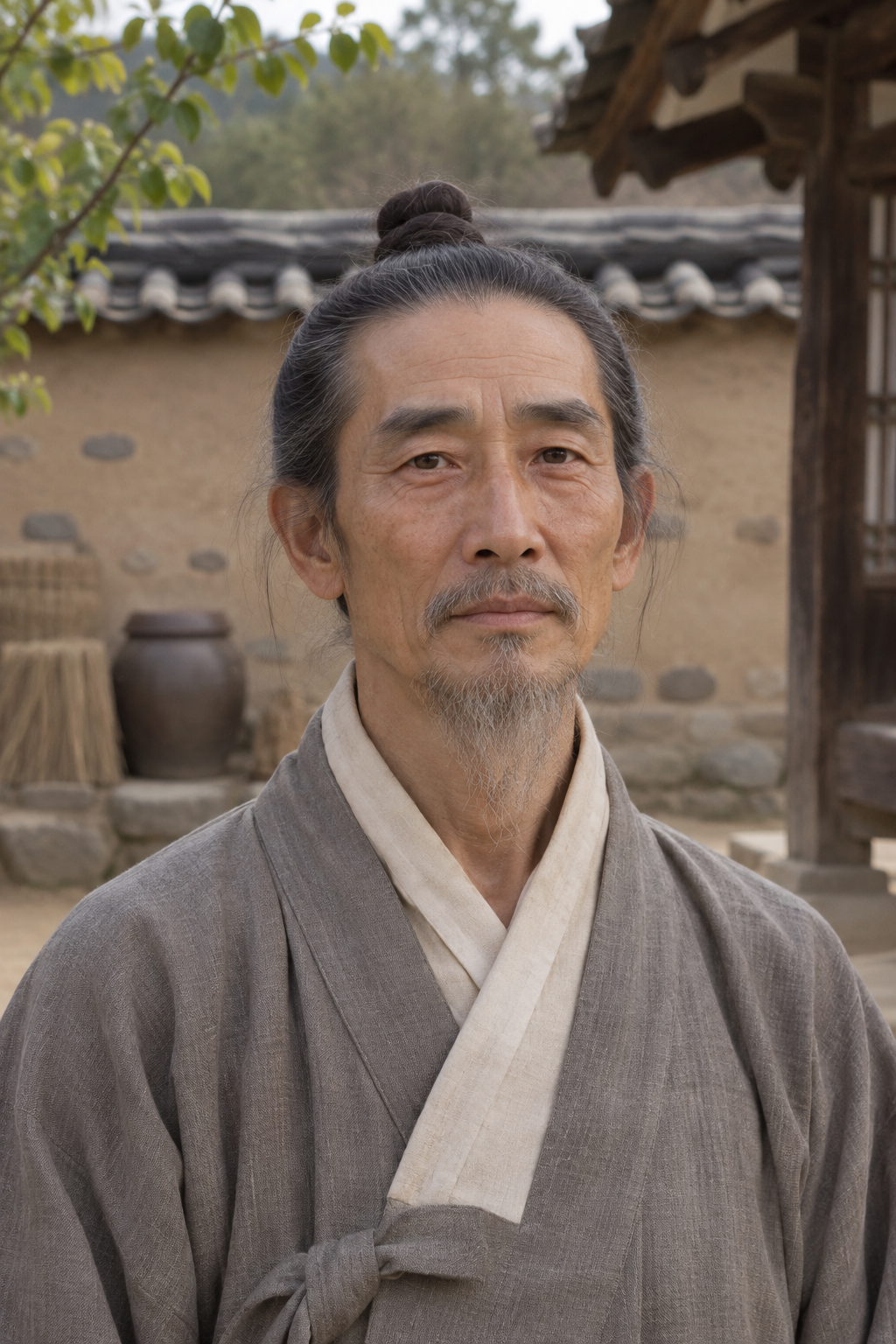
About Martin In Eon-min
Born in 1737, Martin had studied diligently from childhood. The official biography describes a gentle but resolute man with considerable learning. Martin In Eon-min belonged to the Gyodong In family of Jurae, also called Yongmeori, in the Deoksan district. The Korean Catholic Encyclopedia remembers him as a member of the local noble class who learned Christian teaching from his acquaintance Alexius Hwang Sa-yeong. After accepting it, Martin discarded his ancestral tablets in a river. He then travelled to Seoul with his eldest son to receive baptism from Father James Zhou Wen-mo.
When relatives questioned his later decisions, he explained his new faith openly. They did not accept his explanation. Martin nevertheless left his home and possessions and moved to Gongju, hoping to practise his religion more freely.
Historian Cha Gi-jin places the disposal of the tablets in the Sapgyocheon: Martin put them in a jar and threw it into the water. In Cha’s account, baptism and the move also changed the arrangements of Martin’s household. His eldest son Joseph remained beside Zhou in Seoul.
The account published by the Uijeongbu diocese adds that Martin’s second son married a daughter of a Catholic family. Martin’s own move did not provide lasting safety. During the persecution that began in 1797, officers arrested him in Gongju and he was subsequently sent to Cheongju.
The encyclopedia dates his arrest to 1799, while the official life places it during the continuing persecution without specifying the year. At Cheongju he underwent severe punishment. On the governor’s orders, he was then transferred to Haemi, the jurisdiction responsible for his home district.
His injuries made that transfer difficult: he could no longer walk and had to travel on a horse normally used by officials. At Haemi he met the younger Catholic Francis Yi Bo-hyeon. The two encouraged each other through questioning and punishment. Their refusal to abandon their faith led the magistrate to order their deaths by beating. Martin received the customary final meal before being taken from the prison. One of the guards repeatedly struck his chest with a large stone. He died on January 9, 1800.
In Yeo Jin-cheon’s account, the punishment at Cheongju had included crushing restraints and heavy blows. Even after transfer, Martin continued to declare his Catholic allegiance. The final assault broke his jaw and chest bones. The received account remembers him as sixty-three years old, dying on the same day as Francis.
Memory of Martin survived in his home village as well as at Haemi. Writing in 1996, Cha described the memorial established at the former Jurae mission hall after the establishment of Sapgyo parish in 1967. The place associated with his birth had become a destination for people remembering his death.
A separate local tradition identified a grave in the In family’s burial ground as Martin’s. That grave tradition eventually prompted a new investigation. In a 2024 interview, Father Choe Il-hyeon of Sapgyo parish described elderly residents remembering warnings not to play on a grave belonging to someone killed for believing in Jesus. He formed a parish team to investigate. Long-established residents helped them contact the Gyodong In family, examine its genealogy and collect testimony from the family that had cared for the grave. The parish then sought advice from the diocesan church-history institute and petitioned the bishop for an excavation. These were living memories being tested against records, not a newly discovered account written by Martin himself.
The petition had been submitted on September 20, 2023. The grave at Yongdong-ri was opened on June 1, 2024, in the presence of fifty-five people, including tribunal members and experts. The tribunal heard evidence on September 26 and delivered its judgment on October 24. Reporting on the tribunal’s findings, journalist Min Gyeong-hwa described the agreement between its position and the northwest-to-southeast burial direction recorded in the genealogy. Witnesses also remembered the grave as unusually substantial and carefully maintained. The outermost surviving tree ring was dated to 1761; investigators interpreted the coffin material as wood felled during the later eighteenth century, not as a direct date of Martin’s burial. The investigation had an important limitation: deterioration of the remains prevented individual identification by DNA. A mitochondrial grouping common in East Asia could establish no unique personal identity. The recognition therefore rested on the combined documentary, oral, archaeological and scientific evidence, rather than on a genetic match.
On November 1, 2024, Bishop Kim Jong-su issued a decree recognizing the excavated remains as Martin’s relics. It records the constitution of a tribunal under Bishop Han Jeong-hyeon, the excavation and careful consideration of expert opinions. This was a formal ecclesiastical judgment about the remains. Through it, a family burial place and a long local remembrance became part of the Church’s public commemoration of the scholar who had left Jurae to practise his faith and died at Haemi.
Wondering how to weigh the stories and sources? Learn how to read a saint biography.