Biography
Martin Yi Jung-bae
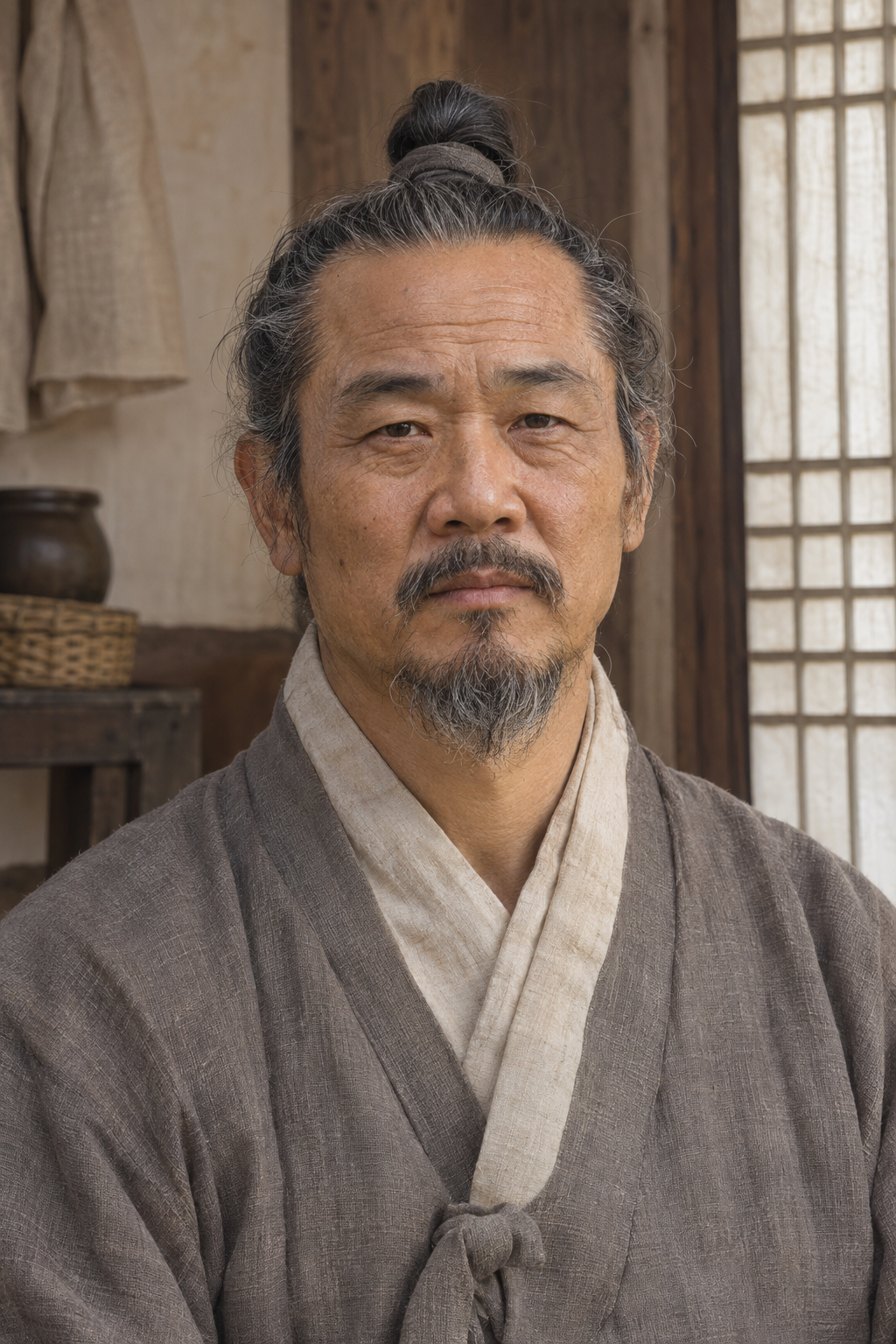
About Martin Yi Jung-bae
Martin Yi Jung-bae brought his father and wife into the Catholic faith. He belonged to the Jeonju Yi clan and a Soron family in Yeoju. In 1797 he and his cousin John Won Gyeong-do learned from their friend Josaphat Kim Geon-sun. Martin accepted the teaching and ceased to perform the ancestral rites he had formerly observed. His wife was Jo Hui. The change in the household would eventually bring punishment to her as well as to him.
The Church’s account remembers a man of unusual strength and courage whose temper could also be violent. Conversion changed the way he used that strength. He remained outspoken about his religion even when others could discover that he was a Catholic, but began to master his anger. Oh Se-taek notes that, as the son of a secondary union within a noble family, he belonged to the seoeol. His family status did not give him the same opportunities as the principal line.
His religious year included both restraint and celebration. Lee Seung-hun describes the care with which he kept Lent and the joy with which he celebrated Easter. In 1800 he and John went to the house of Jeong Jong-ho, a believer at Yangseom. They prayed the Easter Angelus and sang together. The encyclopedia remembers the group beating time on gourds as they sang their prayers. The magistrate had sent officers to discover Catholics, and information about the gathering brought them to the house. Martin was taken away with the other believers.
Imprisonment lasted more than six months. Interrogation and punishment repeatedly brought the prisoners out of their cells, and the officials pressed them to abandon their religion. Martin encouraged companions whose courage was failing. Family members could make that decision harder. John’s elderly servant came to the prison describing the grief of his mother and wife. When John wavered, Martin rebuked her and sent her away. His own father also came, weeping and asking whether his son intended to leave an old man without him.
The answer he gave his father did not deny their relationship. Martin acknowledged the duties of filial affection, but reminded him that they were both Christians. He asked him to judge the decision in light of their common allegiance to God. Lee’s account presents the meeting as a conflict between that religious commitment and the father’s distress, rather than as indifference to the parent who had come to see him.
Peter Jo Yong-sam also felt the force of his encouragement. After yielding when his father was beaten, Peter met Martin while leaving custody. Martin reproached him and urged repentance; Peter returned to the authorities rather than complete his release.
He also cared for sick people while confined. Lee reports that fellow Catholics brought him their wounds and illnesses, while guards brought sick members of their families. His treatment became sufficiently well known that people came to the prison seeking help. The accounts regard the results as extraordinary. That is how the Church remembered his practice; they do not provide the kind of clinical record from which a modern reader could verify every reported cure.
Historian Bang Sang-geun distinguishes Martin from the owners of commercial pharmacies. He interprets the evidence as showing a man who had studied medicine personally and treated people who asked for assistance, rather than a professional physician. His study also emphasizes the missionary character of the work: care for patients and the invitation to Christian belief belonged together. Martin’s case provides unusually concrete evidence of treatment in a period when many other Catholic medical workers are known chiefly through brief notices that they ran shops or sold drugs.
Hwang Sa-yeong’s letter reports prayer followed by acupuncture and medicines. It also remembers Martin copying religious texts, reciting prayers and teaching in prison, and says that one jailer became a believer.
In October 1800 the prisoners were taken to the Gyeonggi governor’s office. Further questioning followed in 1801. The authorities eventually ordered the condemned men returned to their home district, where an execution would serve as a public warning. Martin was beheaded outside the southern gate of the Yeoju government office on April 25, 1801. John and Marcellinus Choe Chang-ju died with him. Jo Hui survived her husband, but was exiled to Ulsan because she had learned Catholicism from him.
A later monument at Yangseom remembers the gathering that led to the arrests. Reporting from the island in 2016, Lee Seung-hun described the stone erected by Yeoju parish on May 31, 2015. Martin’s name appears beside John, Peter Jo Yong-sam, Marcellinus, Jeong Jong-ho and Im Hui-yeong. The inscription gathers people connected with the persecution; it does not prove that every person named was arrested at the same moment. By the reporter’s visit, river works had turned Yangseom into a park, and the location of the earlier household could no longer be read directly from its modern paths and recreation grounds.
Wondering how to weigh the stories and sources? Learn how to read a saint biography.