Biography
Martinian of Caesarea
About Martinian of Caesarea
Martinian is remembered as a hermit associated with Caesarea in Palestine. His story survives in an early Byzantine Life transmitted in several recensions. A. Yu. Vinogradov identifies this as the sole source for his personal history and describes its structure as close to a religious tale or romance. Its geography is often vague, and its chronology depends on interpretation of the narrative.
The Life says that Martinian left the city while young and sought silence in the wilderness. When a woman came to his cell during a storm, he faced a conflict between offering shelter and protecting his ascetic commitment. The story eventually directs her toward repentance and Paula’s community at Bethlehem.
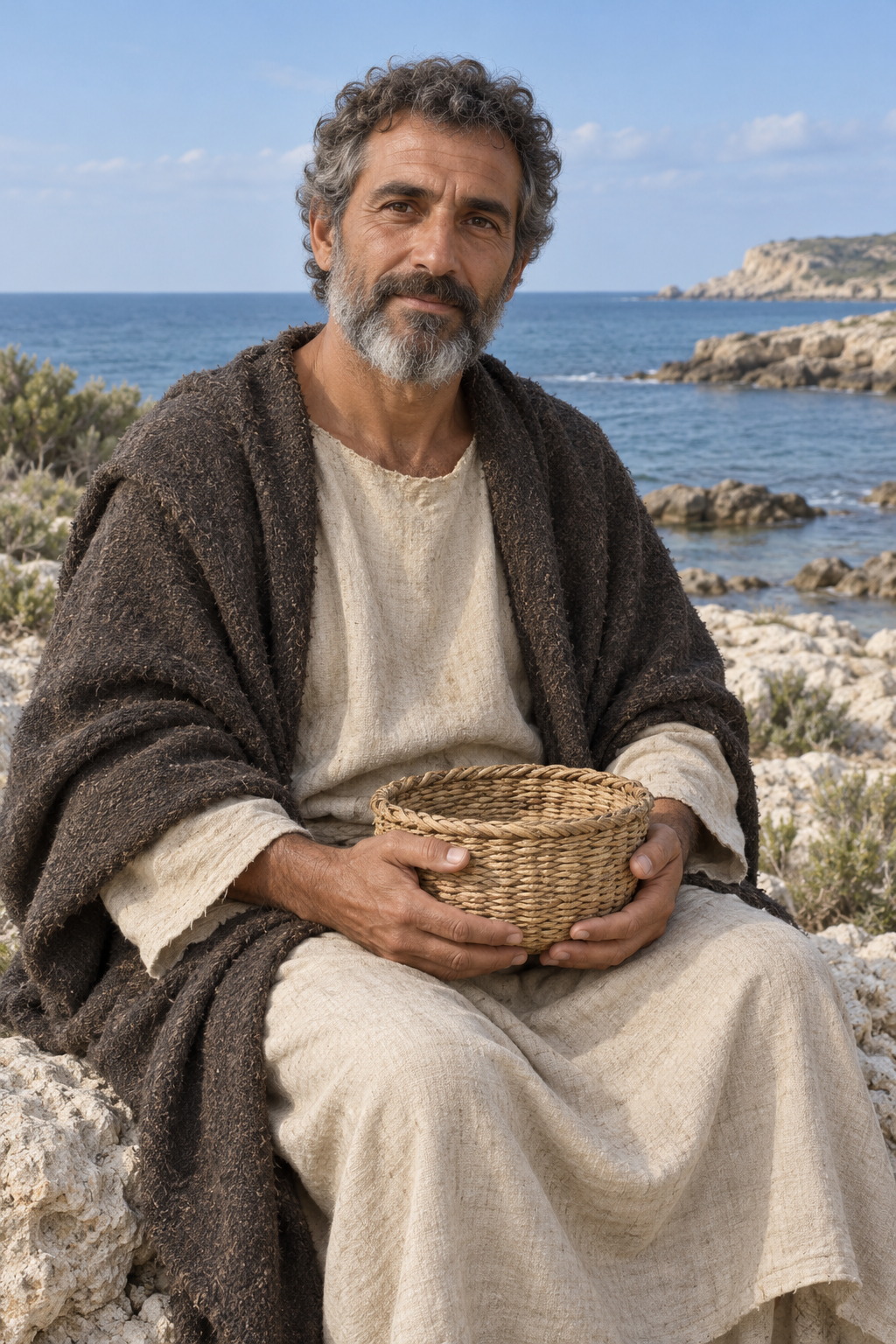
He later withdrew to an isolated sea rock. A sailor brought provisions and palm branches, and Martinian wove baskets to exchange for food. When a shipwrecked woman reached the rock, he helped her to safety and left her his supplies. The narrative then turns him into a wanderer and places his death in a church at Athens.
The Orthodox Church in America commemorates him with Zoe and Photina, the women named in its received account. That account remembers their own lives of repentance and prayer alongside his ascetic struggle.
The names and some details developed across the textual tradition. Vinogradov notes that the women’s names were apparently absent from the original Life and appear in later versions. The saint’s commemoration on 13 February is attested in the Palestinian Georgian and Constantinopolitan synaxaria.
A surviving homily fragment attributed to Michael Choniates links Martinian’s remembrance with purity and self-control. It also honors chastity within marriage and widowhood, as well as virginity.
Wondering how to weigh the stories and sources? Learn how to read a saint biography.