Biography
Marus of Trier
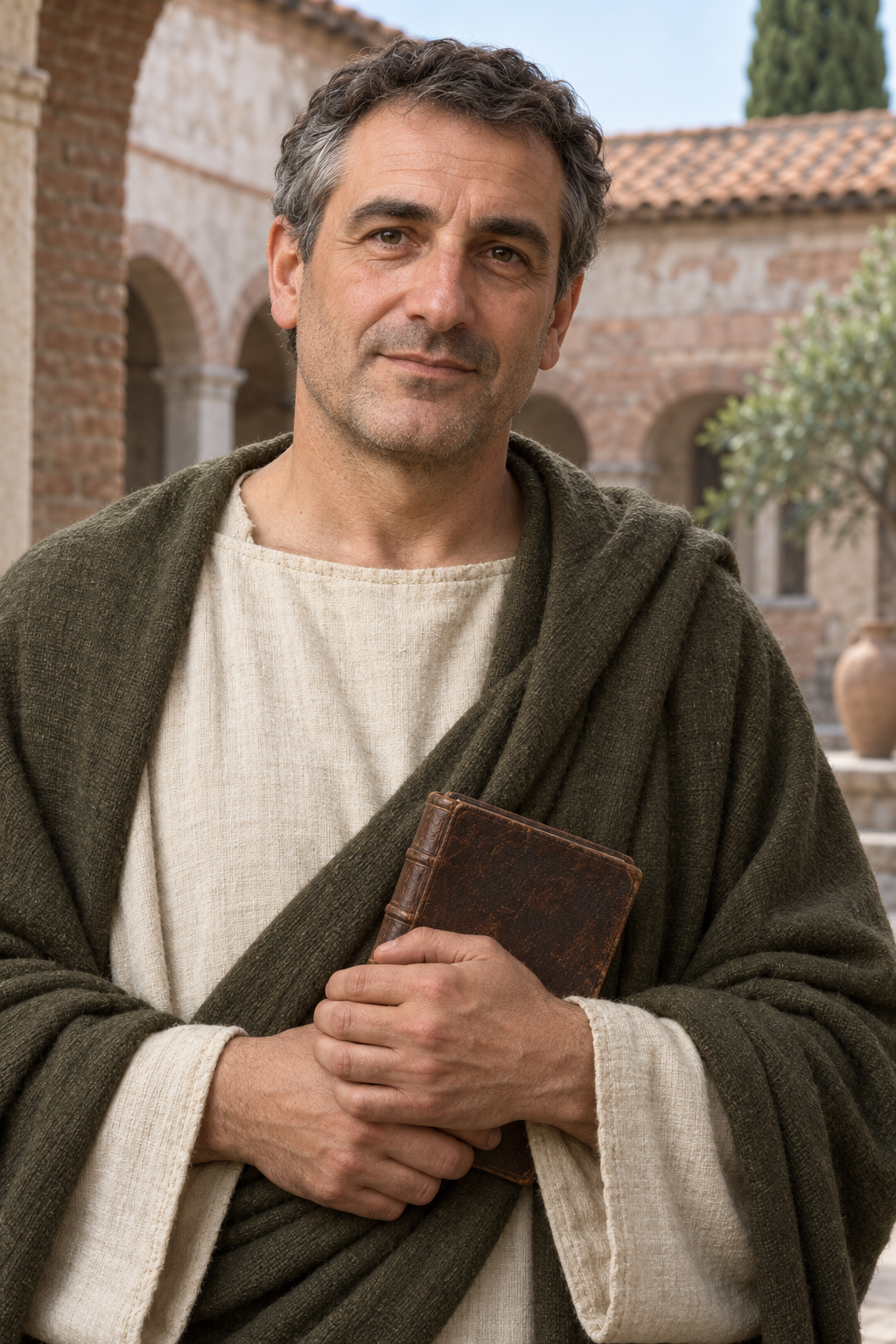
About Marus of Trier
Marus appears in Trier’s episcopal list among the bishops who served before the year 500.
His personal history is much less clear than his place in that list. A later chronicle credits him with restoring Saint-Paulin, but no early Life survives. Bastien Dubuisson’s study traces the surviving miracle narrative to the fifteenth century, centuries after the bishop’s lifetime. It is evidence for later devotion, not a contemporary biography.
That narrative describes a young man from Saxony who had been unable to leave his bed for three years. After repeated dreams urging him to visit Marus’s tomb, he traveled with his wife and brother to Trier. The account says that his recovery began on the journey, and that he promised to return each year. It also describes the worn stone around the tomb as a sign of the many people who had knelt there. These details belong to a religious account of healing.
The text explicitly presents Marus as an intercessor for people with gout, paralysis and related conditions. This supports a historical record of invocation rather than a claim that the reported cures have been independently verified.
Dubuisson places the story within the promotion of pilgrimage to Trier’s saints. Johannes Scheckmann later reused it in a printed guide to Saint-Paulin’s relics in 1515. The distinction matters: a text copied in the sixteenth century can preserve an older story without becoming evidence for the bishop’s fifth-century life.
Other records show how his memory was maintained. An altar dedicated to Peter, Paul and Marus was consecrated in 1148. Relics attributed to him were moved for safety during seventeenth-century warfare, returned to Saint-Paulin in 1655, and removed again before the church’s destruction in 1674. His commemoration falls on January 26.
Wondering how to weigh the stories and sources? Learn how to read a saint biography.