Biography
Matthew Kim Hyeon-u
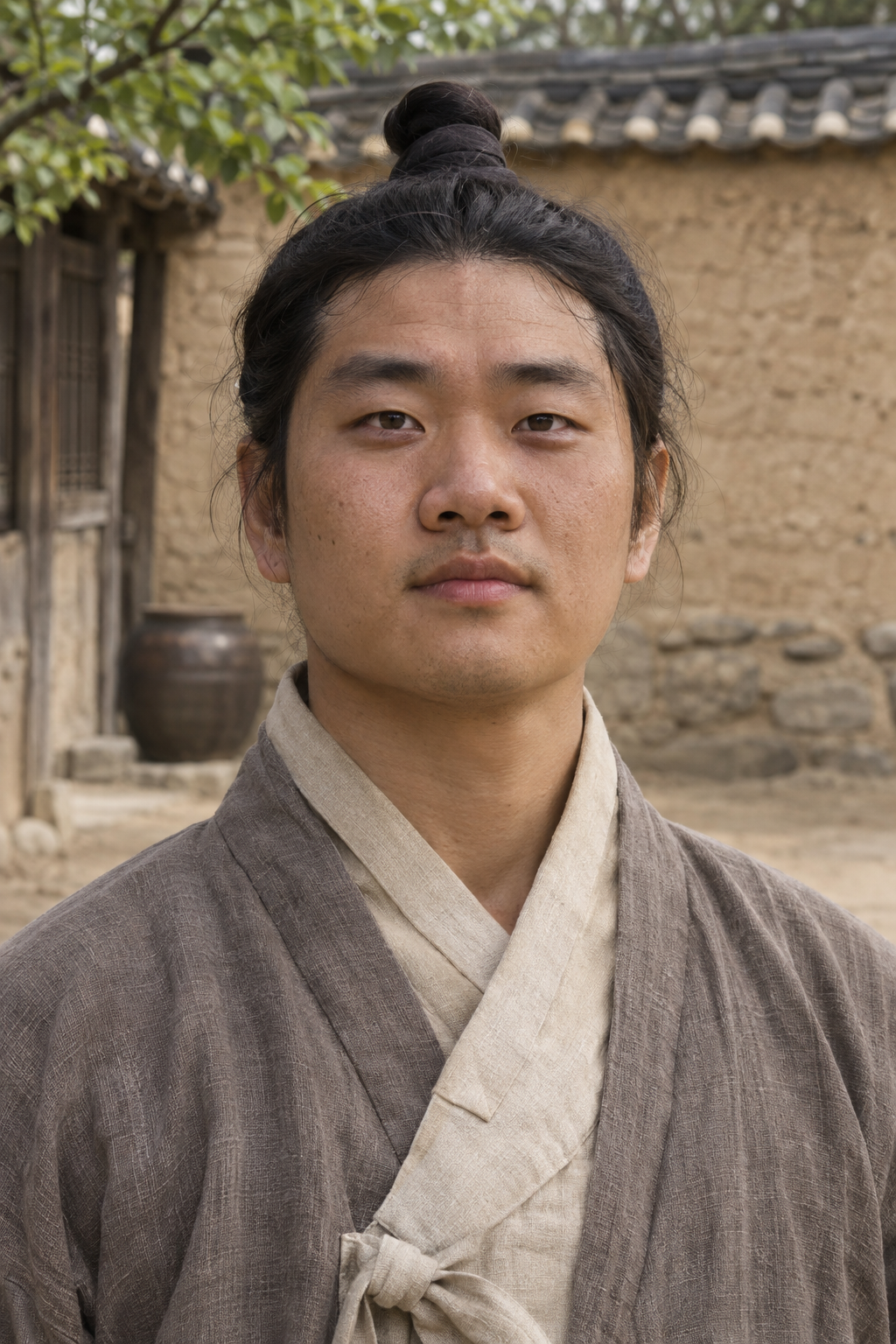
About Matthew Kim Hyeon-u
Matthew Kim Hyeon-u was born in 1775 in Seoul’s Myeongnyebang neighborhood. His eldest half-brother, Thomas Kim Beom-u, taught him Catholicism. Peter Yi Seung-hun baptized Matthew and Barnabas Kim I-u. When officials broke up a meeting at Thomas’s house and exiled him in 1785, Matthew was about ten. He and Barnabas continued to pray in secret.
The name by which the family recorded Matthew was Sun-u. Jeong Min traced it in the Gyeongju Kim genealogy. Matthew and Barnabas were sons of their father’s concubine, who also had a daughter. Thomas, by contrast, was the eldest son of their father and his wife, Lady Hong of Namyang. The difference matters when following the brothers through the records. A reader looking for Hyeon-u among the children of Lady Hong could miss Matthew altogether. The Church knew him under a different given name and remembered the three men as brothers.
Historian Kim Doo-heon compared family genealogies with the records of government interpreters. Their father, Kim Ui-seo, worked for the government bureau that supplied interpreters, although Kim found little evidence about the rank he actually held. The genealogy dates Matthew’s birth ten years after that of Jeok-u, the fourth son of Lady Hong. For Barnabas, it gives neither a birth year nor a death year. These records preserve the different standing of the children born in one household. They offer much less about the relationship through which the younger boys came to share the faith of their eldest brother.
The family’s reputation rested on several generations of interpreting work. Son identifies Matthew’s great-grandfather Kim Ik-han as successful in the interpreter examination of 1669. She also records Jeok-u’s success in 1783. These notices help explain why the household was remembered as an interpreter family.
Thomas made his house available to a new community of readers. Yi Seung-hun had brought Catholic books back from Beijing, and he and other scholars spent months reading and discussing them. Regular gatherings followed. The house in Myeongnyebang thus gave believers a place to learn from one another before a priest was available to serve them.
His brother’s biography gives some idea of what the disruption cost. Thomas had lent books or given instruction to people outside the household as well as to his younger brothers. When officials entered the house they seized devotional objects and books. They released several men from aristocratic households after a warning, but kept Thomas, who owned the house, for questioning. He maintained his faith under punishment and was sent away.
Matthew’s own recollection of what happened to Thomas became evidence in a later dispute. Historian Son Suk-gyeong identifies him as a witness for Danyang as the place of exile. Son herself favors Miryang, where family documents and a grave associated with Thomas came to light. The disagreement concerns how to read evidence from different generations of the family.
Jeong Min points out that the records of Thomas’s grandson Dong-yeop place his move to Miryang around 1854, decades after both Thomas and Matthew had died. In his reading, the grandson’s presence there can be explained by his employment and cannot by itself establish the earlier place of exile. He favors Danyang. For Matthew and Barnabas in Seoul, the immediate consequence was the same. The brother who had taught them was gone.
After Father James Zhou Wen-mo arrived, Matthew and Barnabas went to Philip Hong Pil-ju’s house to meet him. They formed a group with Thaddeus Jeong In-hyeok and Peter Choe Pil-je for prayer and instruction. Matthew attended Mass when Zhou took shelter in Barnabas’s house and returned there for Mass when the priest visited again in 1800. Both brothers belonged to the Myeongdohoe, the lay association Zhou founded.
Ri Gil-jae follows the connection with Florus Hyeon Gye-heum through the families’ marriages. Thomas’s wife was a daughter of Florus’s uncle, Hyeon Jae-yeon. Another daughter of the same uncle married Thomas’s brother Gwan-u. Ri reports that Florus continued visiting Matthew and Barnabas after Thomas’s death and helped guide their religious life, citing Jeong Min’s study. He also attributes to Cha Gi-jin the proposal that the brothers’ house was the association’s unidentified sixth meeting place. That identification remains a scholarly reconstruction.
In 1801 the brothers were arrested together. Under interrogation, Matthew confined his answers to what the authorities already knew and gave away no one’s whereabouts. Barnabas died in police custody. On July 2, Matthew was beheaded outside Seoul’s Small West Gate.
A painting by Tak Hui-seong recalls a tradition about the journey to prison. Tak shows Matthew between two guards on a road, his hands bound behind him and his bare feet lifted in mid-step. One guard carries a staff and the other holds a spear. Matthew turns his face toward the light breaking across the hills. The caption identifies it with the cross that, in the devotional account of his arrest, appeared before him and showed him the way.
Wondering how to weigh the stories and sources? Learn how to read a saint biography.