Biography
Matthias Choe In-gil
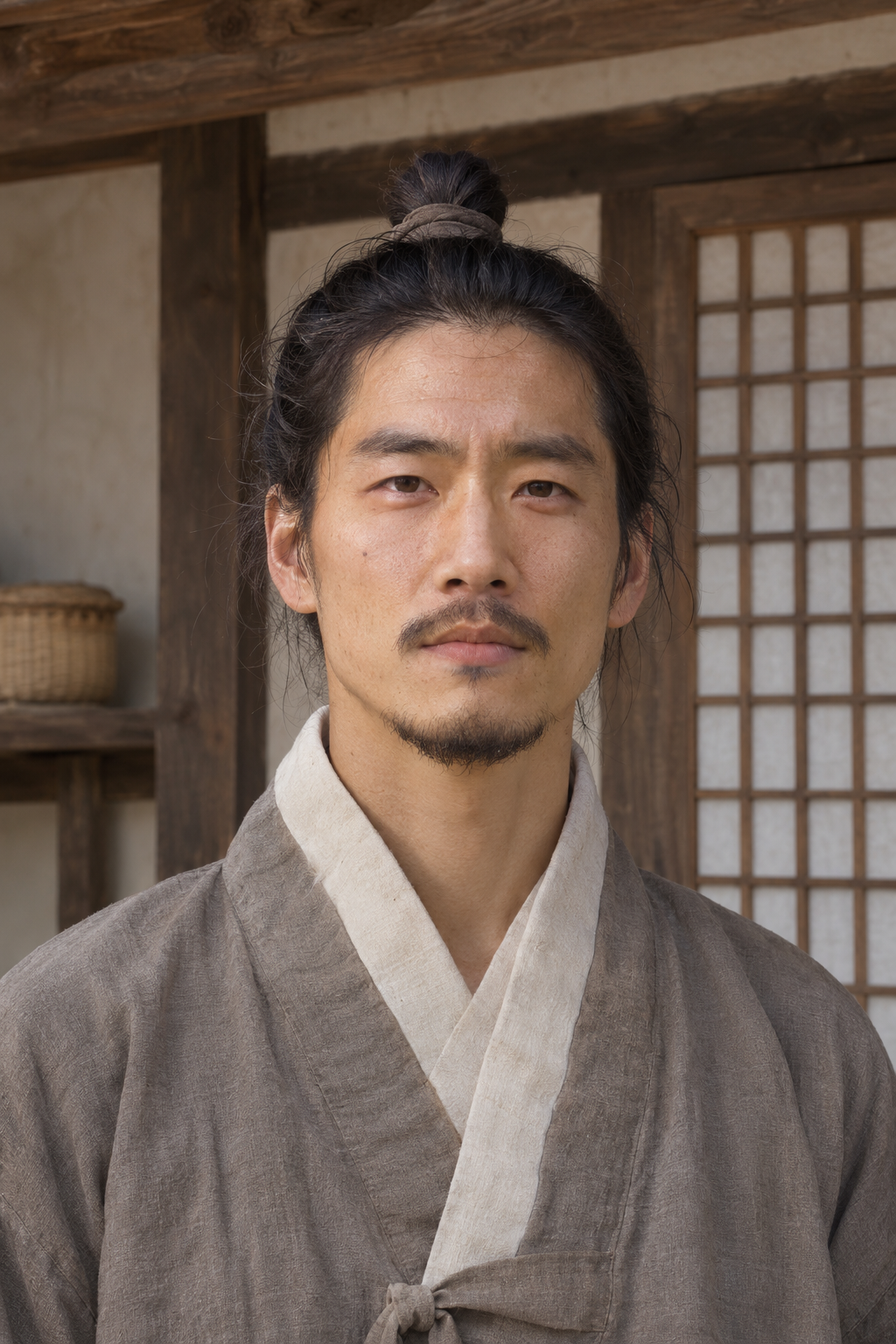
About Matthias Choe In-gil
Matthias Choe In-gil was born in Seoul in 1765 into a family of interpreters. He learned Catholic teaching from Yi Byeok and became a Christian in 1784, soon after the first Korean community formed. He took part in spreading the religion among his neighbours. His younger brother Ignatius Choe In-cheol learned the catechism from him and became a Catholic; he would suffer martyrdom in 1801. He was related to the lay leader John Choe Chang-hyeon.
His family background connected him with Kim Beom-u, whose household also belonged to the interpreter community. At Kim’s home, Choe attended religious meetings with Kwon Il-sin, Jeong Yak-yong and Yi Byeok. In 1785, officials of the Ministry of Punishments broke up the meetings. Choe was imprisoned with Kim, beaten and eventually released. His first experience of detention therefore came years before the arrival of the priest whose safety he would later protect.
Son Suk-gyeong’s account distinguishes the treatment of the people found at the meeting. Officials searching the house, initially suspecting gambling, confiscated Christian books and an image of Jesus. The minister sent the sons of elite families home with admonitions, while Kim and Choe remained in custody. Choe asked to share Kim’s punishment and was held for about ten days before being released. The difference in treatment separated the interpreter-family believers from the higher-status men who had attended the same gathering.
The persecution of 1791 brought another arrest, this time with his brother. Kim Ok-hui’s account records that he renounced his faith, obtained release and then returned to the Church. After returning, he worked again with the leading Catholics to obtain a priest. Yun Yu-il had brought back instructions from Beijing, and the task required local preparations as well as messengers crossing the frontier. Choe undertook to find a secure place where the missionary could live.
He obtained a house at Gyedong beneath Bugaksan, in the northern part of Seoul, and moved there. In the winter of 1794, he went to Uiju with Yun Yu-il and Ji Hwang. While Ji went to meet Father Zhou Wen-mo across the border, Choe waited for the priest’s entry. Once Zhou crossed into Korea, Choe served as interpreter and helped conduct him to the house prepared in the capital. There he began teaching the newcomer Korean while attending to his safety.
Yeo Jin-cheon’s account places the preparations in a household that had become both a residence and a place for Christian worship. Zhou stayed with Choe, learned the local language and celebrated Mass on Easter Sunday, April 5, 1795.
Kim Gil-su describes the priest preparing to begin his ministry from Choe’s house. He studied Korean urgently and arranged the things needed for Mass. At Easter, believers could receive sacraments from an ordained priest: some educated men made their confessions in writing in Chinese.
News of Zhou’s presence reached the authorities through an informer. The priest escaped to the house of Columba Kang Wan-suk, while Choe stayed behind. Speaking Chinese fluently, he presented himself as the Chinese missionary so that the officers would arrest him instead. The deception was intended to give Zhou more time to reach safety. Choe was taken into custody, but the authorities soon discovered that their prisoner was not the man they wanted.
The later account gives a concrete detail of the disguise: Choe changed his hair to appear Chinese. It also explains why the substitution could not last, pointing to a difference between his beard and the priest’s fuller beard. The police renewed their search for Zhou and arrested Yun Yu-il and Ji Hwang, who had helped bring him into the country.
The three were questioned about the priest’s whereabouts. Choe’s role as host made his knowledge especially important to those trying to find Zhou. They demanded information about the missionary, but he and his companions would not supply it. The questioning included their route and the missionary’s stopping places. The official life places their deaths at the police headquarters on June 28, 1795: they were beaten to death and their bodies were thrown into the river.
Gouvea’s later letter identifies Choe as one of the early Christians chosen by Yi Seung-hun to spread the faith. Unlike Yun and Ji, Choe had never visited him in Beijing. The bishop explicitly attributed his knowledge of Choe’s devotion and work to the missionary sent into Korea.
The deaths did not end discussion of the failed attempt to arrest Zhou. Historian Lee Won-sun describes a petition made two months later by Kwon Yu, who complained that killing the three men had removed the opportunity to discover and seize the priest. Further petitions attacked prominent men associated with Catholicism, and punishments followed. The case remembered as the Eulmyo persecution thus had a public political aftermath, even though Choe and his companions had been killed without revealing the missionary’s refuge.
Wondering how to weigh the stories and sources? Learn how to read a saint biography.