Biography
Matthias Choe Yeo-gyeom
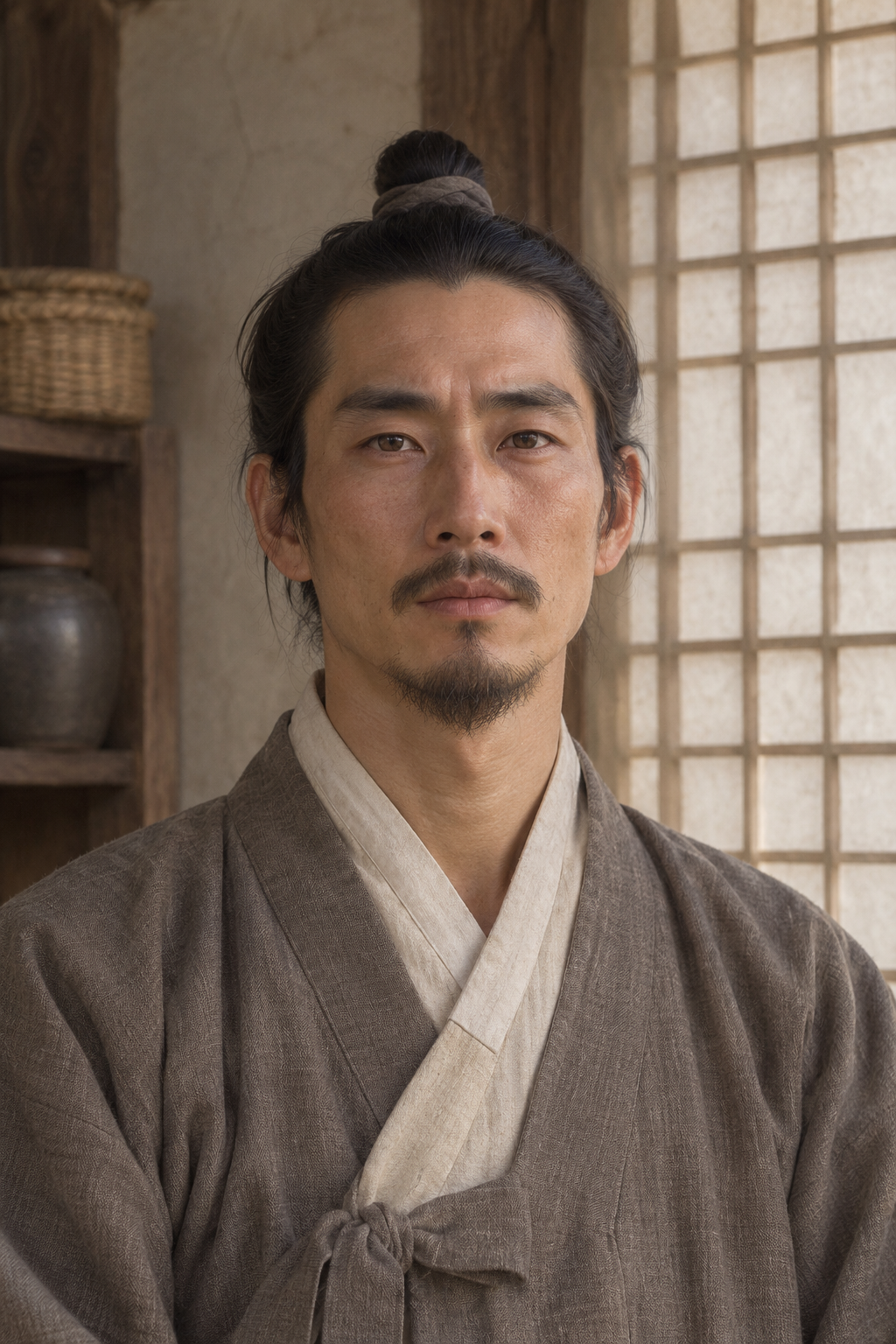
About Matthias Choe Yeo-gyeom
Matthias Choe Yeo-gyeom came from Mujang in Jeolla Province. Born in 1763, he learned Catholic doctrine from Paul Yun Ji-chung. Marriage brought another opportunity to study. His wife’s family lived at Hansan in Chungcheong Province, and there he met Louis Gonzaga Yi Jon-chang. Further instruction helped him put the teaching he had learned into practice.
Returning to Mujang, Matthias shared the religion with his neighbors. The bishops’ account credits him with bringing many people into the Church. His work connected the community in his home district with believers he had met elsewhere. It also meant that, when officials began questioning local Catholics, they could learn his name from people whom he had taught.
Some of the people who learned from Matthias can still be identified. The Diocese of Jeonju’s account names two of his nephews in Mujang. It also names Kim Cheo-dang in Heungdeok and Yi Hwa-baek in Yeonggwang. Twenty-eight people are remembered as having entered the Church through his teaching. What began as conversations with members of his family carried him well beyond the district where he lived.
His work followed the coast. In a report from Gaegap, Woo Se-min distinguished Matthias’s travels around Gochang and Hampyeong from the teaching that Augustine Yu Hang-geom undertook from Jeonju in the interior. Father Kim Jeong-yeol, who cared for the shrine, noted that some of the places where Matthias taught now belong to the Archdiocese of Gwangju.
Historian Son Suk-gyeong examined the background to that interest in a 2021 study of his life and faith. As reported by the Catholic Times, she related his early curiosity to the intellectual setting of Jeolla, where practical learning had encouraged interest in Western knowledge. She judged that he had acquired substantial knowledge of Catholic teaching through Chinese-language books and had sought to live by it. This is a scholarly interpretation of his formation; it does not identify a particular book as his surviving personal copy.
When persecution broke out in 1801, Matthias took refuge with his wife’s family at Hansan. Arrested there after the investigation in Mujang, he was questioned locally and then sent back to his home district. Further interrogation and punishment followed. Officials transferred him again, this time to the provincial government at Jeonju. There he met Stanislaus Han Jeong-heum and Andrew Kim Cheon-ae in prison.
In Mujang the officials pressed Matthias to identify other Christians. The diocesan bulletin relates that they kept up the questioning for six days. He had been identified through people he had instructed. His captors now wanted him to supply names in his turn. They continued to demand that he abandon the religion he had taught.
The three men were sent to Seoul, where the police bureau and Ministry of Punishments examined them. The Catholic Encyclopedia records a death sentence on August 21, 1801 and an order to return each man to his own district for execution. Matthias was sent back to Mujang and beheaded at Gaegap market on August 27. He was 38. The story thus moved through several jurisdictions before ending among the people to whom he had taught his faith.
The place of his execution has itself been a subject of research. In 2021 geographer Kang Dae-gyun compared an 1872 map of Mujang with twentieth-century topographical maps and 2020 geographical data. As reported by Ri Gil-jae, he proposed a sloping field where the old market hollow met a road north of Gapchon. This was a reconstructed location, rather than an uninterrupted modern marker of the exact spot.
Kang situated the market beside Seokgyo, where tax grain from Mujang, Gochang and Heungdeok was collected for shipment to the capital. Seafood and agricultural produce also passed through the area. Later reclamation, road building and other large earthworks altered the landscape. Those changes explain why the name of a remembered execution ground does not by itself establish its precise present coordinates. The historical market and the modern shrine need to be understood with that distinction in mind.
Local historian Lee Gi-hwa helped recover this history. Interviewed in 2015, he recalled first hearing only that a Catholic had been beheaded at Gaegap. He asked elderly residents around the market and learned that the man belonged to the Jeonju Choe clan, but could not initially establish his name. He then searched the Myeongdong Cathedral archive in Seoul with a specialist. After a week, he found material identifying the martyr and the date of his death.
The report credits those findings with helping establish the significance of Gaegap, later designated Gochang’s first local cultural heritage site. Lee received recognition from the Diocese of Jeonju in January 2015. His account describes how Matthias’s name was recovered from a combination of local memory and documentary research. The later shrine preserves that recovered connection between the Catholic teacher and the market where his life ended.
At the modern shrine a stained-glass mural by Nam Yong-u stands behind an outdoor altar shaped like one of Gochang’s ancient stone monuments. An angel leads Matthias towards Christ. Below them, the artist placed the twenty-eight people who received baptism through his teaching. The people Matthias taught have a place alongside their teacher in the community’s remembrance of him.
Wondering how to weigh the stories and sources? Learn how to read a saint biography.