Biography
Maurice of Carnoët
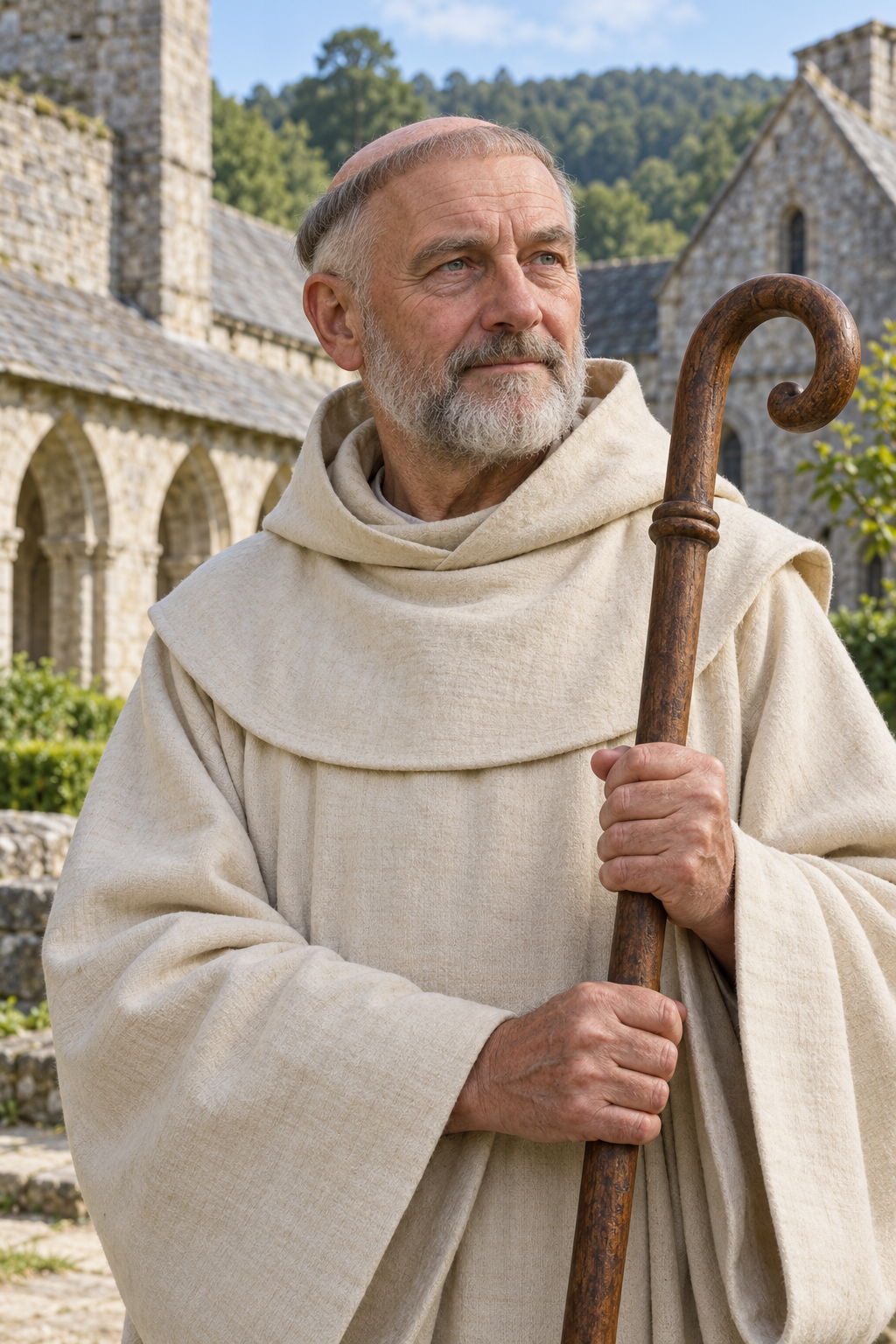
About Maurice of Carnoët
Maurice Duault, remembered as Maurice of Carnoët, came from a farming family at Croixanvec in Brittany. The Diocese of Quimper and Léon recounts his studies in Paris and his entry into the young Cistercian abbey of Langonnet after becoming a priest. He went on to lead that community for about thirty years.
The abbey’s heritage history places Maurice’s arrival at Carnoët in 1177. Duke Conan IV had provided land for the community around 1170. Woodland, water, and cultivable ground helped sustain the monks, who built their monastery in a demanding landscape. The site’s own account acknowledges how little is known about their arrival.
Historian Joëlle Quaghebeur places the foundation within the political geography of Brittany. Carnoët stood near the boundary between Cornouaille and the Vannetais, in a region important to the ducal family. Conan’s support combined religious devotion with concern for his territory. Maurice was not simply an isolated figure: documents also name him as a witness in affairs involving Sainte-Croix of Quimperlé in 1161 and 1166.
The earlier Life describes an interruption in his responsibilities. After about thirty years as abbot, Maurice wished to withdraw from active duties. The writer presents this choice through the biblical contrast between Martha’s service and Mary sitting at the Lord’s feet. Yet he was recalled to lead Carnoët, where the same account remembers him patiently enduring the community’s poverty.
The diocesan tradition recalls Maurice setting out with twelve companions. He remained at Carnoët until his death in 1191. His community’s memory survived in the name Saint-Maurice, which the abbey subsequently adopted.
Later stories give a more vivid, less certain picture of daily life. One describes rodents damaging the monks’ sandals and Maurice responding with practical advice and prayer. Historian André-Yves Bourgès cautions that the language of a “plague” in this story describes a destructive nuisance; it should not be mistaken for evidence of an epidemic.
The surviving tradition developed after his death. A medieval Life was rediscovered by the Benedictine scholar François Plaine in the archives at Troyes and published in 1880. Along with copies of the foundation donation, it preserves evidence for the abbey’s earliest period.
A papal letter dated 1 September 1225 provides direct evidence of the effort to secure his formal recognition. It records a petition supported by the bishop and cathedral chapter of Quimper, Cistercian abbots, and other churchmen. The monastery was already bearing Maurice’s name, and people were venerating him as a saint before papal authorization.
An earlier report had listed witnesses who testified under oath to miracles attributed to Maurice. What it failed to show was whether those witnesses had been questioned individually and carefully about the circumstances of their testimony. The pope therefore preferred to defer judgment and ordered a renewed examination. This is evidence of scrutiny of the inquiry, not proof that the reported miracles occurred or that a formal canonization had been completed.
Later scholarship has also corrected the chronology of that process. A scholarly review of André Vauchez’s research identifies two papal commissions from 1224 and 1225 and notes the confusion introduced by earlier editors.
Maurice remains among the saints commemorated by the Diocese of Quimper and Léon, which celebrates him on 5 October.
Wondering how to weigh the stories and sources? Learn how to read a saint biography.