Biography
Maurus
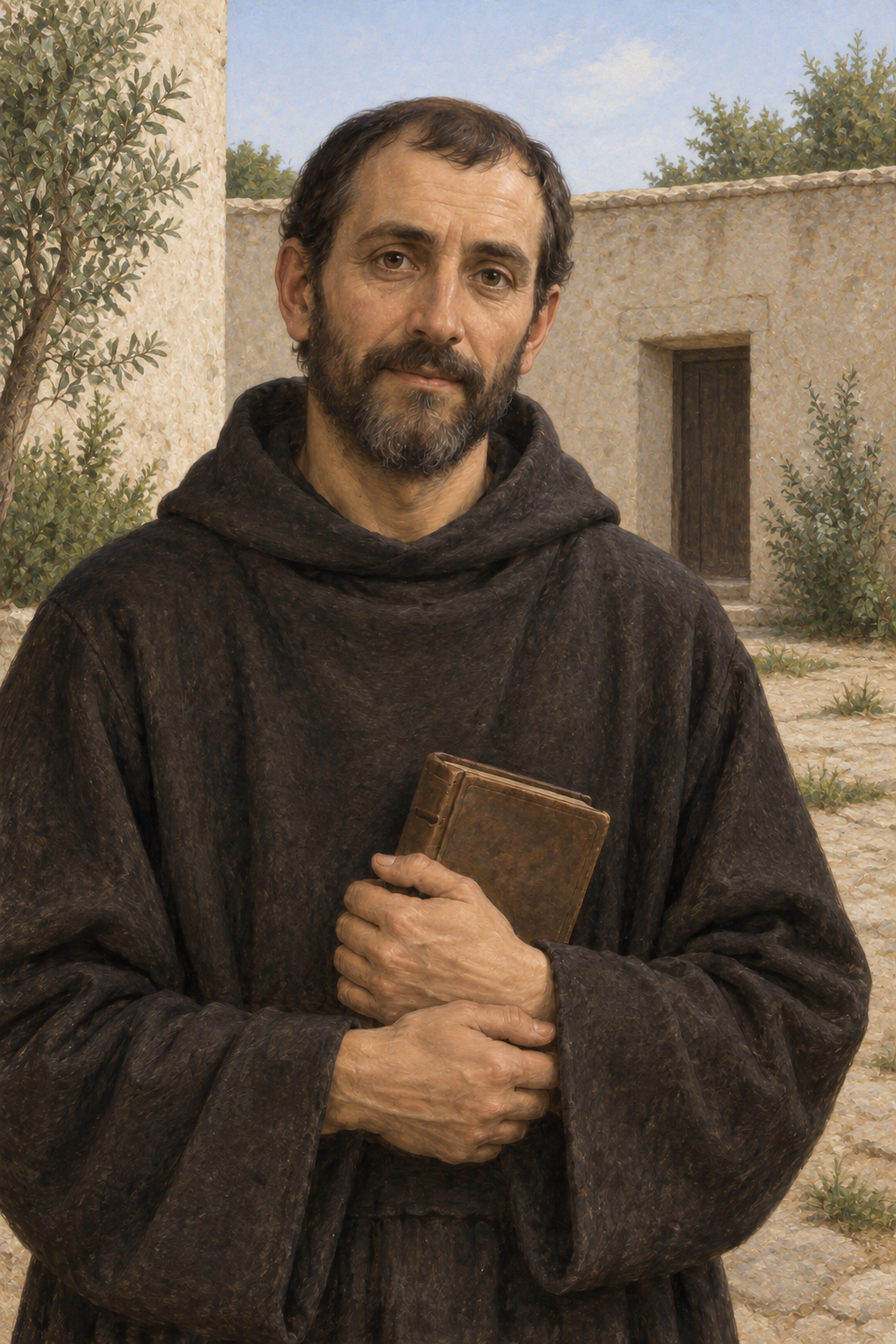
About Maurus
Maurus is remembered in Benedictine tradition as one of the monks associated with Benedict of Nursia. The earliest account that names him is Book II of the Dialogues, a religious work traditionally attributed to Pope Gregory the Great. It was written generations after Benedict's lifetime and presents the founder through exemplary stories and miracles. Scholars have debated whether the Dialogues are genuinely Gregory's work; this draft refers to the text by title and treats its account as an early monastic tradition rather than an eyewitness record. In that account Maurus appears within Benedict's community, where his obedience becomes a model for the other monks.
The stories in the Dialogues are brief and focused on Benedict's spiritual authority. In one episode, a monk loses an iron tool in water, and Maurus brings the problem to Benedict, who restores the tool. In another, Placid falls into a lake while drawing water. Benedict calls Maurus to help, and the narrative says Maurus runs across the water and pulls Placid to safety. Benedict credits Maurus's obedience; Maurus credits Benedict's command, while Placid gives a third account of the rescue. The tale is structured as a lesson in humility and obedience, not a verifiable report of a physical event. It shows how the Dialogues wanted readers to understand Maurus's place in Benedict's community.
The Dialogues give little continuous biography of Maurus. They do not provide a usable birth or death date, and the account does not establish where he was born or died. Later devotion supplied a much fuller life. In the ninth century, Odo of Glanfeuil produced a Life that presented Maurus as a missionary who traveled from Italy to Francia and founded the monastery of Glanfeuil. The story linked a local monastery and its relics to Benedict, giving a French community a prestigious origin. Wickstrom's study traces how Glanfeuil and other abbeys developed and reshaped Maurus's cult.
The later Life is important evidence for medieval memory but cannot fill gaps in Maurus's sixth-century biography. The Vatican State's devotional account explicitly distinguishes Gregory's early tradition from the later French journey, foundation claims, and additional miracles, calling Odo's account apocryphal and historically unverified. Wickstrom likewise places the Life within the ninth-century expansion of Benedictine culture and the work of monastic institutions to establish identity and authority. For that reason this profile does not list Glanfeuil or Monte Cassino as proven residences, record the journey to France as an event, or assign a death date or place from the legend.
Maurus's continuing significance lies in this two-layered history. In the Dialogues, he is a named monk whose obedience illustrates Benedictine discipline. In later centuries, French Benedictine monasteries made him a founder and missionary in their own institutional histories. The Italian Episcopal Conference commemorates an abbot Maurus at Glanfeuil on January 15, and the Orthodox Church in America also lists Maurus of Glanfeuil on that date. These observances document continuing church memory; they should not be mistaken for independent confirmation of every event in Odo's Life. The inherited January 20 date for ID 777 came from a Martyrology page about a different Maurus, the bishop of Cesena, and should be corrected.
Wondering how to weigh the stories and sources? Learn how to read a saint biography.