Biography
Maxellende of Caudry
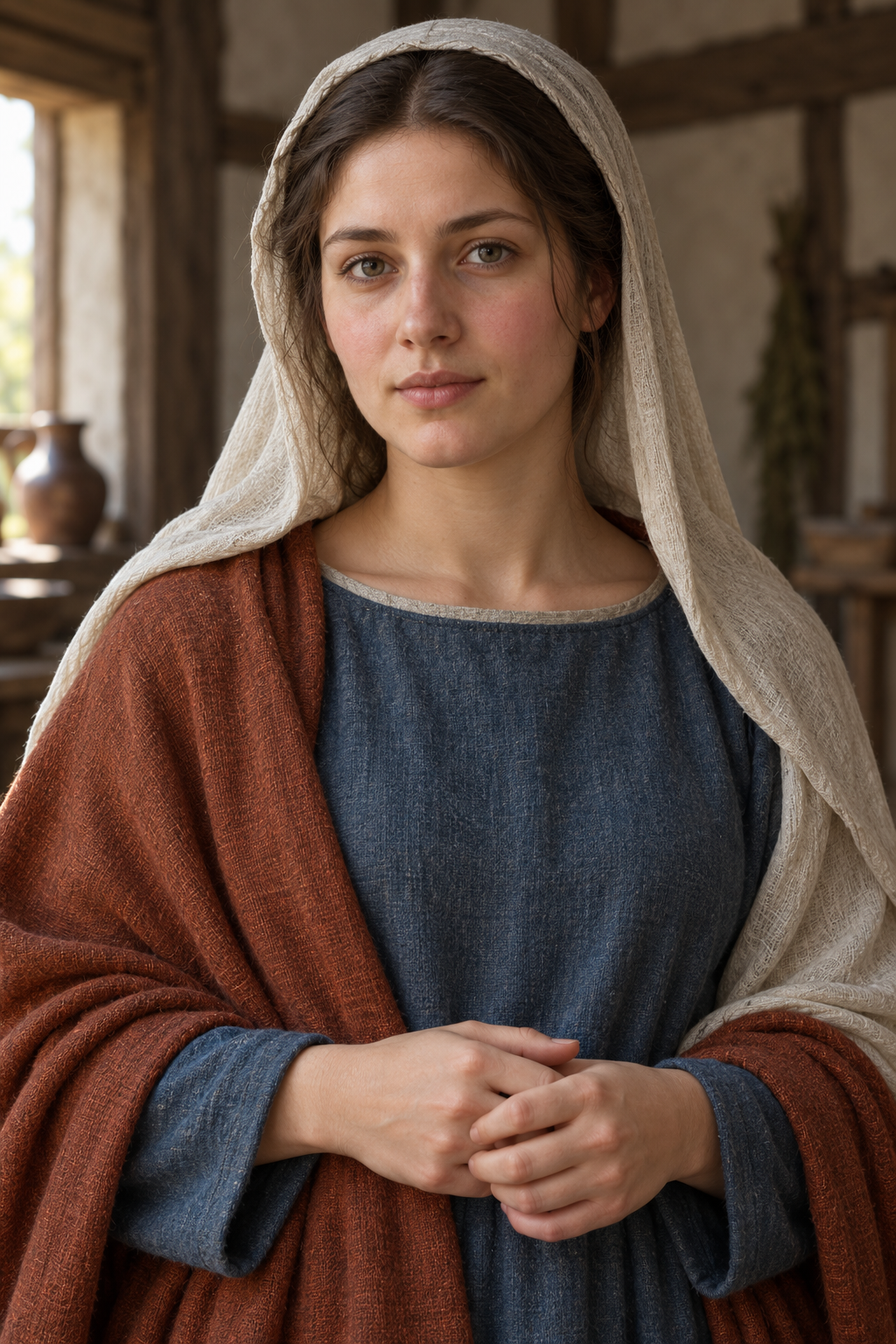
About Maxellende of Caudry
Maxellende is honored at Caudry as a virgin martyr. Her traditional story concerns a young woman who chose fidelity to Christ over an unwanted marriage and was killed for refusing it. The local Christian tradition also tells of her attacker’s blindness, repentance, and healing. These episodes belong to the saint’s devotional memory, rather than to a contemporary record of her death. Her death is traditionally dated to about 670.
The surviving evidence becomes firmer when it turns to her commemoration. Paul Bertrand and Charles Mériaux identify her feast in two calendars used at Essen, entered by a hand active before a fire in the mid-940s. Her name also appears in a later tenth-century sacramentary. The calendars establish devotion to her there; they do not establish how relics might have reached Essen.
The same study shows that her Life was already known to the author of the history of the bishops of Cambrai written in 1024–1025. That author summarized a narrative placing her in seventh-century Caudry. By the tenth century, her relics were associated with Saint-Martin near Cambrai; in 1025 they were entrusted to the newly founded abbey of Saint-André at Le Cateau.
A passage from the Life describes her refusal to display wealth or rank. She does not wish to appear as mistress among her servants, adorn herself with precious necklaces, or dress her hair with gold. The narrator explains this restraint as care for inward sincerity.
Alain Dierkens places this passage alongside the modest dress expected of devout women in tenth- and eleventh-century hagiography. His comparison helps explain how the author’s religious ideals shaped the portrayal of a woman assigned to an earlier age.
A diocesan history identifies Maxellende and Andrew as patrons of the abbey at Le Cateau. It reproduces a miniature in which the two saints accompany Christ while a monk seeks protection in prayer.
Another diocesan account records her historical patronage of Cambrai alongside Géry until the fifteenth century. It also traces the return of relics from Le Cateau to Caudry during the Revolution, after a petition was approved in 1791. The shrine later found a place in the new church at Caudry in 1890.
The basilica remains central to her local memory. François Tandonnet calls her Caudry’s patron and describes the stained glass telling her story in the choir. He reads that story as an invitation to consider fidelity and forgiveness in the face of violence. The local celebration falls on 13 November or the following Sunday.
Nominis also records invocation of Maxellende for eye diseases in the diocese of Cambrai.
Wondering how to weigh the stories and sources? Learn how to read a saint biography.