Biography
Melaine of Rennes
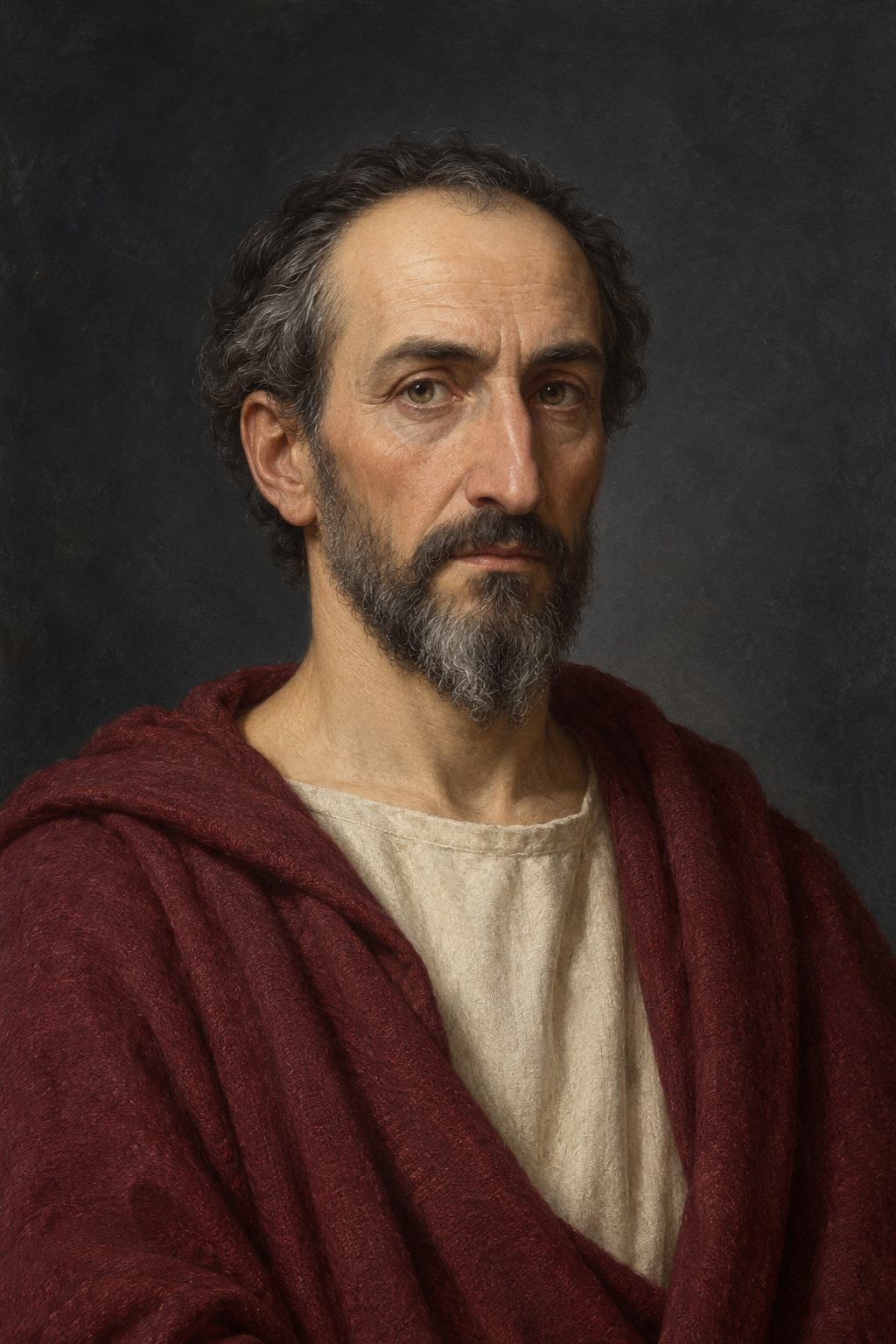
About Melaine of Rennes
Melaine was bishop of Rennes in the early sixth century. The Diocese of Quimper’s account places his origins at Platz, near Redon, and describes a monastic community there before his episcopate. His attendance at the council of Orléans in 511 connects him with the wider church of Frankish Gaul.
His surviving correspondence also reveals conflict over religious practice. With Licinius of Tours and Eustochius of Angers, Melaine rebuked the priests Lovocatus and Catihernus after reports that they celebrated in private homes with women assisting at the Eucharist. The bishops objected to women holding the chalice and distributing communion, demanded that the practice stop, and threatened exclusion from church communion. The letter records their accusations and instructions; it does not establish that the women were ordained.
Later biographies present a different kind of evidence. James Drysdale Miller observes that the first and second Lives preserve broadly the same narrative while the second substantially expands it. Their account of Melaine presiding at Orléans is historically inaccurate. The saint’s role in these works must therefore be distinguished from his documented participation in the council.
The Rennes parish tradition describes him returning frequently to his monastery and being buried at Rennes after his body was brought along the Vilaine. Its later Life attributes healings to him, sometimes with blessed oil and medicinal preparations. These stories belong to his hagiography rather than independently verified medical history.
The archaeological synthesis published by Inrap identifies the abbey of Saint-Melaine near an ancient cemetery and notes its attestation by Gregory of Tours in the late sixth century. His burial place became an enduring center of religious life.
Melaine is the principal patron of the Diocese of Rennes. The local commemoration on November 6 is associated with his burial. Quimper’s calendar also records January 6. The diocese identifies Moëlan and Saint-Melaine in Morlaix as parishes dedicated to him; the latter developed from a priory founded by the Rennes abbey.
The church at Thorigné-Fouillard likewise honors him as its patron. Its guide distinguishes the present building from the older church demolished in 1901, showing how a dedication can survive successive generations of buildings.
Wondering how to weigh the stories and sources? Learn how to read a saint biography.