Biography
Michael of Synnada
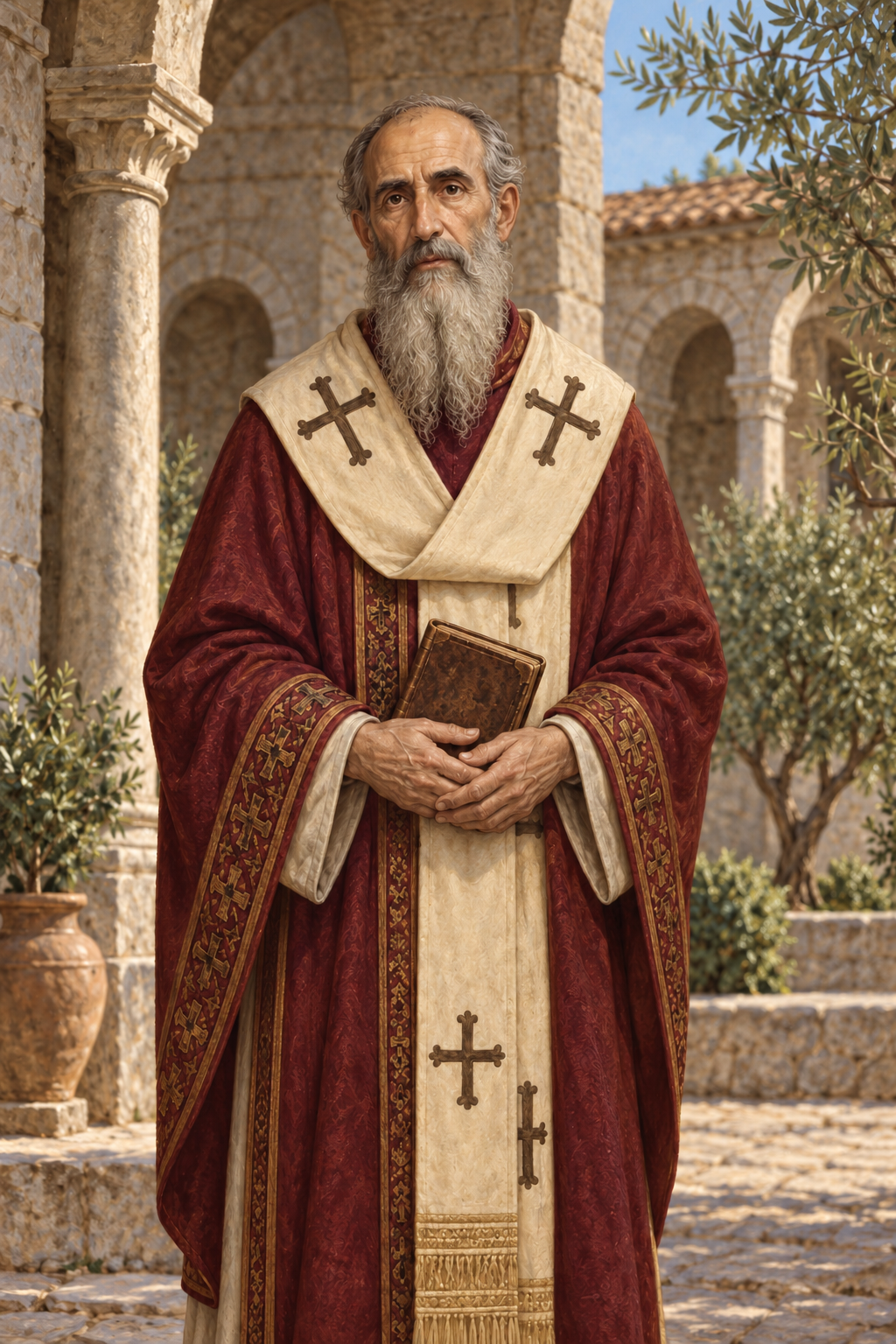
About Michael of Synnada
Michael of Synnada combined monastic life with the responsibilities of a bishop and imperial envoy. The Orthodox Encyclopedia places his birth around 750 in Synnada in Phrygia. Its account describes a prosperous family and a journey to Constantinople, where he met Theophylact, later bishop of Nicomedia. The two entered monastic life together under Patriarch Tarasius.
The same encyclopedia preserves a family tradition behind his name: his parents, long without children, prayed to the archangel Michael and named their son in his honor. It also describes an intermediate responsibility before his episcopal appointment. Tarasius entrusted him with the care of sacred objects at the Great Church. This office places his early service within the patriarchal church, before he returned to Synnada as its bishop.
The Finnish Orthodox account describes the monks’ shared discipline of fasting, prayer and reading Scripture. It also remembers Michael’s episcopal care in practical terms: he built churches and monasteries and established charitable institutions for sick people, those left alone, and strangers. These details belong to the later church narrative rather than to the diplomatic records that document his public missions.
Tarasius appointed Michael metropolitan of Synnada before the council held at Nicaea in 787. His name appears in the council’s subscription lists from its first session. The scholarly prosopography also records an embassy to the caliph Harun al-Rashid in 806, undertaken with two other churchmen, which successfully negotiated peace.
The Royal Frankish Annals provide a contemporary western record of his diplomatic work. Under 803 they name a bishop Michael among three envoys from Emperor Nicephorus. The delegation met Charlemagne at Salz on the Saale, received written proposals for peace, and returned through Rome to Constantinople. The annals identify the envoy by his name and episcopal rank; the identification with Michael of Synnada belongs to the scholarly reconstruction of these missions.
The earlier delegation included the abbot Peter and an official named Callistus alongside the bishop. The annal records their arrival after the deposition of Empress Irene, when Nicephorus governed the empire. They accompanied returning Frankish envoys, making Michael’s mission part of an exchange already under way between the two courts.
Another entry, for 812, names Bishop Michael with Arsafius and Theognostus as envoys of Emperor Michael. At Aachen they received a treaty document in church and acclaimed Charlemagne in Greek as emperor. On their return journey they received the agreement again from Pope Leo in Rome. This account places the bishop within negotiations between the eastern and western courts, rather than simply at a ceremonial visit.
The prosopography links the western embassy with negotiations about a possible marriage for the emperor’s son. It also records Michael’s delivery of Patriarch Nicephorus’s synodical letter to Pope Leo III. These journeys preceded his imprisonment under Leo V: when imperial policy turned against icon veneration, Michael supported the images and was sent into exile at Eudokias.
The Orthodox Church in America remembers his refusal to remove icons from churches. Its account also preserves a monastic miracle story shared with Theophylact, in which their prayers brought water to people suffering from thirst. The story belongs to the devotional tradition surrounding the two monks.
The date and location of Michael’s death require care. The Orthodox Encyclopedia favors 826 and suggests a place near Constantinople, while noting that he apparently did not regain his see after his release. It discusses Theodore the Studite’s account of his final illness, but cautions that Theodore’s personal presence cannot be asserted with certainty.
Pargoire’s earlier study compared Theodore’s writings with the liturgical calendar and argued for May 23, 826. The conclusion rests on the sequence of events as well as the calendar, not on the feast date alone.
Pargoire rejected an early death in 815 because the accounts required a longer period of exile. He also noted that the freedom to meet described in the final illness narrative fitted the later reign of Michael II better than the initial imprisonment.
The church biography instead gives a death in exile around 821. That discrepancy remains visible rather than being silently harmonized. The Orthodox Church in America commemorates Michael on May 23 and reports relics at the Great Lavra and Iveron monasteries on Mount Athos.
Later devotion connected Michael with the protection of cultivated land. The Finnish account tells stories of prayers against destructive animals and insects, and describes his relic being carried at believers’ request to places threatened by pests. This is a reported devotional practice, not a claim that the relic’s effects have been historically demonstrated.
His remembrance also appears in Byzantine Catholic worship. St. Mary Byzantine Catholic Church lists Michael as a holy father and confessor on May 23, the same month and day given by the Orthodox Church in America.
The Synodikon of Orthodoxy later honored Michael among the defenders of icon veneration in its commemorations.
Wondering how to weigh the stories and sources? Learn how to read a saint biography.