Biography
Miriam Teresa Demjanovich
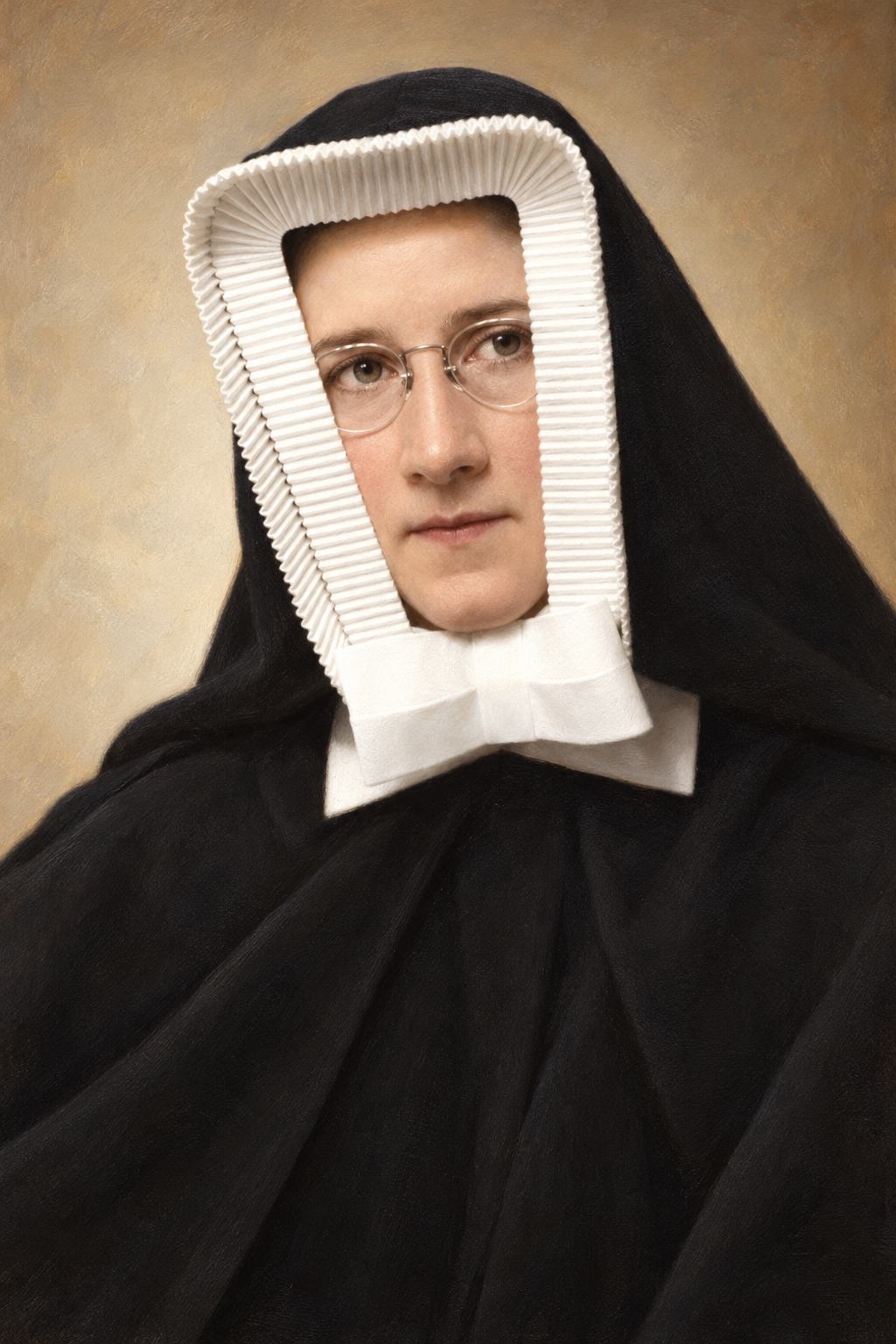
About Miriam Teresa Demjanovich
Teresa Demjanovich grew up in Bayonne, New Jersey, in a family of immigrants from the region now called northeastern Slovakia. She was baptized and confirmed in the Byzantine-Ruthenian Catholic tradition. Alongside public schooling, she received religious instruction and learned to read Slavonic prayer books. As her mother’s health declined, she helped manage the household and care for her.
She studied at the College of Saint Elizabeth, graduating in 1923, and then taught at the Academy of Saint Aloysius in Jersey City.
Before choosing the Sisters of Charity, Teresa had considered becoming a Carmelite. The virtues decree records that the prioress of the Gun Hill community did not accept this plan; teaching then renewed Teresa’s contact with the Sisters of Charity.
In 1925 she entered the Sisters of Charity of Saint Elizabeth and received the religious name Miriam Teresa. She taught at the Academy of Saint Elizabeth while beginning religious life. Her writing included poems, meditations, plays and part of an autobiography. Her spiritual director, Benedict Bradley, asked her to prepare conferences for him to give to the novices.
The decree on her virtues describes a difficult relationship with the director of novices. Her confessor had forbidden her to disclose her spiritual experiences to that superior, who interpreted her reserve as a lack of openness and humility. The resulting misunderstandings became serious enough for departure from the community to be suggested. This account places her formation amid conflicting expectations rather than presenting community life as free from strain.
In an August 1926 letter to Bradley, she described closeness to God as a possibility for people in every calling. Her explanation began with Jesus’ promise that he and the Father would dwell with those who loved him and kept his word. She connected that promise with the prayer for God’s kingdom to come. The letter also named a particular purpose: helping her own community and other religious engaged in active service. She believed that union with God sustained their work and made it fruitful. Ordinary responsibilities and difficulties, she wrote, could become part of a life directed toward God.
Serious illness interrupted her religious formation. She was hospitalized, underwent surgery and later returned to the hospital with further complications. In April 1927 she was permitted to profess religious vows while gravely ill. She died in Elizabeth on May 8, 1927.
After her death, Bradley disclosed that she had written the conferences he had been giving. They were published as Greater Perfection, edited by her brother Charles.
The decree records an ordinary diocesan process in 1953–1954, a supplementary process in 1971 and an apostolic process in 1981. The Congregation for the Causes of Saints recognized their legal validity in 1999. Theologians reviewed her virtues in 2011, followed by cardinals and bishops in 2012. On May 10, 2012, Benedict XVI approved the judgment that she had practiced the Christian virtues heroically. That ecclesiastical recognition preceded the separate decision on the reported miracle and her later beatification.
In December 2013, Pope Francis authorized a decree recognizing a miracle attributed to her intercession. The decree concerns a boy whose sight reportedly recovered in 1964 after a Sister of Charity, his classmates and their families prayed for Demjanovich’s intercession. It records a diocesan inquiry in 2003–2004 and a medical review in 2012 that judged the recovery lasting and unexplained by contemporary medicine. Theologians and then cardinals and bishops reviewed the case before the papal decision.
Her beatification followed on October 4, 2014. The following day, Francis publicly acknowledged the ceremony and her deeply spiritual life.
At the beatification, Bishop Arthur Serratelli interpreted her significance through the relationship between prayer and practical service. His homily placed classroom teaching, household cleaning and writing within the same religious commitment. He connected her Scriptural outlook with the Second Vatican Council’s later emphasis on Scripture and the call of all Christians to holiness. In his account, her vocation belonged within a congregation whose educational, medical and social ministries put charity into practice. He also emphasized her devotion to the Trinity, presenting the divine presence in the baptized person as central to her spiritual message. These were the bishop’s theological readings of her life, offered as the Church publicly recognized her; they do not turn her reported mystical experiences into independently verified events.
Her teaching continued to shape local remembrance. In 2019, young people from the Diocese of Paterson walked to her shrine at Convent Station during a diocesan pilgrimage. They heard about her short life and her conviction that holiness could be pursued in everyday responsibilities. The gathering linked her writings with the questions and hopes of a new generation in the New Jersey communities where she had lived.
Her local liturgical remembrance is also established: the ecclesiastical province of Newark observes her memorial on May 8. The approved calendar is specifically for the dioceses of New Jersey.
Wondering how to weigh the stories and sources? Learn how to read a saint biography.