Biography
Mo Chutu of Lismore
About Mo Chutu of Lismore
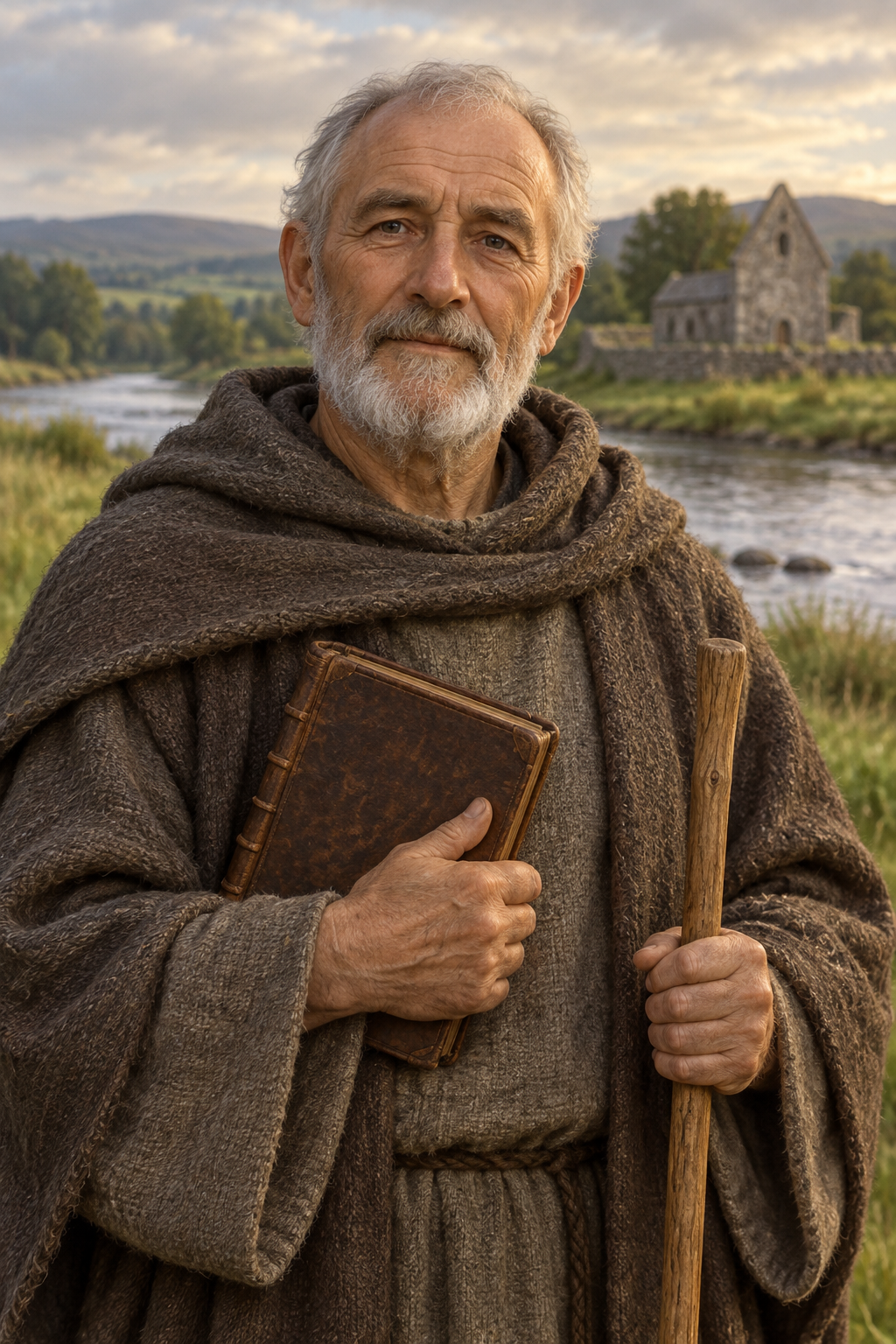
Mo Chutu, also known as Carthach or Carthage, was an Irish abbot associated with Rahan and Lismore. Aidan Breen’s account places him among the Ciarraige Luachra of Kerry. Expelled from Rahan in the seventh century, he moved south and founded a monastery beside the River Blackwater. The reasons for his expulsion remain uncertain. Disagreement over the dating of Easter may have contributed, but Breen considers rivalry between churches or regional groups more likely.
The fuller accounts of his life were written centuries later. Breen dates the Latin and Irish Lives to the twelfth or early thirteenth century and cautions against reading them as immediate historical testimony. He also distinguishes a hymn that may be Carthach’s from a metrical Irish rule attributed to him. The rule is probably ninth-century work. Lismore’s later reputation for Latin learning and canon law should likewise be distinguished from what can be established about its founder’s own writings.
Breen places his death in 637, shortly after the move, while noting that the surviving annals differ over the year of his expulsion. An exact lifetime chronology cannot be recovered with confidence.
The traditional account of his youth has him tending pigs near Castlemaine before entering religious life under Carthage the Elder. That teacher is a different saint. William Grattan-Flood’s Catholic Encyclopedia entry describes a period of solitude at Kiltallagh and visits to other religious communities before his settlement at Rahan. These details belong to the received life story, whose chronology is less secure than the broad movement from Kerry to Rahan and Lismore.
Grattan-Flood also preserves the tradition of an elderly founder spending his final months in prayer near a well at Lismore. He calls him the place’s first bishop and patron. The precise ages, large numbers of followers and detailed itinerary in such accounts cannot all be treated as independently documented facts. They show how later devotion pictured an austere monk whose final foundation outlived him.
The Life translated by P. Power gives that devotion a more difficult side. Its account of the expulsion depicts Mo Chutu resisting removal from the home where he hoped to die. It then attributes curses to him against the ruler and others who took part, predicting illness, humiliation or the disappearance of their descendants. These are features of a later religious narrative, not verified reports of his words. Power himself recognized how such stories could defend a monastery’s rights by portraying resistance to its saint as disastrous.
The same narrative remembers a community extending beyond healthy monks. It describes Mo Chutu caring personally for people with leprosy and taking them with him when he left Rahan. The story’s emphasis on keeping vulnerable people within the community is part of his devotional memory. Its extraordinary incidents and exact numbers remain unverified. Reading its compassion alongside its curses gives a fuller account of the tradition than selecting only the episodes that are comfortable today.
Power’s text follows a manuscript copied by John Murphy in the eighteenth century; its surviving written form is far removed from the events described.
His name later travelled with Irish Catholic communities overseas. Chris Watson traces several Australian church dedications to priests connected with Ireland’s Mount Melleray Abbey. At Lismore in New South Wales, Jeremiah Doyle renamed a small church for Carthage in 1880. The town’s own name had originally referred to a Scottish Lismore; the church dedication created a different Irish connection. This was the later history of his cult, rather than evidence about the seventh-century founder.
At Parkville in Victoria, the choice of Carthage as church patron was praised when the foundation stone was laid in 1934. Speakers linked the saint’s association with learning to the nearby University of Melbourne. Watson also describes a stained-glass image pairing him with Thérèse of Lisieux and interprets its message of finding a resting place as meaningful for emigrants. His suggestion that Carthage might serve as a patron of refugees is a proposal, not evidence of an established patronage.
Watson also links an Australian priest’s request for information to a biography published in Ireland in 1937, showing devotion prompting further research.
The Irish bishops list Carthage among the patrons of the Diocese of Waterford and Lismore, together with Otteran and Declan. Castlemaine Parish also explicitly names him as the village’s patron. These local associations connect his remembrance with particular communities rather than assigning him a general patronage from stories of his life.
Ireland’s National Proper celebrates him as Saint Carthage, bishop, on May 15. Its prayer recalls an attraction to monastic worship and a willingness to live as a pilgrim, asking for gentleness and patience through his intercession. This liturgical remembrance offers a different emphasis from the combative episodes in the medieval Life: the qualities sought by the worshipping community are those it hopes to practise in its own life.
Wondering how to weigh the stories and sources? Learn how to read a saint biography.