Biography
Modesta of Oeren
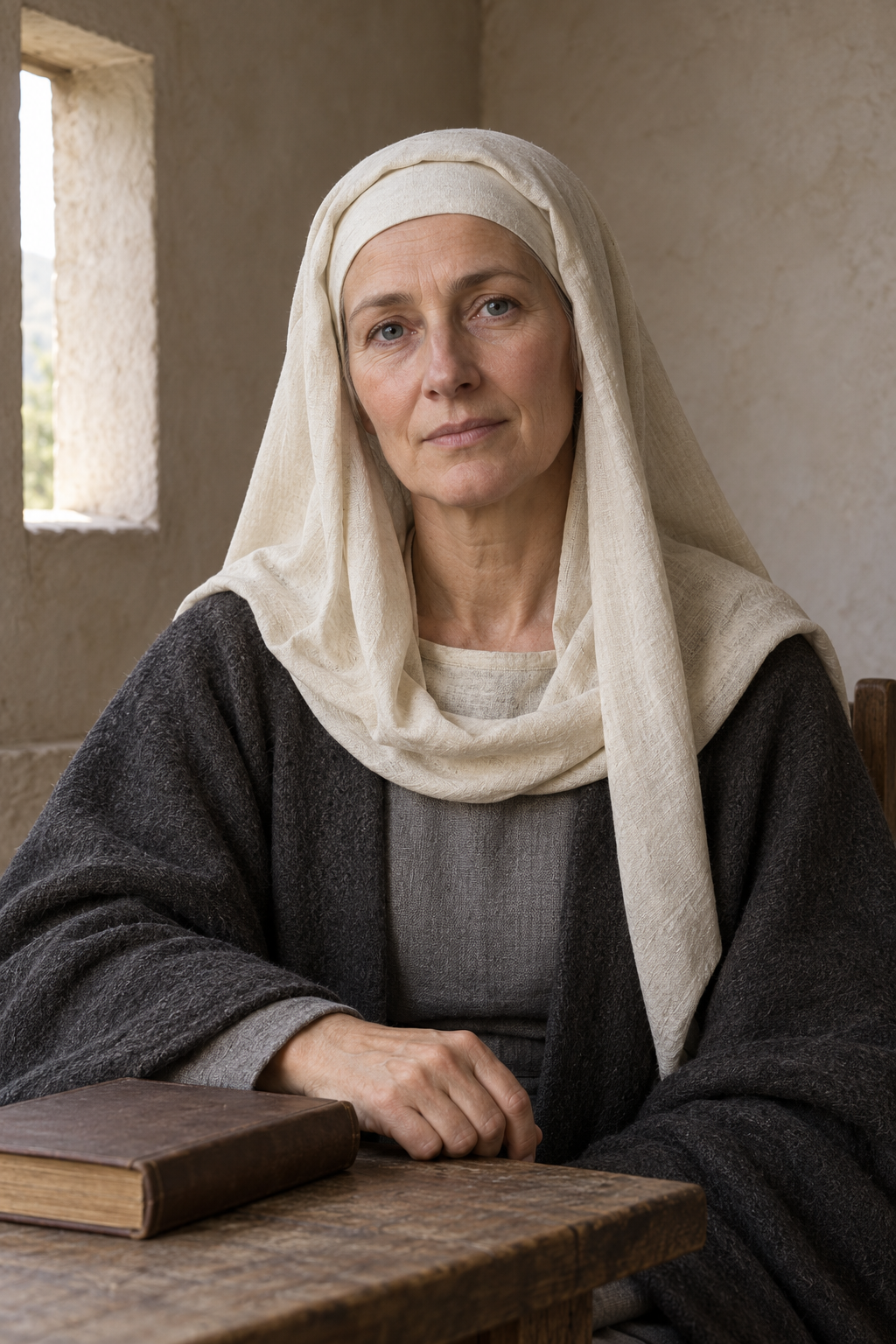
About Modesta of Oeren
Modesta led a community of women at Trier in the seventh century. She is remembered as the first known abbess of Oeren, the monastery later called Saint-Irminen. Her parents and the exact dates of her life are unknown.
The early collection of miracles associated with Gertrude of Nivelles gives the clearest glimpse of her. It describes Modesta as an abbess at Trier who had been dedicated to religious life since childhood. Though separated from Gertrude by distance, she shared a close spiritual friendship with her. According to the narrative, Modesta was praying before an altar when Gertrude appeared and announced her death. The following day, Bishop Chlodulf of Metz visited the monastery. Modesta asked him to describe Gertrude’s appearance and then told him about the vision. The account says that he confirmed its timing. This is a hagiographic account of a vision, rather than an independently verified encounter.
The miracle collection was composed around the year 700. Much later, a reworked version circulated under a title presenting it as a Life of Modesta, although she appeared in only one chapter. As historian Marieke Neuburg explains, these later texts became entangled in disputes between Oeren and the archbishops of Trier over the monastery’s origins and authority.
Other later traditions supplied royal and saintly relatives. Claims that she was a daughter of Dagobert, a sister of Willibrord, or a niece of Modoald do not securely establish her family. Her education at Remiremont has also been proposed, but the identification with a nun of the same name remains a scholarly reconstruction.
Her veneration can be traced through medieval liturgical manuscripts, including a ninth-century litany.
The Diocese of Trier celebrates her memorial on November 6.
Wondering how to weigh the stories and sources? Learn how to read a saint biography.