Biography
Moninne of Killeavy
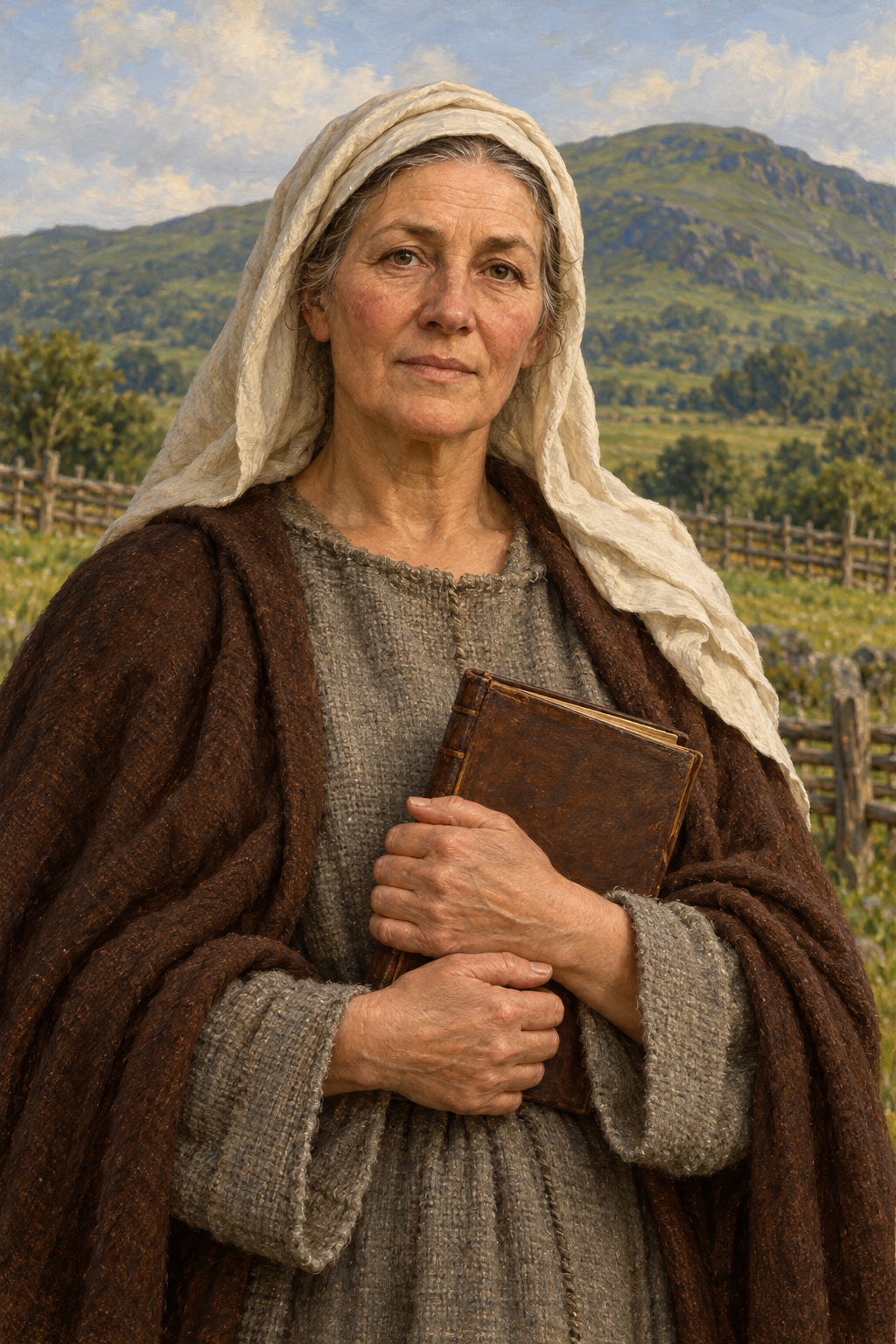
About Moninne of Killeavy
Moninne, also called Darerca or Monenna, founded a women’s religious community at Killeavy on the slopes of Slieve Gullion. Her life belongs to the early Irish Church, but its exact chronology is uncertain. Ailbhe Mac Shamhráin places her in the sixth century and notes that even the death years recorded in the annals do not settle the question. The familiar dates attached to her life should therefore be treated cautiously.
Her medieval Life describes a progression from religious discipline at home to solitude and leadership of other women. It remembers her as learned and interested in the education of her community. Mac Shamhráin treats stories of meetings with Patrick and Brigit as likely explanations of later relationships between monasteries, rather than secure evidence of personal encounters.
Among the traditions Mac Shamhráin records are an exchange of books with Íte and the sending of Brígnat to Whithorn to learn about monastic practice. They portray learning as something shared between communities.
The historian Maeve Callan draws attention to the range of women represented in these Lives. Religious life appears open to women from different social backgrounds, including wives, widows and mothers as well as virgins. The women study, teach, travel and form relationships with other communities. This is evidence for the world imagined and valued by the narratives; it does not make every episode a contemporary record of Moninne’s actions.
Callan also stresses that the stories contain conflict as well as harmony. A women’s community could possess resources and authority that other people challenged. Moninne’s remembered generosity therefore sits alongside accounts of her defending the community’s independence. The tradition presents her as an intellectually capable leader, an ascetic and a participant in demanding manual work. These emphases give a fuller picture than the image of a solitary holy woman detached from practical responsibilities.
Some of the stories portray an exceptionally severe discipline. Per Einar Odden’s compilation recounts a nun ordered to throw away woollen stockings received from a man because her possession of them supposedly obstructed the community’s prayers. Another story has Moninne predict blindness for a sister whose curiosity angered her. These are hagiographical claims, not verified events or instructions to imitate. They belong to the difficult side of the tradition and should not be concealed behind its accounts of kindness.
Her identity has also become entangled with other saints called Monenna or Modwenna. Odden explains that traditions from different places and periods were combined, even producing an implausibly long lifespan. This account keeps the Killeavy foundress distinct and does not assign her all the journeys through Britain found in later retellings.
The community’s later history is more firmly attached to its site. Ken Abraham of Newry and Mourne Museum records Viking raids and the monastery’s place in the religious and political life of medieval Ulster. Its location near an important northern road helped make it a place of hospitality. By the medieval period it housed Augustinian nuns, a development that occurred long after Moninne’s lifetime.
The monastery was surrendered in 1542 by its last abbess, Alicia Negan McDonnechy O’Hanlon. Abraham distinguishes the likely wooden buildings of the early foundation from the stone structures that survive. This matters when visiting the place today: the ruins witness centuries of community life and rebuilding, rather than preserving Moninne’s own convent unchanged.
A royal heir’s feasting visit in 1163 provides one concrete example of that hospitality. The monastery belonged to the wider medieval social life of the region.
Northern Ireland’s Department for Communities identifies the older west church’s massive doorway as possibly tenth- or eleventh-century work. The east church belongs to the later medieval convent and has a decorated fifteenth-century window. Later walls join the two buildings, making them appear to be one long church. A large granite slab in the graveyard traditionally marks Moninne’s burial; the identification remains a tradition. These material remains help distinguish the history of the place from the personal relics and episodes attributed to its founder.
The Archdiocese of Armagh describes a local pilgrimage that moved from the reputed grave to the holy well higher on the mountain, then returned for a final prayer. Its modern prayer remembers Moninne’s practical charity, especially shelter and support for poor people, widows and children. It asks worshippers to respond to people in distress in their own daily lives. This is a record of how a community now receives her memory, rather than independent confirmation of every detail in her early biography. The well and reputed grave together preserve a route of remembrance, connecting prayer with a walk through the local landscape.
Moninne is honored as patron of Upper and Lower Killeavy. Ireland’s National Proper keeps her feast on July 6 and recalls a mountain community devoted to service. Her remembrance joins a particular landscape to the continuing work of caring for others.
Wondering how to weigh the stories and sources? Learn how to read a saint biography.