Biography
Mukasa Kiriwawanvu
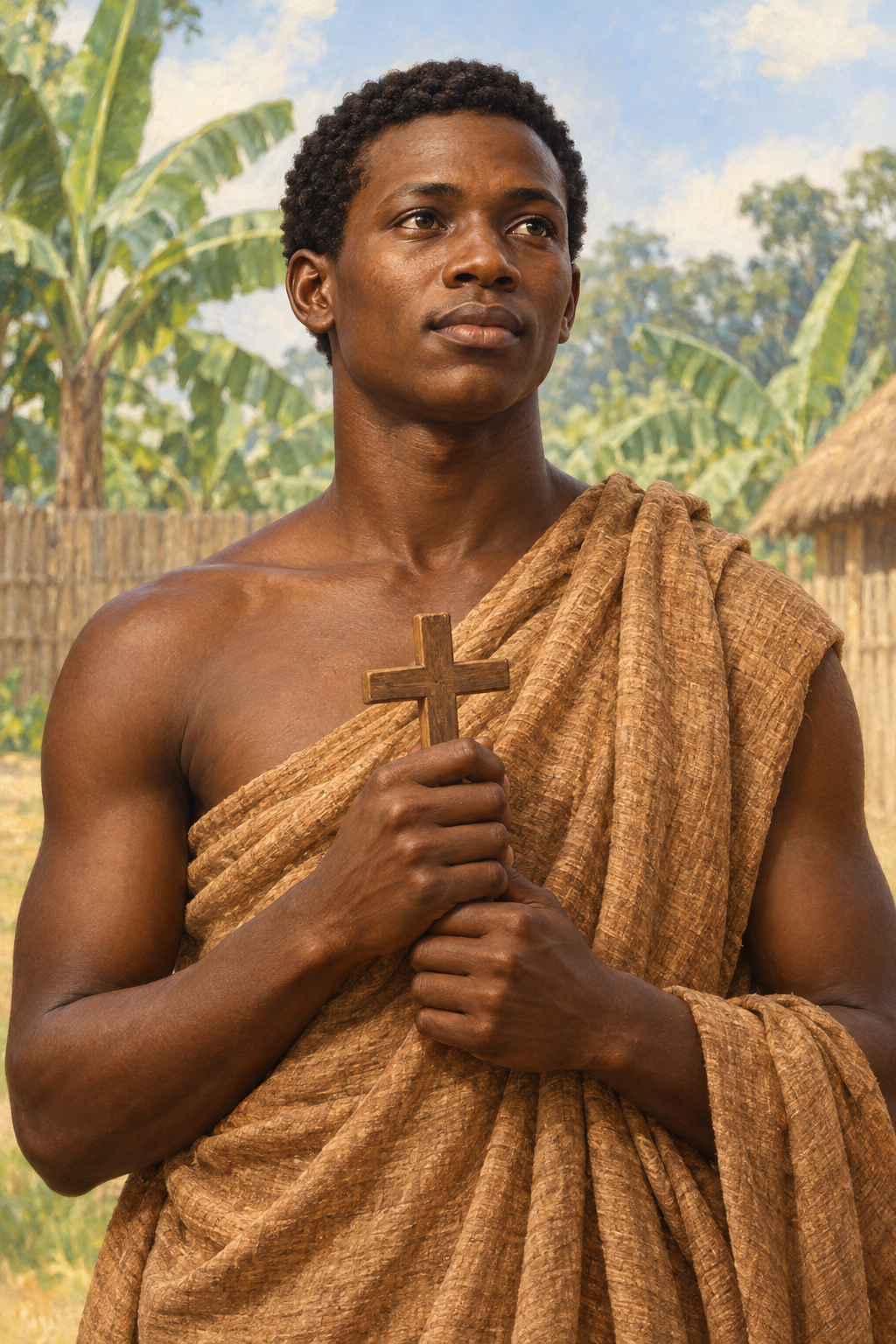
About Mukasa Kiriwawanvu
Mukasa Kiriwawanvu was a Muganda court page who became a Christian catechumen. The Inter-Religious Council of Uganda’s account places him in the Ndiga, or sheep, clan. It describes his introduction to the court through relatives and the example he found in Joseph Mukasa and Charles Lwanga.
His story includes an act of violence against a companion. According to the same account, Gyaviira mocked his long legs while they were splitting firewood. Mukasa struck him and was imprisoned. When persecution brought them together again, the account says that they forgave one another. Their reconciliation is remembered alongside the harm that had divided them.
Mukasa was killed at Namugongo on June 3, 1886. He had not received water baptism. Catholic tradition remembers his martyrdom as baptism of blood, expressing the belief that his death for the faith fulfilled his desire to belong to Christ.
The historian H. B. Thomas identifies him separately from Adolphus Mukasa Ludigo in a comparison of early lists of the martyrs. Shared names can obscure distinct lives; these were different men. Thomas also examines disagreements about the date of the Namugongo executions and accepts June 3 as the better-supported date.
Thomas’s study places the deaths within a court alarmed by missionary influence and European expansion. It also corrects an earlier account that separated Catholic and Protestant victims into different executions. Both communities suffered at Namugongo. Mukasa’s individual story belongs within that wider history, although the surviving narratives preserve different amounts of detail about each person.
He was canonized with the Catholic Uganda Martyrs in 1964. Their Catholic memorial is June 3.
Wondering how to weigh the stories and sources? Learn how to read a saint biography.