Biography
Mura of Fahan
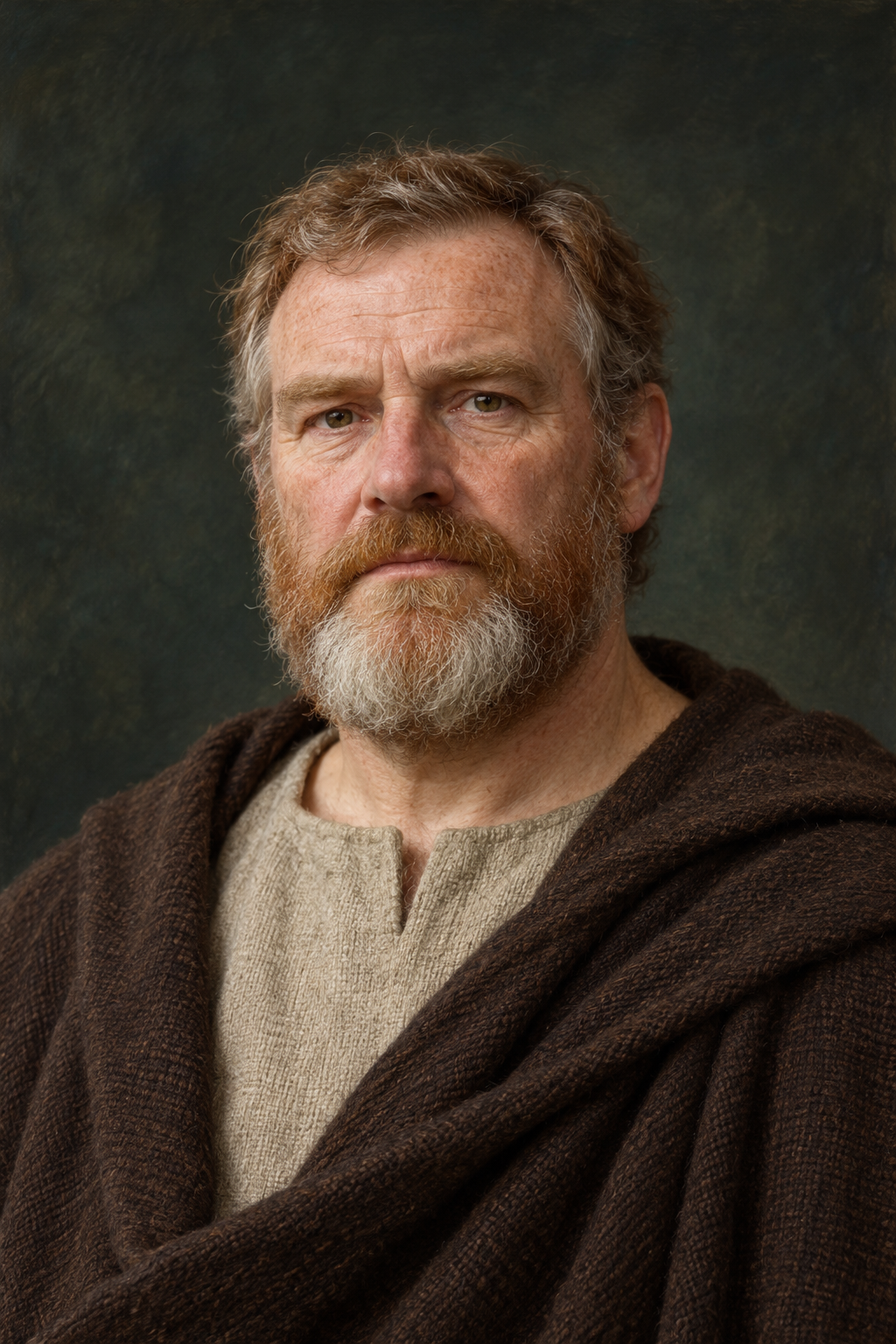
About Mura of Fahan
Mura, also known as Muru, founded the monastery of Othain, later called Fahan Mura, beside Lough Swilly. He belonged to Cenél nÉogain, a branch of the Uí Néill, and became its patron saint. The genealogy gives his earlier name as Gnia.
The Fragmentary Annals preserve a striking story about his relationship with King Áed Uaridnach. Mura promises the future king success and a long life after a display of reverence for the church; the king subsequently gives land to the monastery. When a fatal illness comes sooner than expected, Áed accuses Mura of misleading him. Mura answers that the king’s hatred of the Leinstermen, including his desire to kill their men and enslave their women, has shortened his life. He urges repentance before the king dies. This is a religious narrative about power and accountability, rather than a verified deathbed conversation.
Mura probably also had a connection with Banagher. A poem about Colum Cille has been attributed to him, but no early evidence establishes that authorship. His death is placed around 645. The tradition that he was buried at Magheramore remains a tradition, rather than an identified modern grave.
Fahan’s visible church ruins belong to a much later history. The building was recorded as repaired in 1622 and remained in use until a neighboring church opened in 1820. They should not be mistaken for Mura’s own surviving monastery buildings.
The Wallace Collection dates the object known as the Bell of Saint Mura to the eleventh through sixteenth centuries. Its surviving decoration belongs to later devotion, centuries after the saint. His Catholic feast is March 12, and he is remembered as a patron of the O’Neill clan.
A parish church at Fahan continues to bear his name.
Wondering how to weigh the stories and sources? Learn how to read a saint biography.