Biography
Mutien-Marie Wiaux
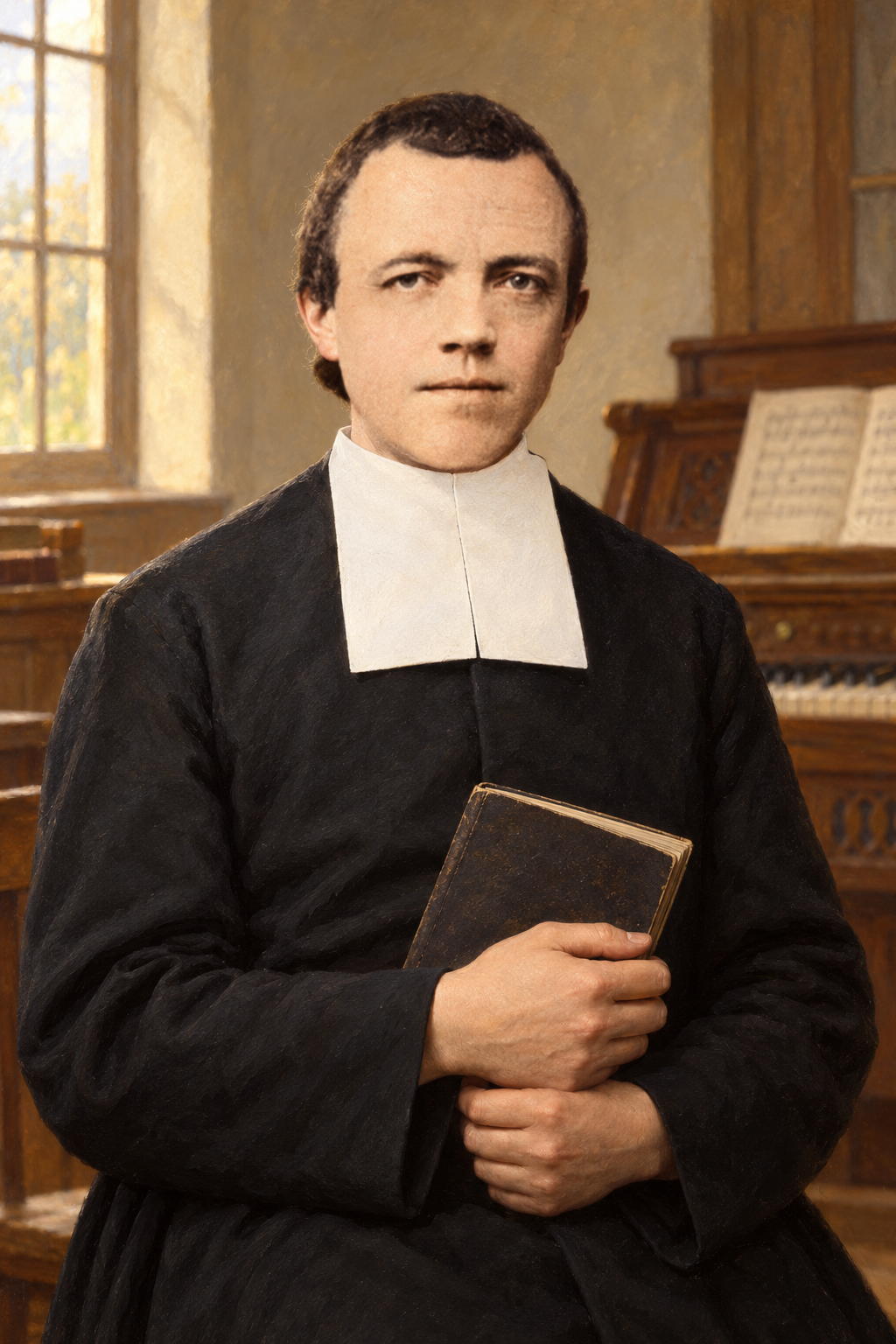
About Mutien-Marie Wiaux
Mutien-Marie Wiaux was a Belgian Brother of the Christian Schools whose life centered on teaching, prayer and the daily work of a boarding school. Born Louis-Joseph Wiaux in Mellet on March 20, 1841, he first worked in his father’s forge. At fifteen he entered the Brothers’ novitiate at Namur. After teaching in Chimay and Brussels, he moved to Malonne in 1859 and remained there until his death.
His first years at Malonne were difficult. The Vatican biography describes an inexperienced young teacher who struggled professionally and nearly lost his place in the congregation. He was assigned supervision and elementary lessons in drawing and music. He studied instruments diligently and also taught catechism to children at the free school attached to the college. These responsibilities became the substance of his long religious life.
Luke Salm’s biography gives a more precise account of the crisis. In 1860 the community voted against allowing him to renew his temporary vows as a teaching Brother. His existing vows still had two years to run, so the decision did not immediately expel him. Brother Maixentis offered to take him as an assistant. Mutien renewed his vows the following year and eventually made a lifelong commitment.
Salm questions the judgment that Mutien was incapable of teaching. He argues that the young Brother had been advanced without enough preparation, and that his later work showed the first verdict to be premature. Music lessons required persistent practice: Mutien learned the harmonium, a small reed organ, and taught beginners. The surviving recollections emphasize patient encouragement and careful preparation. Salm also records a later occasion when Mutien comforted another Brother whose profession had been deferred. His own humiliation had become something he could draw upon when helping someone else. The harmonium had practical importance for students preparing to teach in rural parishes, where competence on the instrument could be expected when they sought work.
Prayer was woven into this routine. At his canonization, John Paul II recalled the impression his devotion made on pupils and fellow Brothers. He prayed before the Blessed Sacrament, received Communion, and returned often to the rosary and devotion to Mary. The pope presented these practices together with his willingness to welcome pupils and undertake unnoticed tasks. Teaching and prayer belonged to the same life.
The canonization homily did not celebrate a famous institution-builder or a remarkable public career. It drew attention to a man who had spent decades helping music and drawing teachers and carrying out the work needed in a large school. John Paul II asked educators to accompany young people in faith and praised perseverance in ordinary responsibilities. Mutien’s recognition as a saint on December 10, 1989, thus gave public attention to work that had usually been done out of sight. The pope also drew on a letter from January 1914 in which Mutien recommended devotion to Mary as a way of approaching Christ. That letter gives a personal expression to the religious practice others observed.
The historian Jean Pirotte places this reputation in its social setting. After Mutien died at Malonne on January 30, 1917, pilgrims gradually gathered at his grave and reported favors and healings. These are accounts of devotion and attributed miracles, not medical conclusions established here. His remains were moved in 1926 to make the tomb easier to visit; a later pilgrimage center received them in 1980. Pirotte connects the devotion with people who recognized something of their own modest lives in his. The diocesan inquiry into his life began in 1923, bringing the growing local reputation into the Church’s formal investigation.
Pirotte also asks a difficult question about the example being offered. Mutien’s patience and lack of worldly ambition could challenge narrow ideas of success, but an emphasis on passive obedience could trouble Christians who valued critical judgment and action against injustice. Pirotte argues for understanding the man within his time while examining how his example is used in another. This distinction allows admiration for his care and persistence without turning every feature of his spirituality into a rule for others.
Local remembrance remains concrete. The pastoral unit bearing his name describes a January 30 Mass at his birthplace in Mellet, preceded by the rosary, and a separate annual pilgrimage on a Sunday in March. The pilgrimage brings prayer, a procession, the veneration of a relic and a shared meal. These occasions connect the school Brother remembered at Malonne with the village where his life began. The unit explicitly names him as its patron.
His patronage also extends to the College of Criminal Justice Education at De La Salle University-Dasmariñas in the Philippines. The university’s 2025 feast report identifies him as the college’s patron and recalls his commitment to education. This is a particular institutional association, rather than a claim that he is the universal patron of criminal justice.
Wondering how to weigh the stories and sources? Learn how to read a saint biography.