Biography
Myron of Crete
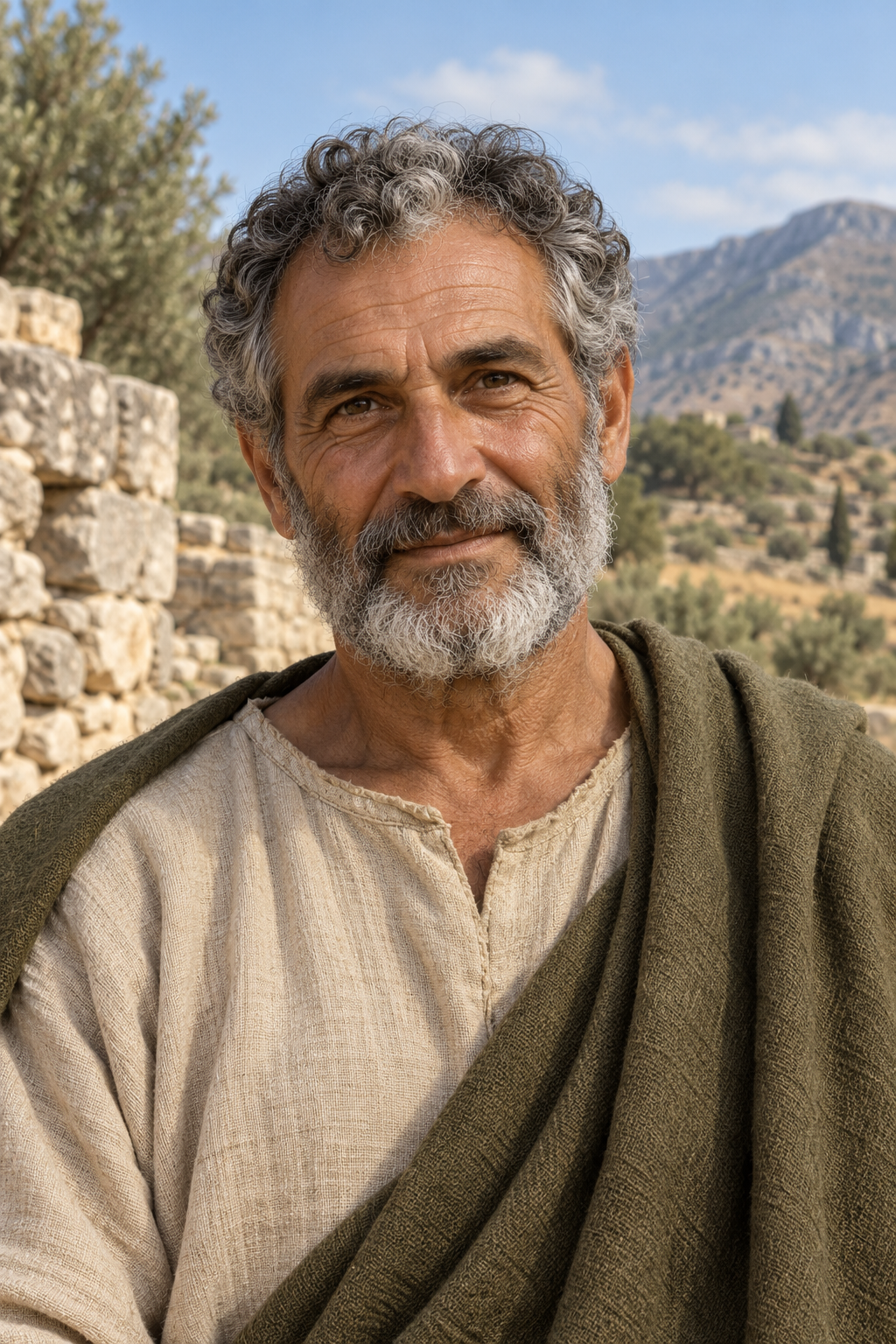
About Myron of Crete
Myron is remembered in Cretan church tradition as a farmer and family man who became a bishop. The Orthodox Church in America’s account describes his generosity through a story about grain thieves: he helped them shoulder their stolen sack, and they changed their ways. It places his ordination in his native city of Raucia, followed by his election as bishop.
The same account tells of Myron stopping a flooded river and later sending his staff to restore its flow. This is a miracle tradition, rather than an independently verified event. His death is placed around 350.
The early accounts require caution. The Bollandist editors compared several Greek versions and found serious chronological inconsistencies. They treated a death around the middle of the fourth century as a hypothesis, rather than a fixed historical date. They also questioned the title of martyr in one manuscript, since the narrative describes a peaceful death. Myron is therefore presented here as a bishop, without treating that disputed title as evidence of an execution.
His memory remains attached to a church in the village that bears his name. The Church of Crete’s monument directory identifies a tomb there as Myron’s and describes a chapel below the church associated with his retreat. The building itself preserves several periods of construction: an early Christian basilica was later transformed into a domed church. These places preserve a local tradition of veneration; their association with Myron does not establish every detail of his life.
Wondering how to weigh the stories and sources? Learn how to read a saint biography.