Biography
Naukratios of Studion
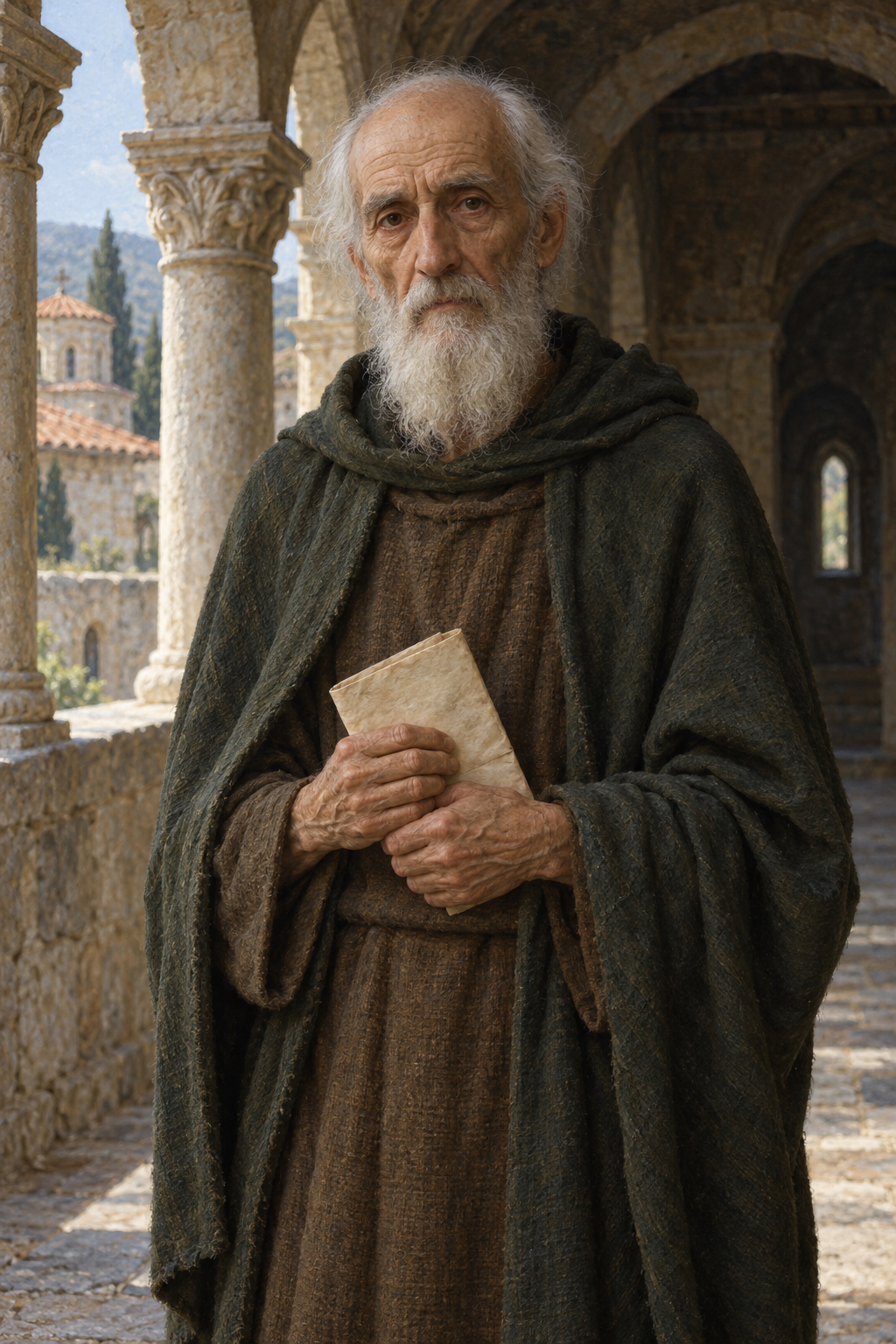
About Naukratios of Studion
Naukratios was a monk, steward, and eventually abbot of Studion in Constantinople. His formation began with Plato and Theodore at Sakkudion in Bithynia. Born sometime around 760–765, he belonged to Theodore’s early circle and became one of his most trusted correspondents. The surviving record includes fifty-four letters addressed to him, though two survive only as titles.
The monastery where he first served had been founded around 780 on the family estate of Plato and Theodore, near the southern shore of the Gulf of Nicomedia. Naukratios became its steward before the community’s move to Constantinople.
His responsibilities carried him through years of controversy. He shared the exile to Thessalonica in 797 that followed the monks’ opposition to Emperor Constantine VI’s marriage. After the community moved to Studion, he probably continued as its steward. When renewed imperial opposition to icons began in 815, Naukratios was arrested and exiled; around 818 he was flogged with seven other Studites.
The letters also record periods of illness in 816 and 818, followed by another arrest in 819. Many exchanges answered messages Naukratios had sent to Theodore. When free, he could assist monks undergoing persecution, so the correspondence preserves practical help alongside the disputes that brought the community into danger.
Release followed the accession of Michael II. Yet in 821, as the rebel Thomas approached Constantinople, the emperor ordered Naukratios and other prominent Studites to remain in the capital.
The Finnish Orthodox account notes that imprisonment did not end his correspondence with Theodore. Their exchanges addressed questions of doctrine and discipline. After Theodore died in 826, Naukratios became leader of the community and sent a circular letter to its scattered members.
The letter also urged the exiled monks to hold firmly to their faith. Naukratios had himself supported Theodore when opposition to the emperor’s divorce brought punishment. In the Finnish Church’s account, that loyalty continued across imprisonment and the difficult years in which the community’s members could not live together.
That letter opens with an admission of grief. Naukratios says he had put off writing because he could scarcely bear to announce their teacher’s death. As reports spread, he felt obliged to confirm what others had heard. His repeated expressions of loss reveal a disciple struggling to tell a dispersed community that its spiritual father was gone.
He also describes conversations during Theodore’s last illness. Theodore asked whether anything necessary had been left unsaid and whether anyone still needed his attention. Naukratios records asking what should happen to monks and laypeople under penance, and remembers a response extending forgiveness. He then describes the gathering of visitors, prayers at the deathbed, and the preparations for burial. These details preserve the witness of a companion rather than a detached later biography.
At the letter’s close, he returns to the living brothers. Monks were still arriving at Theodore’s grave from near and far, visibly grieving. Naukratios asks those receiving his message to take courage, continue their course, and pray for him and his companions as they pray for the recipients.
Naukratios’s leadership brought further exile under Emperor Theophilos. After the restoration of icon veneration, he helped bring the remains of Theodore and Theodore’s brother Joseph of Thessalonica to Studion in 844.
The Life of Evaristus offers a glimpse of Naukratios receiving a newcomer. A hermit in Thrace sent the young Sergios to him with a letter of recommendation. Naukratios examined the candidate, accepted him, gave him monastic clothing, and changed his name to Evaristus. He later assigned him to work in the monks’ refectory. When Evaristus and Eubiotos secretly left to live as hermits on an island in the Propontis, Naukratios had them located and called them back to the monastery. These episodes describe an abbot concerned both with admission to the community and with keeping its members together.
Peace over icons did not end disagreement within the Church. Patriarch Methodios demanded the destruction and condemnation of writings in which Theodore had attacked Patriarchs Tarasius and Nikephoros during the second phase of the marriage controversy. Naukratios and Athanasius of Sakkudion refused. The Orthodox Encyclopedia says Methodios imposed penalties, lifted by his successor Ignatios.
The critical prosopography adds that Naukratios was removed as abbot and confined in his monastery during this dispute, before briefly regaining office.
The Life of Ioannikios preserves a hostile view of these Studite leaders: it reports that Ioannikios warned Methodios in 846 against Naukratios, Athanasius, and their associates.
The prosopography instead places his restoration before Methodios’s death in June 847. His remaining abbacy was short.
Naukratios died on April 18, 848, and Nicholas the Studite succeeded him. The Finnish Orthodox Church commemorates him on that date.
He was buried in the church at Studion.
No separate medieval Life of Naukratios survives. His story is reconstructed principally from Theodore’s writings and references in accounts of the Studite community.
Wondering how to weigh the stories and sources? Learn how to read a saint biography.