Biography
Nazaria Ignacia March Mesa
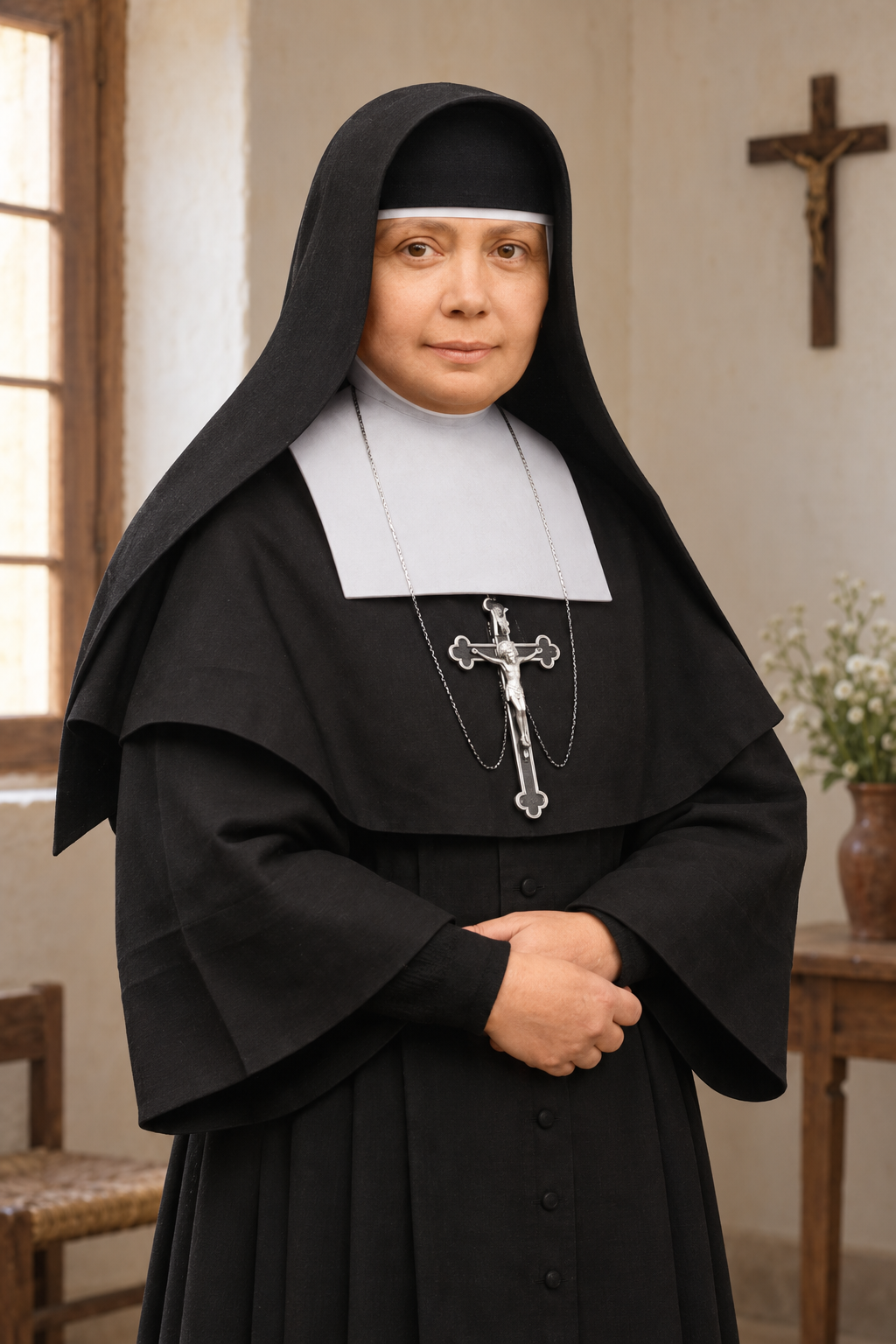
About Nazaria Ignacia March Mesa
Nazaria Ignacia March Mesa founded the Missionary Crusaders of the Church after years of caring for elderly people in Bolivia. She was born in Madrid on January 10, 1889.
As a child she was sent to her maternal grandmother in Seville and attended the Colegio del Espíritu Santo. Pérez Ortiz describes this schooling as an important setting for her religious formation. Nazaria later wrote about the call she believed she had heard while preparing for her first Communion.
Her early ambitions were missionary. The New Catholic Encyclopedia describes a girl inspired by Francis Xavier who gathered friends into a small association to pray and make sacrifices for the missions. Her family’s financial difficulties took them to Mexico in 1906. During the voyage she met members of the Little Sisters of the Abandoned Elderly, the congregation she later entered. Her vocation developed through migration and practical encounters with religious women, alongside her childhood hopes of becoming a missionary.
She made a private vow of virginity at eleven. This childhood commitment preceded her admission to a congregation and her later vows as a religious sister.
She entered in December 1908, completed her novitiate in Palencia and made her first vows in 1911. The following year she was sent to Oruro. For roughly twelve years she cared for elderly people and undertook ordinary community tasks: cooking, serving as sacristan and portress, and seeking donations in nearby settlements. During a retreat in 1920, she understood herself to be called toward a different form of missionary work. The change was not immediate; several years passed before a new foundation became possible.
Daniela Pérez Ortiz, interviewed as superior general in 2018, described that interval as a prolonged struggle. Nazaria loved her existing congregation while believing that another task was required of her. Discussions involved the bishops of Oruro and La Paz and the papal representative. In June 1925 she received permission to leave temporarily and reform a beaterio, a community of religious women. She also faced a demanding condition: finding ten companions within six months for the proposed missionary undertaking.
The separation was painful. In the diary passages reproduced by René Cueto, Nazaria recalled kneeling before her superior, asking forgiveness and embracing the sisters. Her superior objected that she was seriously ill and needed surgery. The bishop’s decree, dated June 15, 1925, appointed her superior of the existing beaterio under a temporary authorization from the nunciature. It required an inventory when the property was handed over. These details show that the new work began within an existing institution, with responsibilities and relationships that could not simply be left behind.
The reform was contested. Javier Baptista’s biography reports objections from residents and a municipal official over the bishop’s authority to intervene. His account is sympathetic to Nazaria and harsh toward the women who resisted; that perspective should not be mistaken for a neutral record of their grievances. In 1932, Rebeca Morales disputed Nazaria’s claim to be the founder. Accusations concerning the beaterio’s property and an alleged physical assault also circulated. Baptista says a judge dismissed the assault allegation after contradictory testimony was challenged, and that the bishop later affirmed Nazaria as founder. The controversy forced her to leave Oruro temporarily. These are the biography’s accounts of the dispute, not independently reexamined judicial findings.
The congregation’s work combined evangelization with material assistance. Its sisters visited rural communities and miners, prepared children for Communion and helped prisoners, abandoned elderly people and families living in poverty. Diocesan recognition came in 1927. During the Chaco War they cared for wounded people and children left without parents. Houses also developed outside Bolivia, including Argentina, Uruguay and Spain.
Nazaria’s concern for working women took an organized form in the Catholic Society of Women Workers. Baptista records that its statutes received episcopal and government approval in 1934. They provided for religious formation, mutual financial help and medical assistance. He also connects the soup kitchens known as the Olla del Pobre with unemployment following the closure of Chilean nitrate works.
Pérez Ortiz explained that the congregation’s martial-sounding name described a mission of love, rather than armed conflict. She linked Nazaria’s spirituality to meeting people in their daily circumstances and refusing to separate faith from social action. In that understanding, prayer and direct work among marginalized people belonged to the same religious commitment.
Nazaria died in Buenos Aires on July 6, 1943.
The congregation received definitive approval in 1947, after her death, and her remains were transferred to Oruro in 1972. The New Catholic Encyclopedia also records her patronage of Mexican barrios.
John Paul II beatified her in 1992, and Francis canonized her on October 14, 2018.
Bolivia’s 2021 liturgical calendar assigns her July 6 celebration the rank of feast nationally and solemnity in Oruro and her congregation. It explicitly identifies her as the diocese’s secondary patron.
Wondering how to weigh the stories and sources? Learn how to read a saint biography.